No modern economy can survive without affordable energy.
Australia’s east coast has none as the gas cartel party rolls on well above Albo’s $12Gj price floor joke:
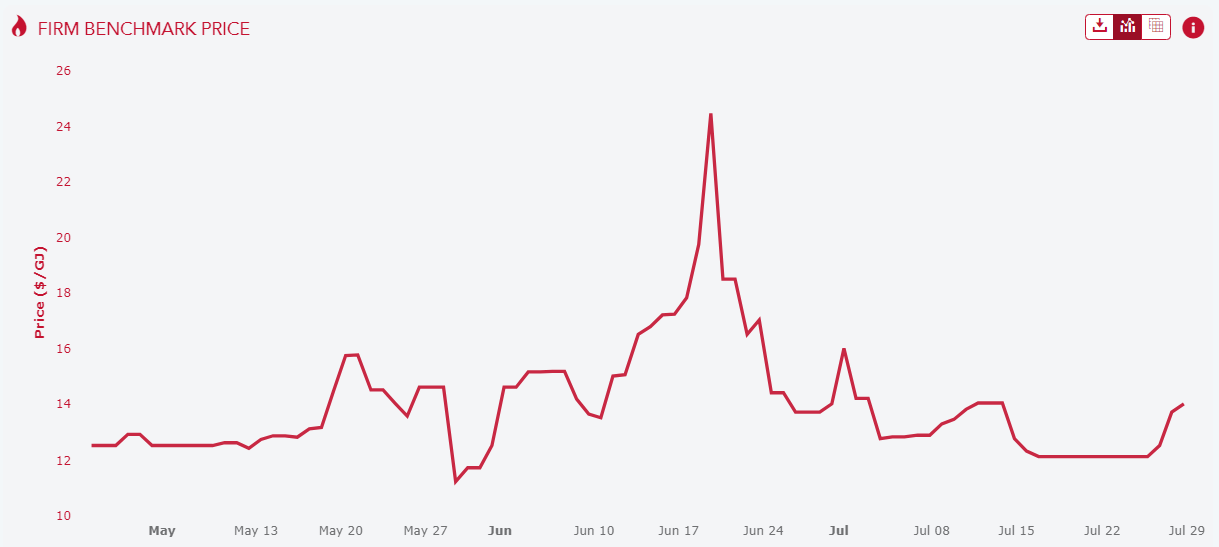
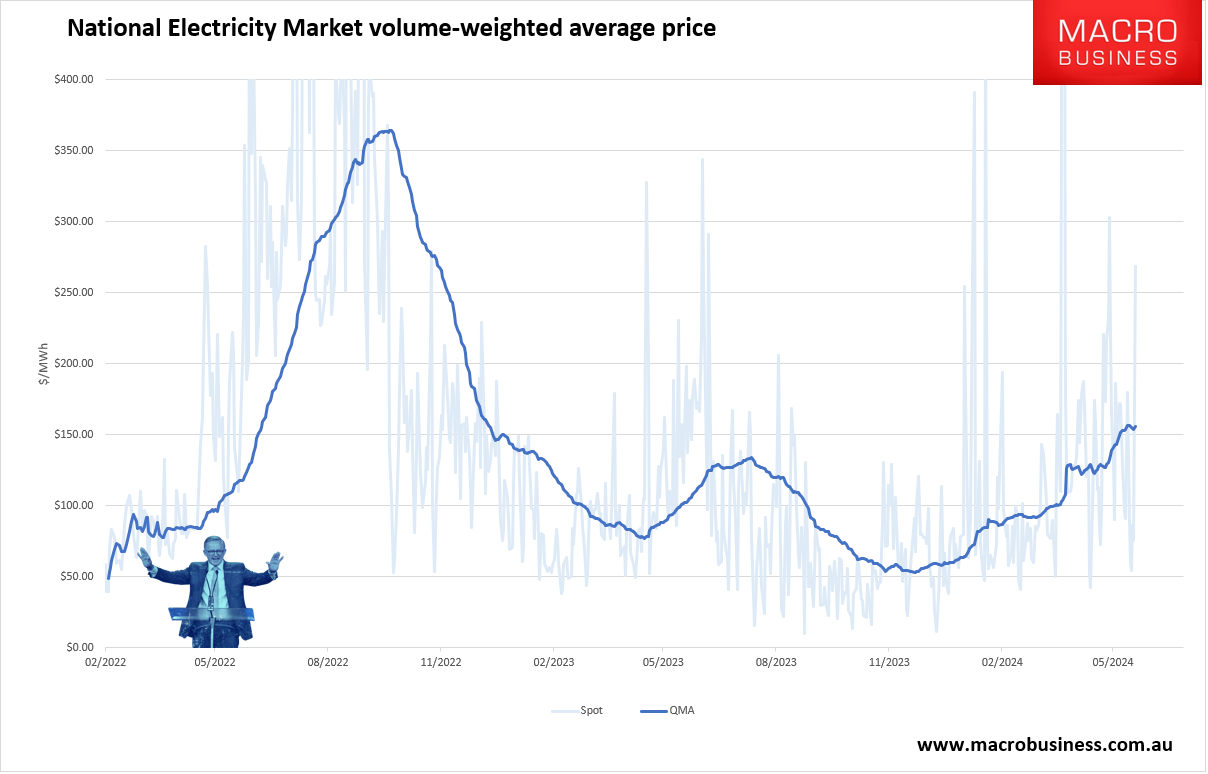
Triggering a new round of power price shock:
ANZ has a take on the direct consequences of the cartel:
RBA Deputy Governor Hauser recently asked do you strip out administered prices and control the things you can control or “do you have to push the rest of the inflation basket down a little bit further in order to bring inflation back to target?”
Non-administered and non-indexed inflation has declined notably and is running around levels consistent with the RBA’s target band on a six-month annualised basis, noting that headline inflation averaged below target (1.9%y/y) between 2013 and 2019(Figure 1).
In contrast, inflation on indexed items has accelerated over the past year and inflation on administered goods & services has picked up on a six-month annualised basis (despite slowing on an annual basis).
This is contributing to the higher inflation pulse we’ve seen this year.
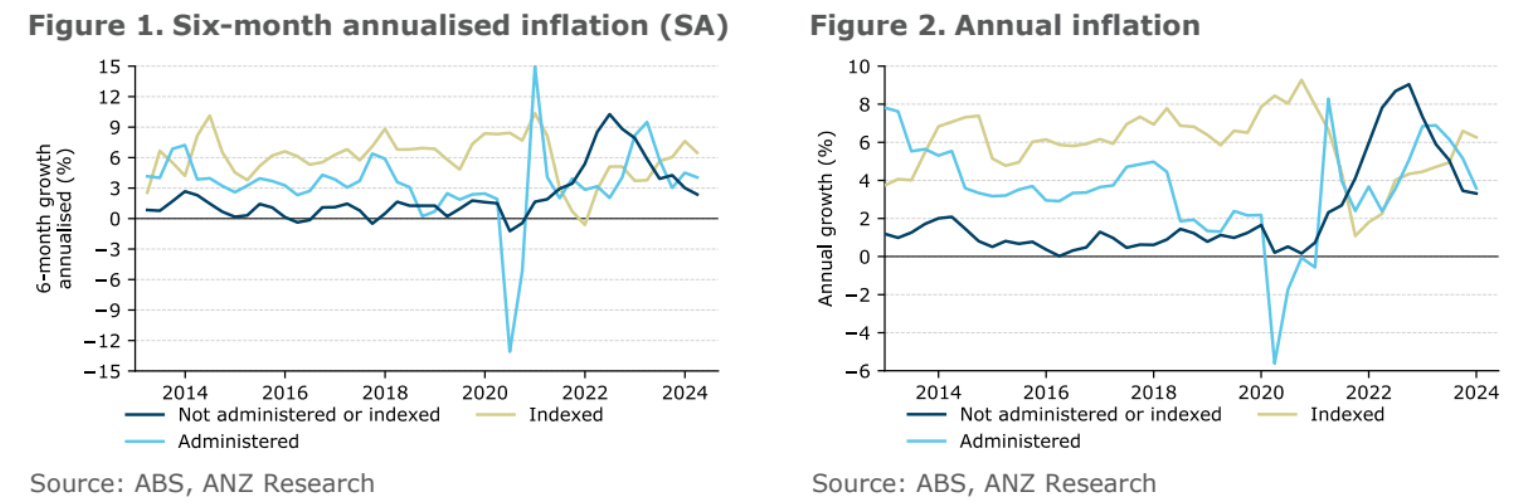
Energy is the largest administered price (other examples include medical, education, postal etc). Indexed prices are for booze and smokes so they can be disregarded.
It is no coincidence that we have lived through a decade of crazy administered price inflation culminating in the 2023 blowoff.
Administered prices are basically “cost-plus” regulations used to prevent natural monopolies from gouging.
If you let a cartel take control of your most basic administered price inputs, then you deserve everything you get.