
Data from the Australian Securities and Investments Commission (ASIC), reported in The Australian, shows that hospitality businesses collapsed at the fastest rate on record in the 2023-24 financial year, as rising food and energy costs and a sharp drop in consumer spending drove cafés and restaurants out of business.
Insolvency appointments in the accommodation and food services sector increased faster than any other sector last financial year.
The number of insolvencies increased by 50% to a record 1667, surpassing the previous high of 1114 in 2023.
Restaurant and Catering Australia chief executive Suresh Manickam said that the hospitality sector was facing one of the toughest periods in history.
“Higher interest rates, cost of living pressures on the up, more expensive produce and the cost of energy are all having an impact”, he said.
“Compared to this time last year, people have less money in their pockets and a reduced ability to pay and go out, and there lies the problem the sector is facing”.
Restaurant and Catering Australia also told SBS that one in eleven hospitality businesses are expected to fail over the next year.
The way I see it, this is the clean-out that the hospitality industry needed to have.
The number of cafés in Australia has increased considerably over the past two decades.
When I moved to Melbourne’s Ashburton in 2006, my local High Street shopping strip featured maybe four cafes.
Over the next 18 years, I saw the number of cafés balloon to more than a dozen on or near High Street, the majority of which are empty most of the time.
The story is similar across Melbourne and throughout Australia.
While a small minority of cafés thrive and remain busy, the majority struggle to break even.
The reality of the situation is that there were too many cafés for the level of demand before the pandemic. And now that cost-of-living pressures are biting, many cafés will need to close down to restore balance.
Given the exorbitant cost of mortgage and rent payments and the severe decline in real household disposable income experienced over the past two years, who can afford to pay $5 for a lukewarm coffee and $20 for eggs on avocado toast?
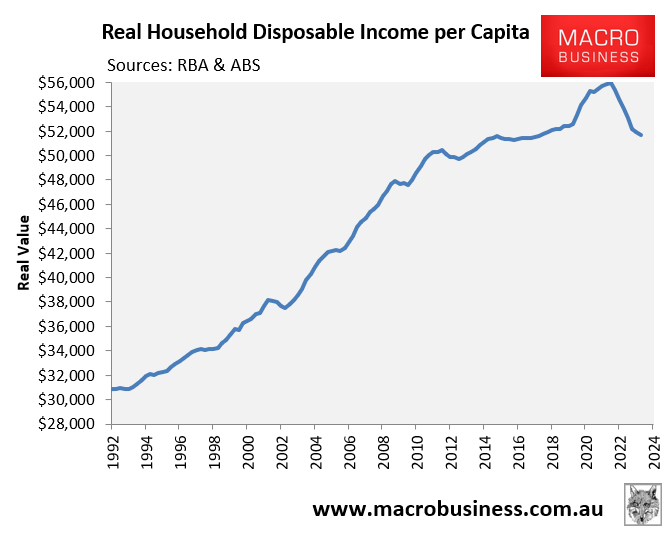
For the café and restaurant scene, this is unfortunately the recession that we had to have.
