
Earlier this year, CBA released data showing how Australians over 60 drove consumption spending across the Australian economy.
As illustrated in the following chart, Australians aged 60 and over increased their spending by more than CPI inflation in the year to March 2024, whereas Australians aged under 60 cut their spending in real terms:
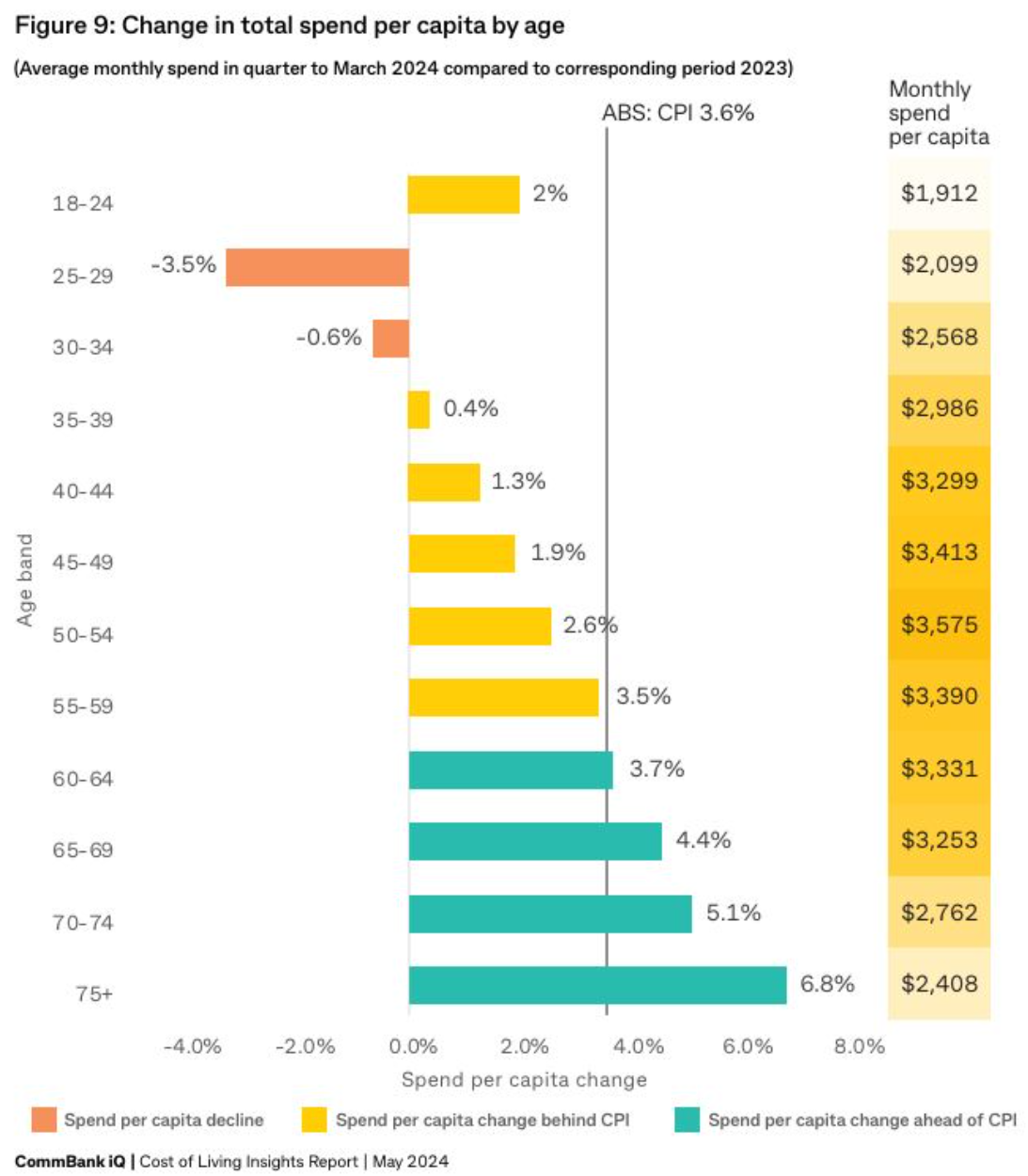
Younger Australians aged between 25 and 34 fared the worst, outright cutting expenditure in the year to March.
Independent economist Tarric Brooker has produced the following chart, taking a longer perspective on household spending:
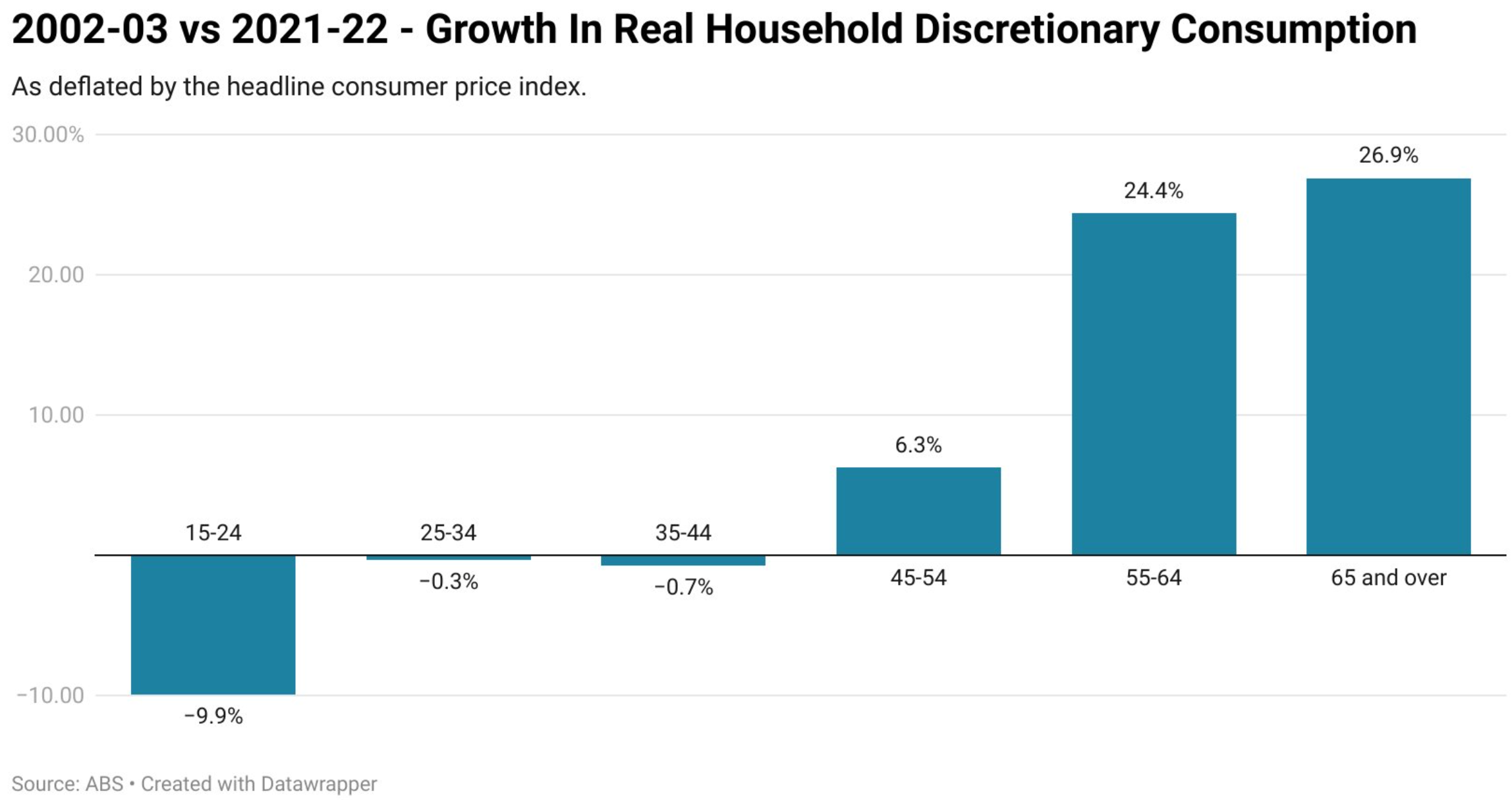
Chart by Tarric Brooker
As you can see, Australians under 45 reduced their real discretionary consumption over the 19 years to 2021–22. And that was before inflation took off, resulting in further cutbacks in spending, as illustrated by the CBA below:
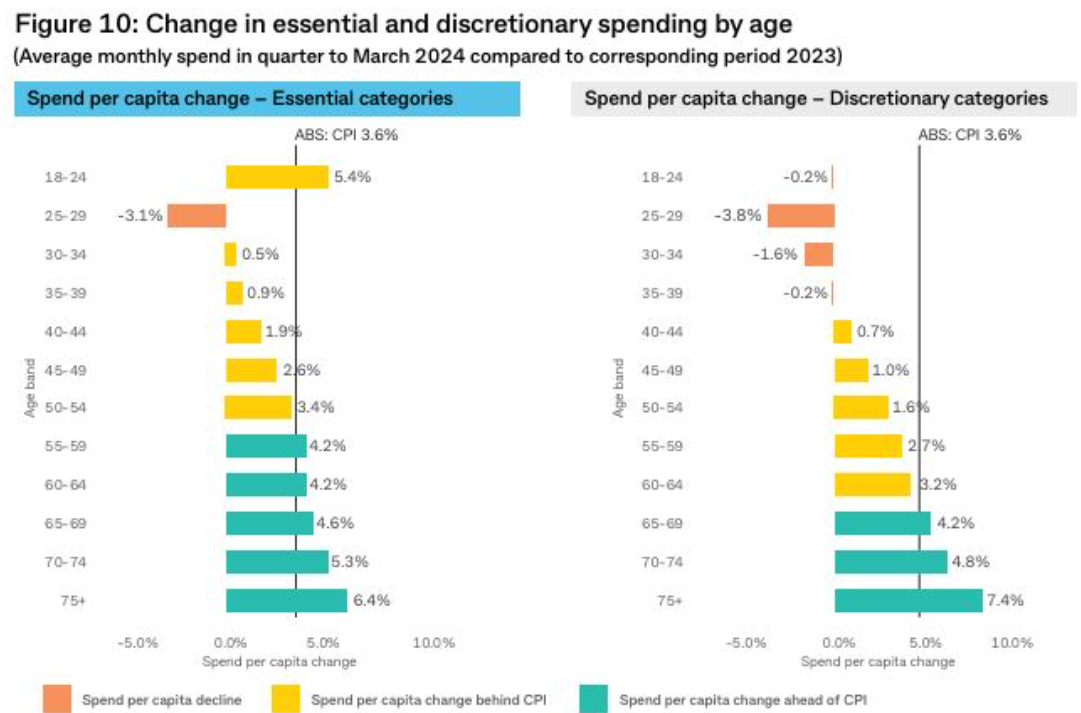
By comparison, older Australians aged 55 and older increased real discretionary consumption the most over the same 19-year period—a phenomenon that has continued into the current cost-of-living shock.
The three faces of Australia:
The Reserve Bank of Australia’s 4.35% interest rate hikes directly impact roughly one-third of owner-occupier mortgage-holding households, particularly Generation Xers and Millennials with small children.
They have seen their mortgage repayments increase by around 50%, while their disposable incomes have decreased at the quickest rate due to inflation and rising living costs.
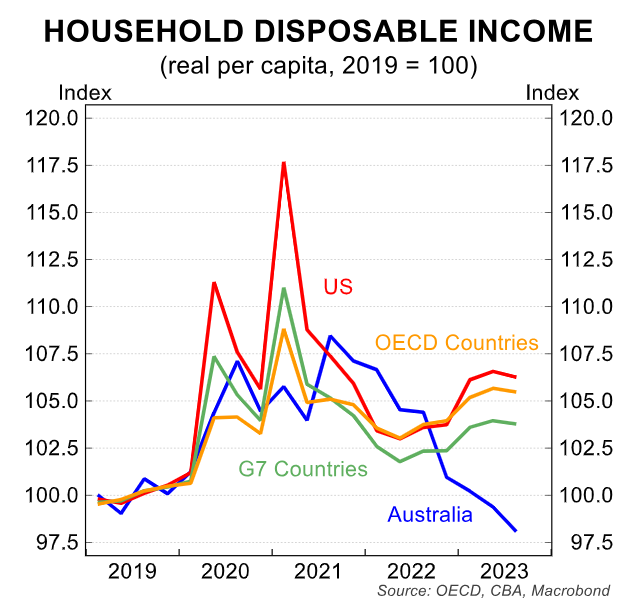
Australians under 35 earn less in real terms than they did in 2008, according to the below chart from Tarric Brooker:
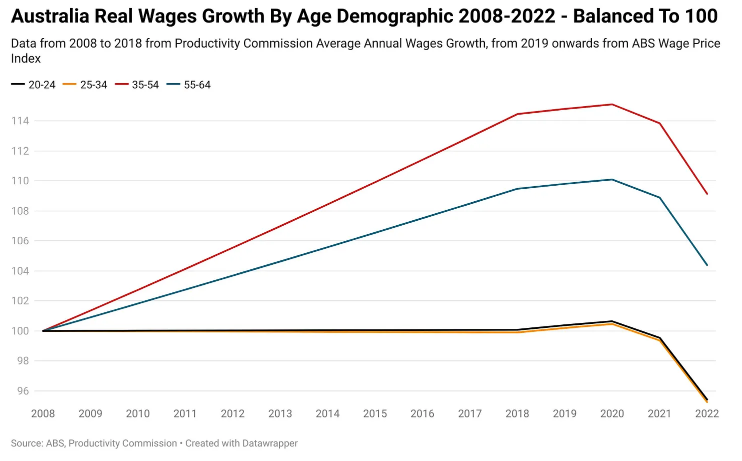
Chart by Tarric Brooker
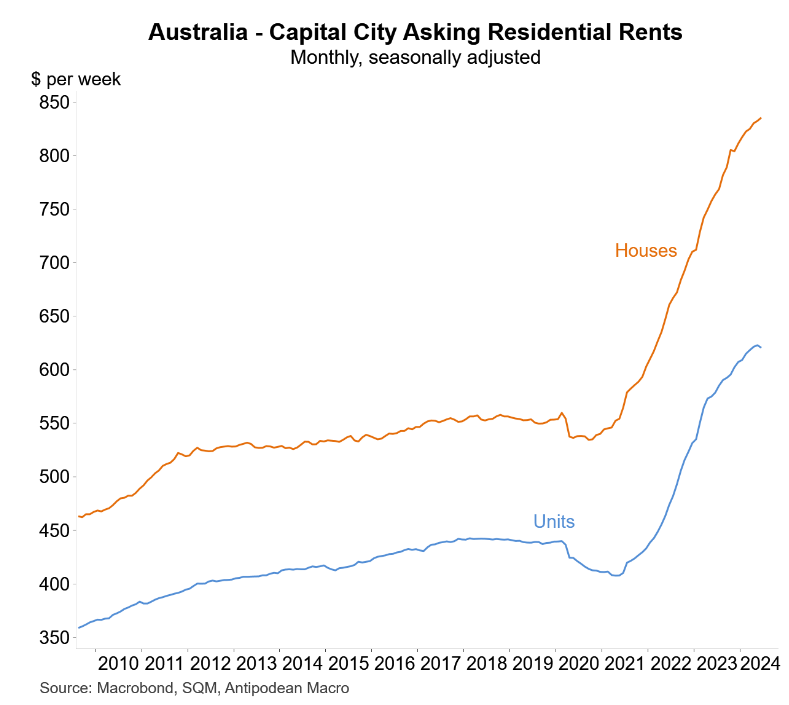
Another one-third of (mostly young) renting households are negatively impacted by hyperinflationary rents and falling real incomes, lowering their discretionary spending.
The older generations are on the opposite end of the spectrum, led by the baby boomers.
They usually own their homes outright, so rising mortgage rates and rental increases have little impact on them.
Some baby boomers are even profiting from rising rents, as they own a large share of the country’s investment properties (many of which are mortgage-free).
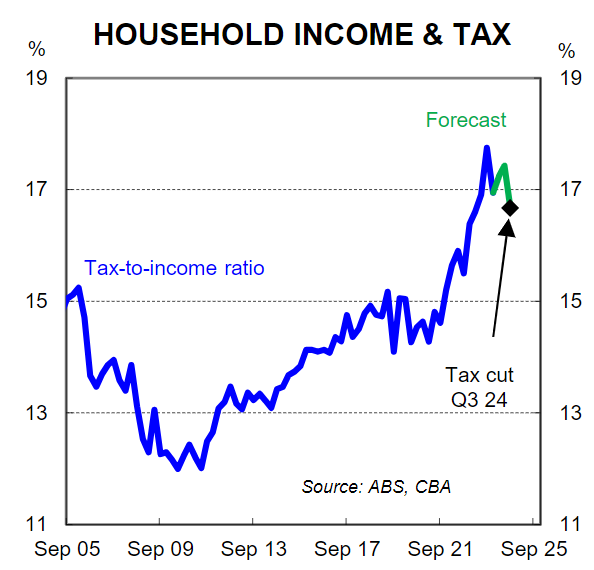
Most older Australians do not work; therefore, they are untouched by increases in income taxes due to bracket creep.
Australians receiving the old age pension also have their payments tied to inflation (unlike workers’ earnings); therefore, unlike workers, their purchasing power has largely been maintained.
Australia requires broad-based tax reform:
The figures above demonstrate why Australia urgently requires tax reform that shifts the base away from productive activities (i.e., taxing labour) and towards more efficient sources such as resources, land, and consumption.
Australia’s tax system is unsustainable, wasteful, and inequitable since it relies on a diminishing share of workers. In contrast, the proportion of taxes collected via indirect sources (e.g., GST and fuel excise) declines.
This is especially true given that the share of older Australians is expanding and paying lower taxes than ever, despite controlling most of Australia’s wealth.
