
Australian renters received some good news in June, as rental growth slowed and the vacancy rate increased for the fourth consecutive month.
CoreLogic reported that rental growth slowed to 0.4% in June, which was the slowest rate of monthly growth since September last year:
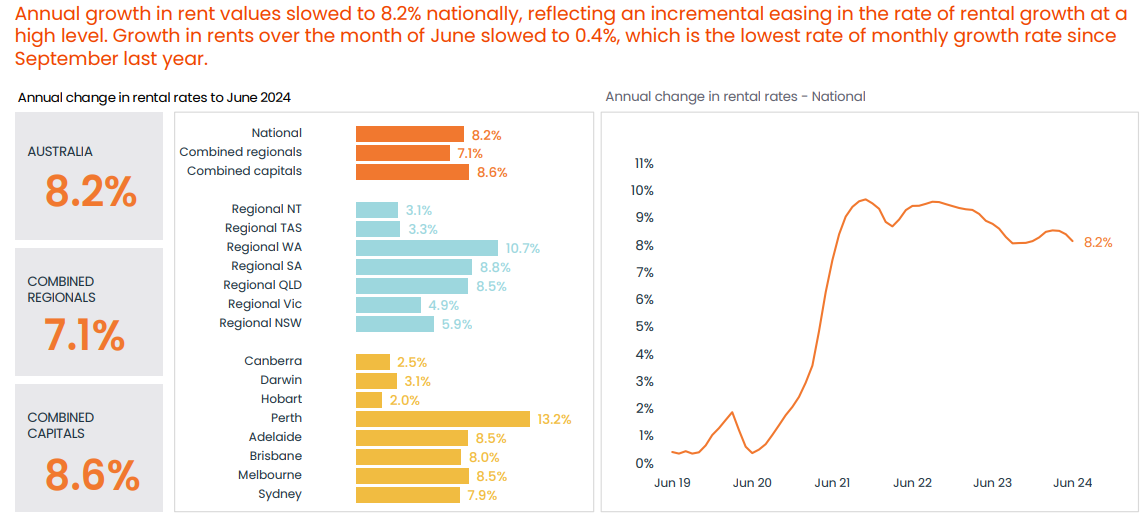
Source: CoreLogic
PropTrack also reported that “Australia’s rental vacancy rate has now eased for four consecutive months, rising from a record low of 1.09% in February to 1.42% in June”.
The slowing of rental growth coincides with a slowing of net overseas migration, which peaked in the September quarter of 2023 at a record annual pace of 564,500.
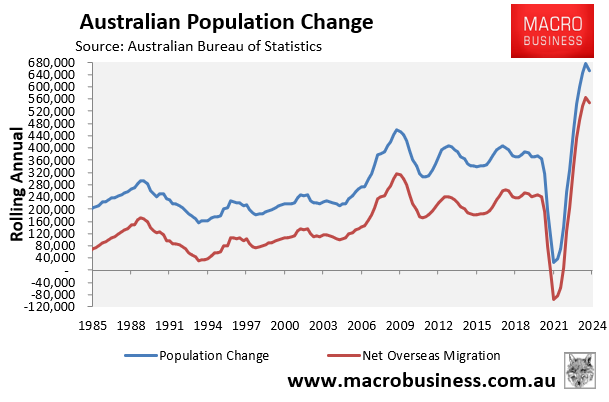
The slowing of net overseas migration has had the biggest influence on the unit markets of the three main capital cities, which are experiencing steeper moderations in rental growth.
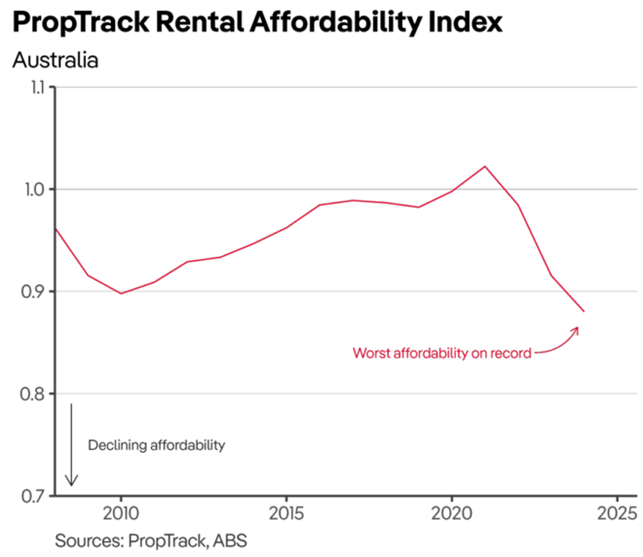
Rents look to be reaching an affordability threshold after rising by roughly 40% since the pandemic began.
PropTrack’s Rental Affordability Report found that “Australia’s rental affordability is at its worst level on record”, with households earning the median income of $111,000 only able to afford to rent the smallest share of dwellings since records began in 2008.
Unlike mortgages, rents cannot be leveraged. This means that rental growth is more directly related to household income, restricting its potential increase.
The rental picture remains grim:
Despite a recent slowing of rental growth and an increase in vacancy rates, the situation facing tenants remains grim.
According to PropTrack, the national vacancy rate remained 43% below pre-pandemic levels in June.
It all boils down to supply and demand.
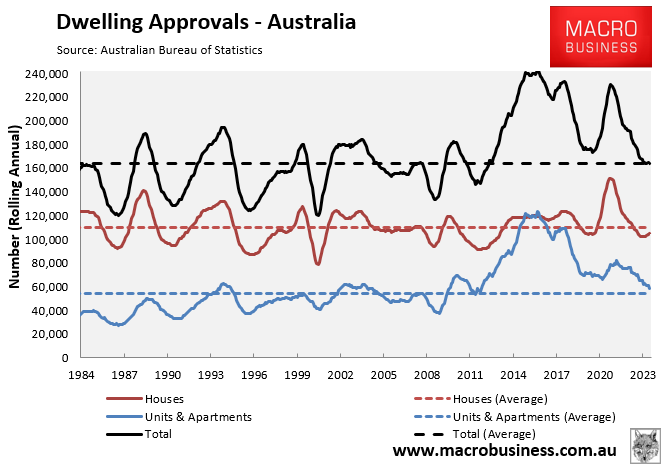
According to the latest data on dwelling approvals from the Australian Bureau of Statistics (ABS), just 13,500 dwellings were approved for construction in May in trend terms:
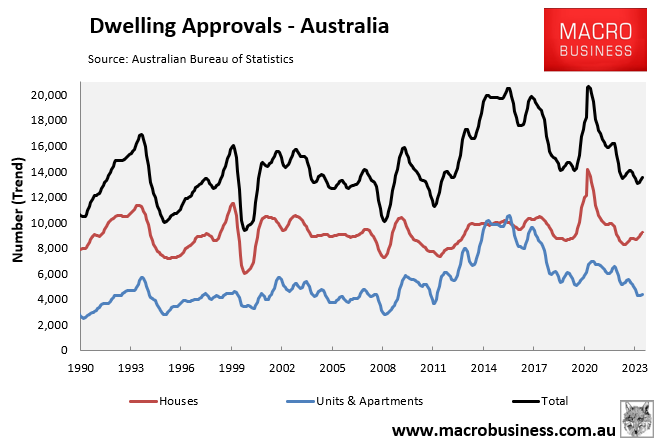
This number of approvals is 6,500 (32.5%) below the monthly run rate of 20,000 required to achieve the Albanese government’s target of building 1.2 million dwellings over five years.
Annual approval rates were no better, with only 163,800 dwellings approved for construction in the year to May, 76,200 (32%) below Labor’s 240,000 annual housing target.
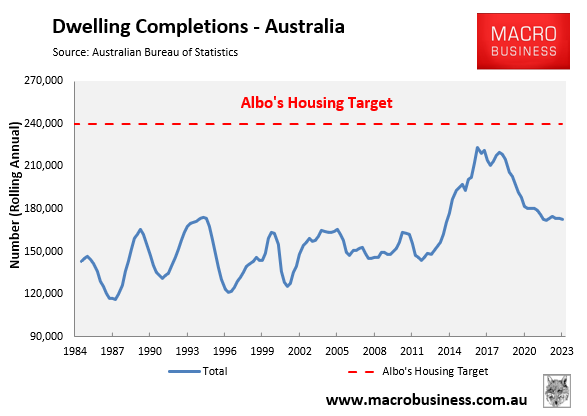
It is important to note that the the Albanese government’s 240,000 housing target has never been achieved before.
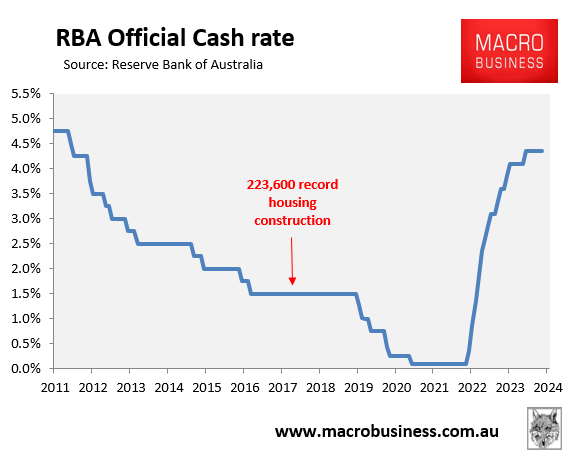
The most dwelling that Australia has ever built in a 12-month period was 223,600 in 2017, which was 7% lower than its current target.
This amount of construction was reached when the official cash rate was only 1.5%, compared to 4.35% currently.
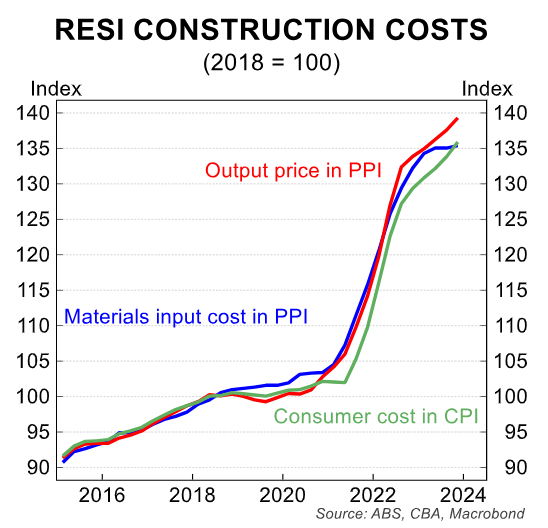
The 2017 record level of construction was also achieved when construction costs were around 40% lower than they are today.
In 2017, the home construction industry did not compete for scarce labour and materials with government ‘big build’ infrastructure projects.
Finally, the most recent insolvency data from the Australian Securities and Investments Commission shows that nearly 3,000 construction enterprises failed in the 2023-24 financial year, implying that productive capacity in the home building industry has been diminished.
In short, macroeconomic conditions are unlikely to improve, and construction rates will likely remain supressed for the foreseeable future.
Meanwhile, continued significant population growth (immigration) will make life harder for Australian renters by exacerbating the demand-supply imbalance.
The chart below from AMP chief economist Shane Oliver shows that Australia’s chronic housing crisis began when net overseas migration more than doubled in the mid-2000s:
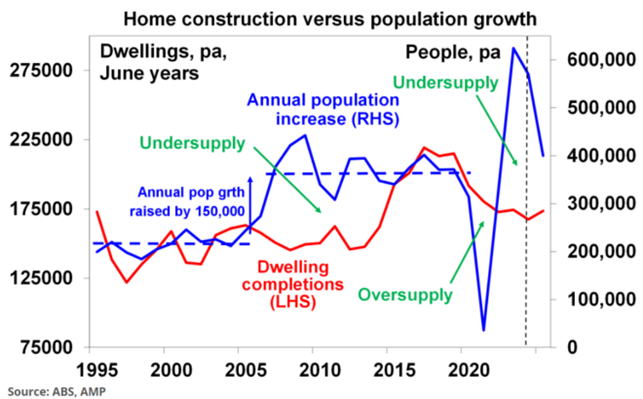
This shortage was nearly eliminated during the pandemic, when net overseas migration momentarily turned negative.
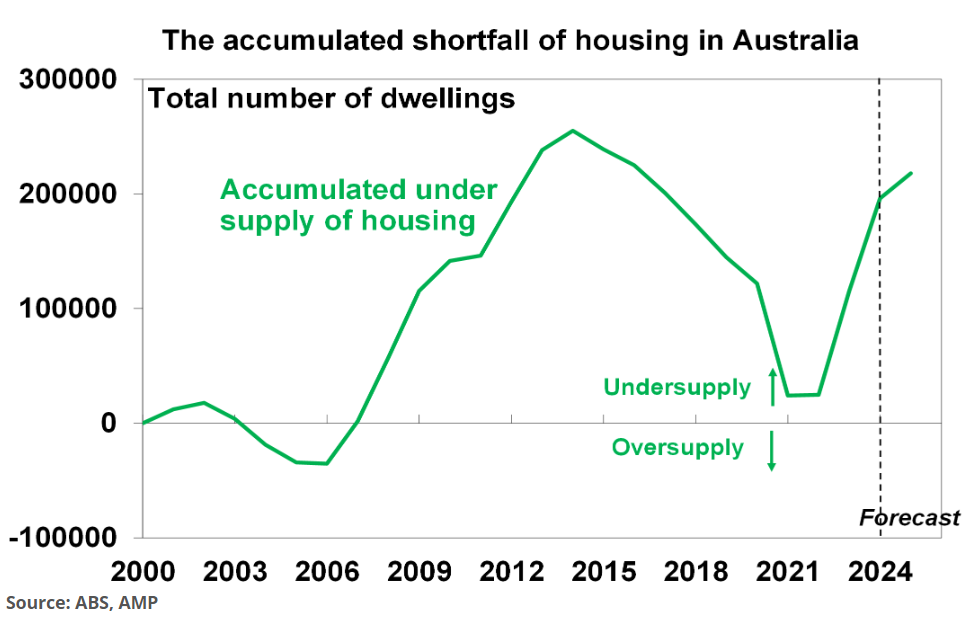
However, the housing shortage exacerbated once again after the international border reopened, with roughly one million net migrants arriving over two calendar years.
According to Shane Oliver, Australia’s structural housing shortfall has risen to roughly 200,000 units, and it will continue to worsen as population growth through net overseas migration outpaces new housing supply.
However, Oliver stated that his shortage estimate is conservative.
“If the decline in the average number of people per household seen in the last few years is sustained then the accumulated shortfall could be around 300,000 dwellings”, Oliver wrote in June.
This “would be well above where we were before the unit building boom got underway around 2015″, he added. “The housing shortfall looks like it will get worse before it gets better”.
Cut immigration, or the rental crisis will become permanent.
The only real solution to Australia’s housing shortage and rental crisis is for the federal government to reduce net overseas migration.
To address the cumulative housing deficit, net overseas migration must be lowered to a level below the country’s ability to produce housing and infrastructure.
However, the 2023 Intergenerational Report predicted that net overseas migration would continue at a rate of 235,000 per year indefinitely, growing the country’s population to 40.5 million in just 39 years—equivalent to adding another Sydney, Melbourne, and Brisbane to the existing population of 27 million.
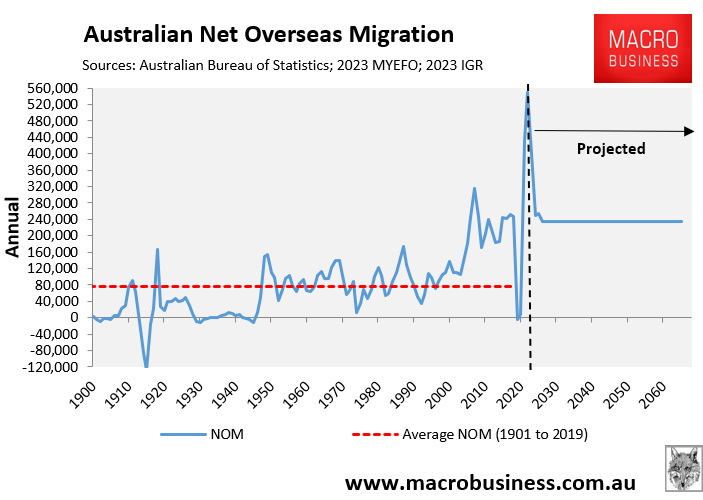
Such excessive immigration will ensure that Australia has a permanent housing shortage, putting upward pressure on rents.
