
CBA’s latest Household Spending Insights (HSI) report contained the following chart tracking household spending across home ownership status:
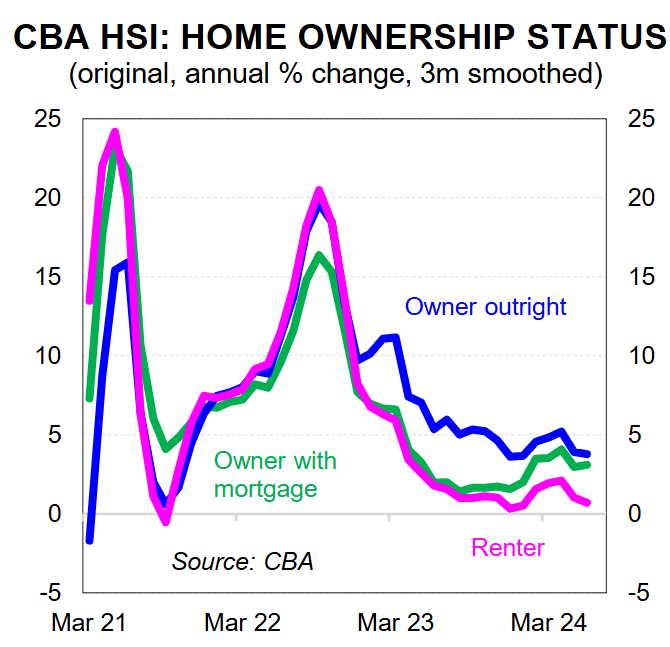
As you can see, aggregate spending by renters has lagged behind their home owning counterparts since late 2022, with the difference growing over the past year.
In the year to June 2024, spending by renters declined by 0.9%. By contrast, spending by owners with and without a mortgage rose by 1.5% and 2.1%, respectively.
A similar pattern has arisen with consumer confidence:
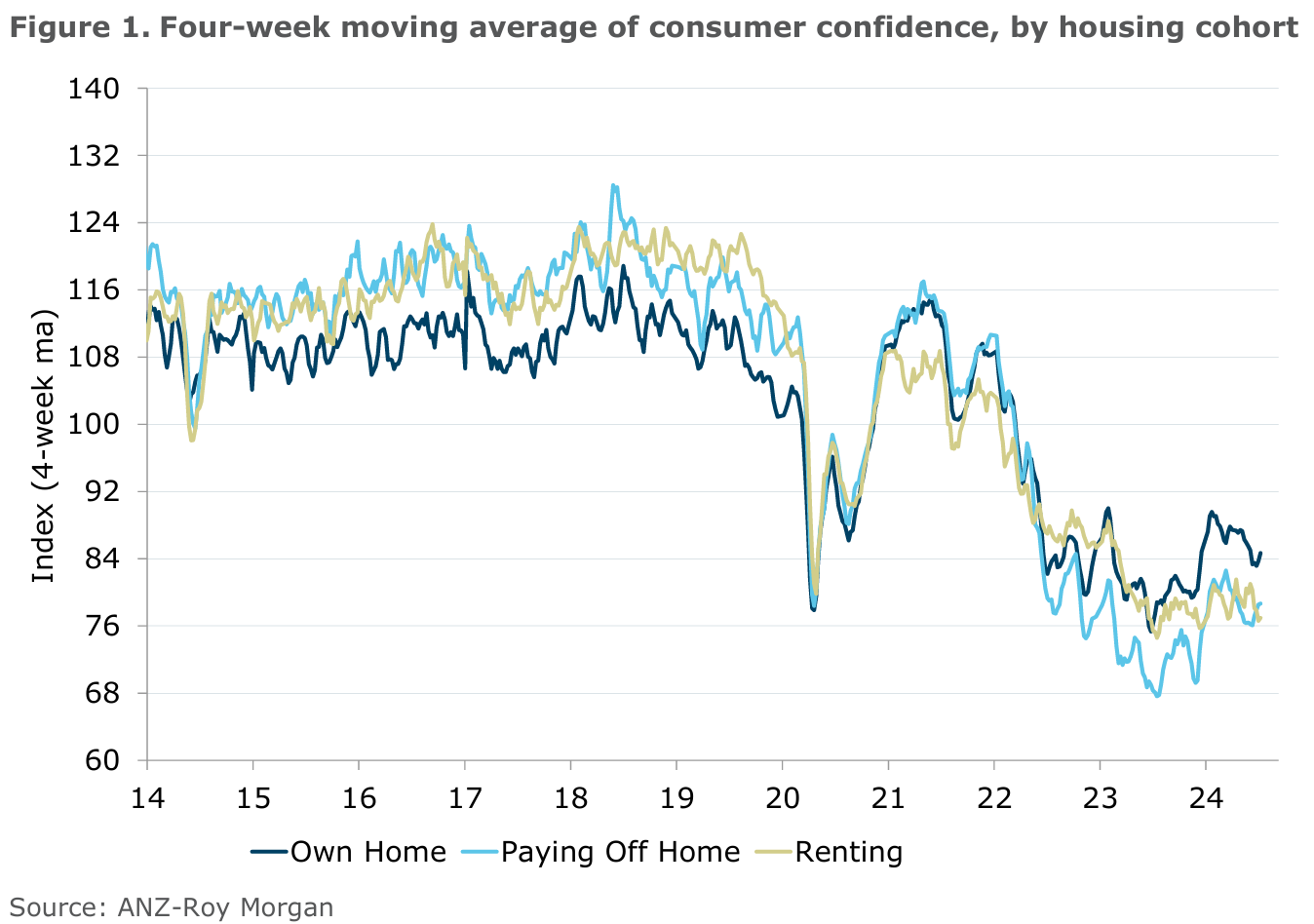
The ANZ-Roy Morgan consumer confidence survey shows that confidence is lowest for renters, followed by owners with a mortgage. By contrast, home owning households without a mortgage have the highest levels of confidence.
The collapse in confidence and spending among renting Australians makes sense given the circa 40% rise in median asking rents since the beginning of the pandemic:
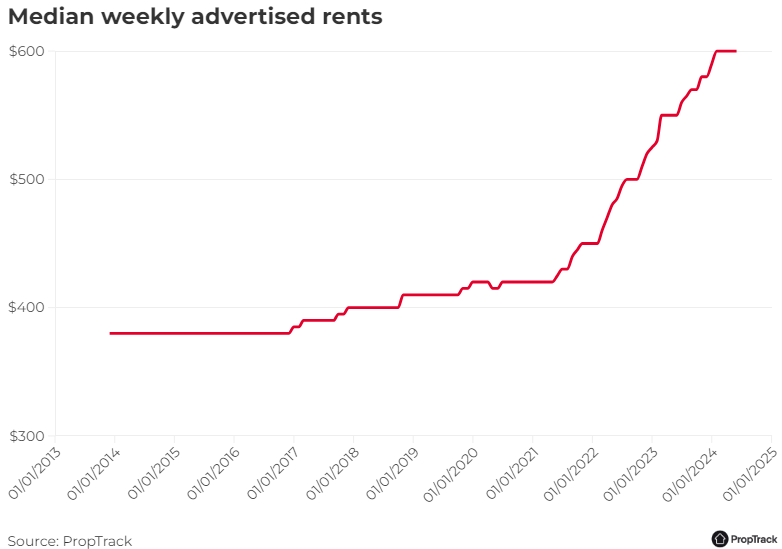
This surge in rental costs has drained disposable income. It has also disproportionately harmed younger Australians, who are more likely to rent.
Separate spending data from CBA shows that younger Australians have cut back hard on spending, whereas older Australians aged over 60, who are more likely to own their homes outright, increased their spending above the rate of CPI in the year to March:
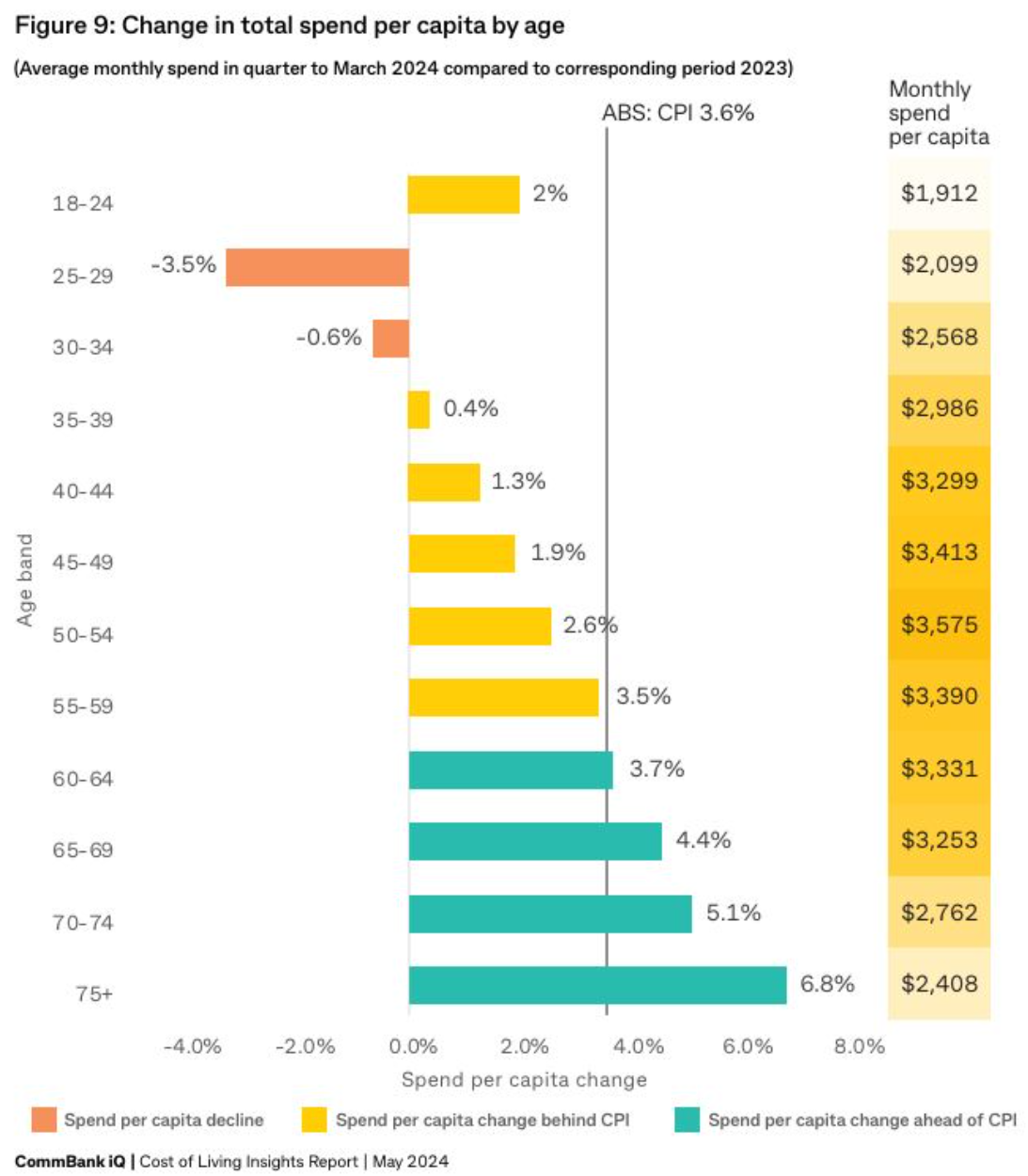
Younger Australians cut back particularly hard on discretionary spending, whereas older Australians spent freely:
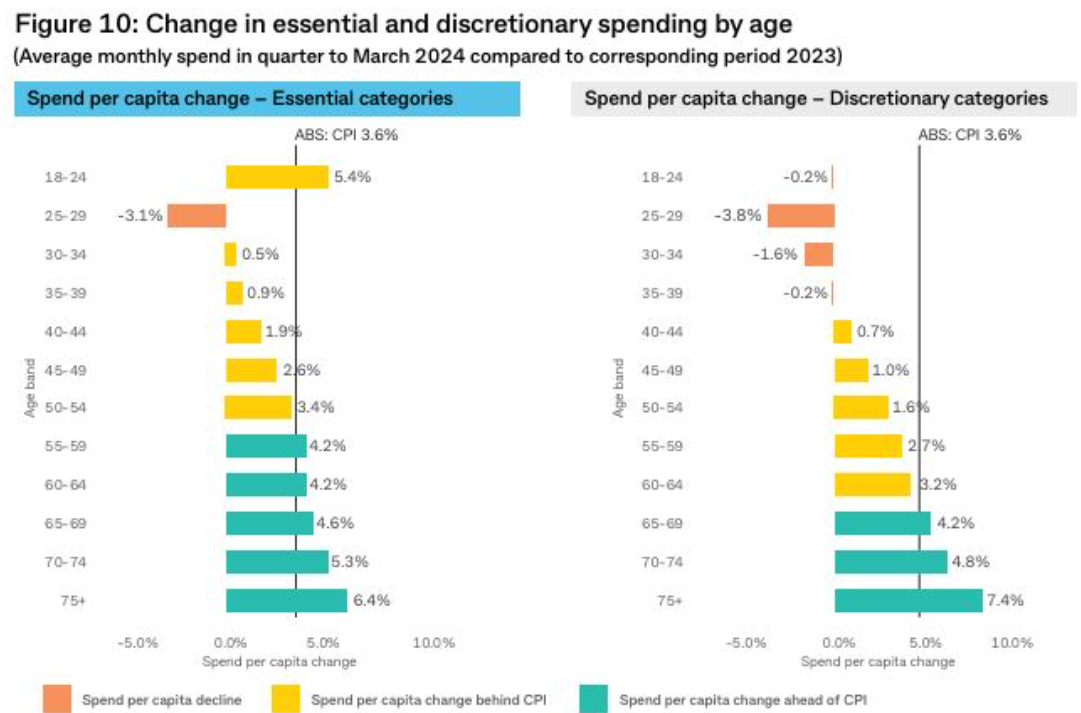
The above data shows how Australia has become split along home ownership lines, with younger renters faring the worst and older, mortgage-free home owners faring the best.
