
Younger Australians’ pain is baby boomers’ gain
Economist Chris Richardson penned a thread on Twitter (X) that neatly explains how the Reserve Bank of Australia’s (RBA) interest rate hikes have punished younger Australians with mortgages and enriched older Australians:
“Since the RBA began raising rates, the cost to families of interest payments have gone up by 3.0% of national income, but the interest earnings of families have gone up by 2.2% of national income”, Richardson wrote.
“That’s a big part of why young families are severely squeezed, while better-off retirees are becoming even better off”.
I have explained previously how there are three Australia’s at present.
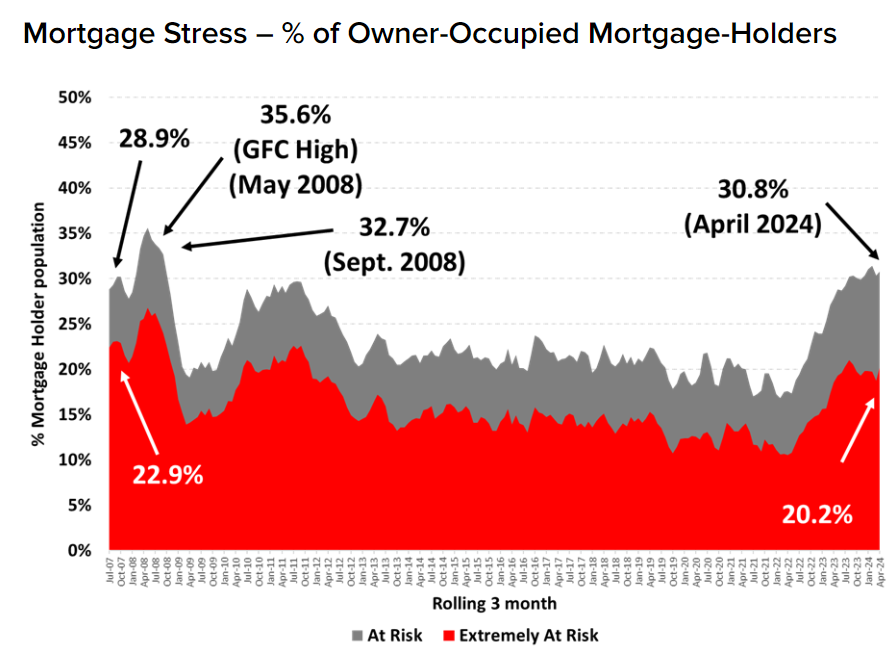
Following the RBA’s 13 interest rate hikes, roughly one-third of Australians are suffering from the sharp increase in mortgage repayments:
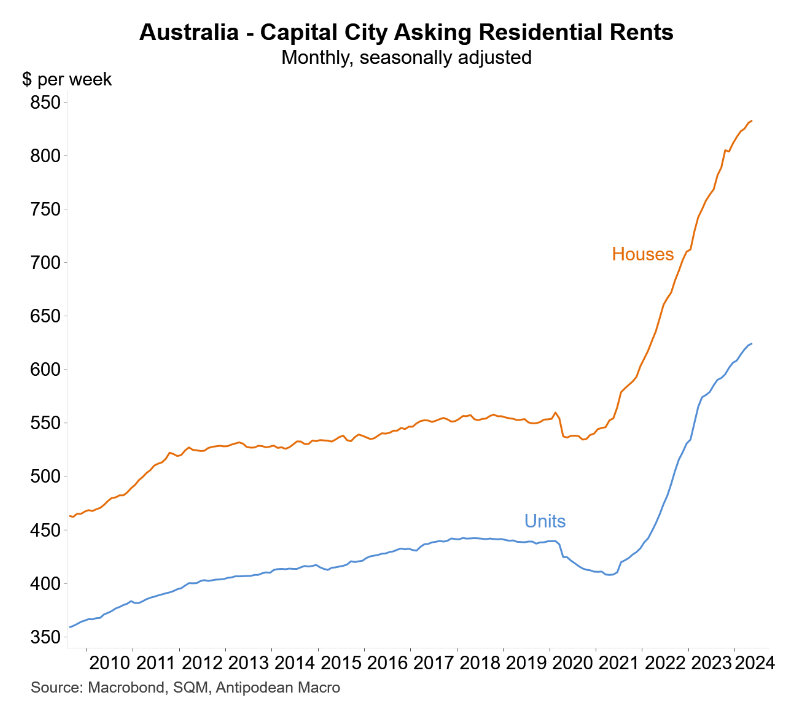
Roughly another one-third of Australians are suffering from the hyperinflation of rents brought about by the federal government’s mass immigration program:
The fortunate other third are those who own their homes outright and are therefore not suffering from the rising rents and mortgage payments.
The wealthy baby boomer generation dominates this group. Many in this cohort are also benefiting from higher investment returns on their savings and investments.
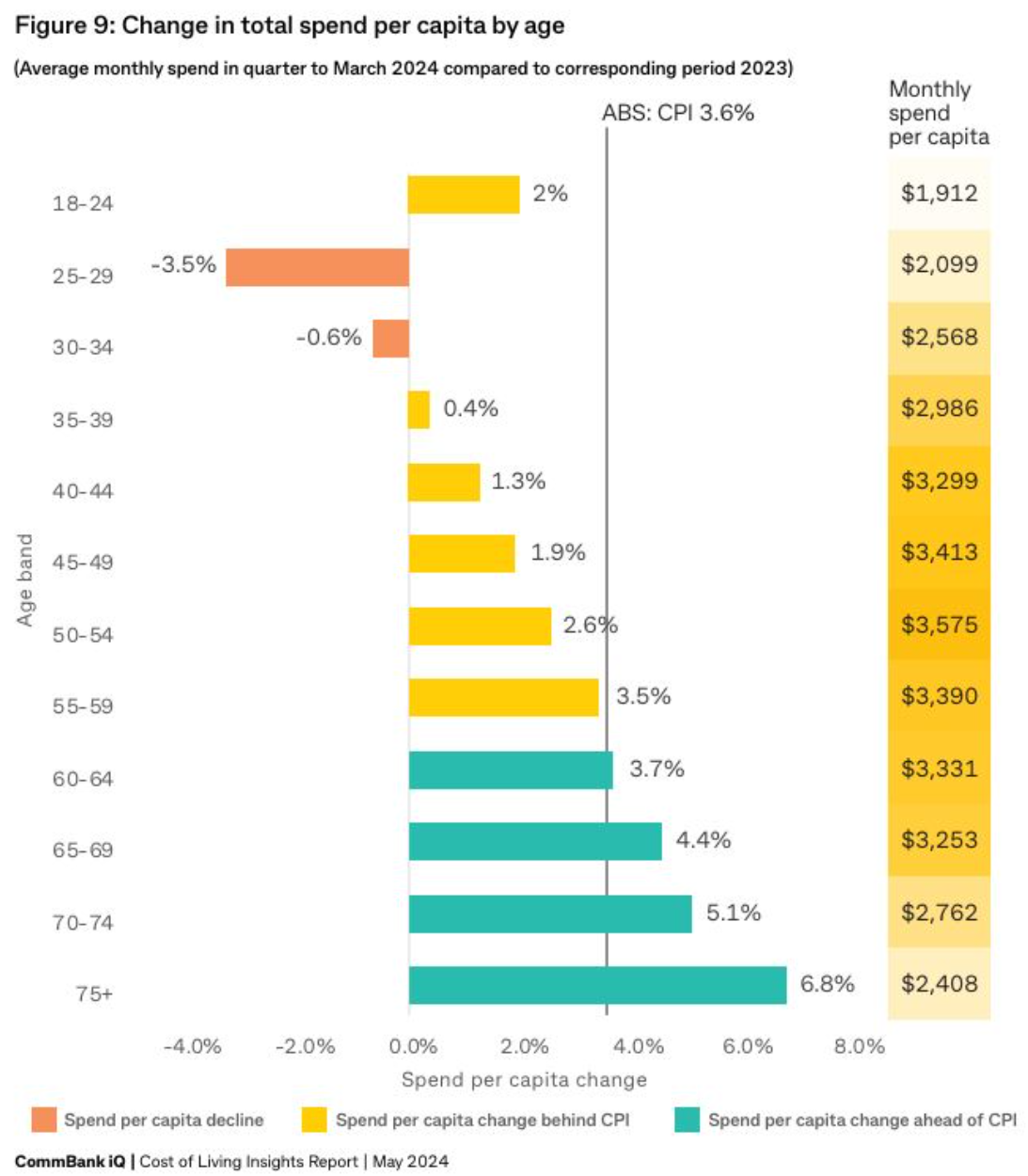
The latest spending data from CBA supports this view. As illustrated in the next chart, Australians aged over 60 have increased their spending above the rate of CPI in the past year, whereas younger Australians have cut back hard on spending:
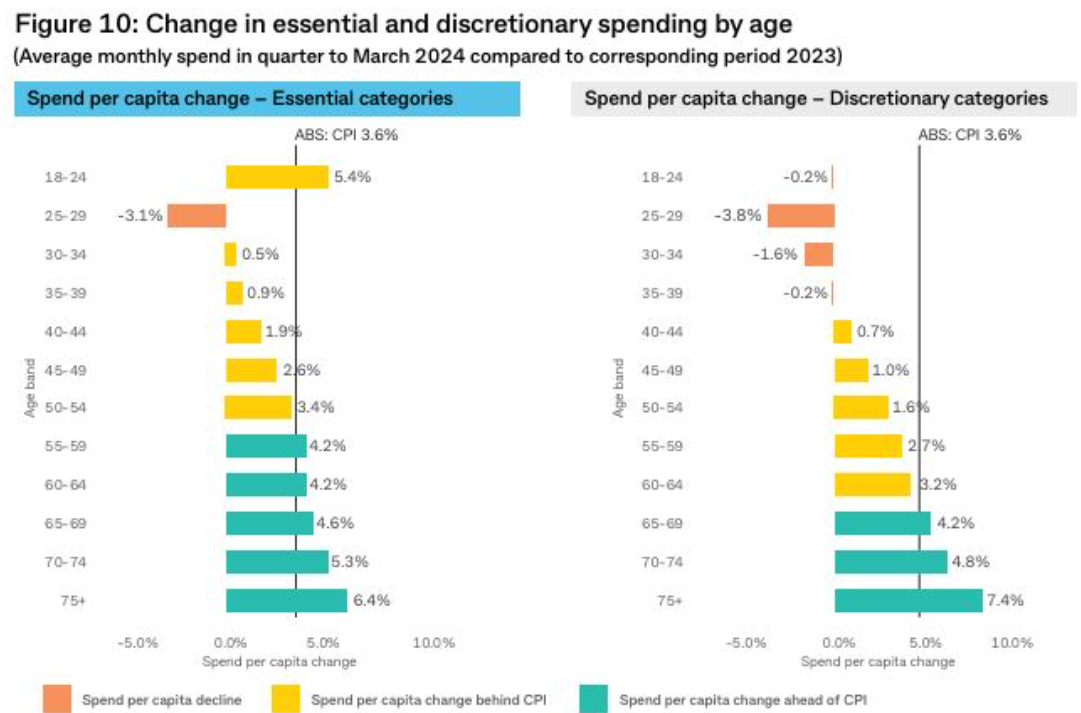
Younger Australians have pulled back especially hard on discretionary spending, whereas older Australians are spending freely:
Young Australians’ pain is baby boomers’ gain
