
Too early to panic on inflation and interest rates
This morning, ABC Brisbane’s Cathie Schnitzerling interviewed me. I discussed the ABS’s May monthly CPI inflation numbers, which were stronger than expected.
In the interview, I discussed some of the key inflation drivers and explained how the federal government’s energy policy failures are contributing to Australia’s ‘sticky’ inflation problem.
I also explained how the RBA will wait to see the outcomes of the next two monthly retail sales readings, the June labour force data, and most importantly, the June quarter CPI inflation result before making a decision on rates.
Edited highlights:
On 31 July, the ABS will receive the next quarterly inflation reading. And that’s the one that the Reserve Bank is going to be looking at most closely.
So, while inflation is certainly not going in the right direction, based on this result, it is important to note that the Reserve Bank has a whole bunch of data releases that come out between now and its next board meeting on the 6th of August.
While the RBA will be a little bit alarmed by these figures, it will wait for the next quarterly CPI release and those other measures to see which way it goes on rates…
The problem that the Reserve Bank has is that it only has one blunt tool, which is interest rates. And those interest rates really only impact about one third of Australians – i.e., Australians with owner-occupier mortgages.
So, effectively, the Reserve Bank is smashing one-third of Australians to try and bring down inflation on behalf of all Australians.
Another problem is that we have hyperinflation in rents and we have strong inflation in building costs. We also have high energy prices.
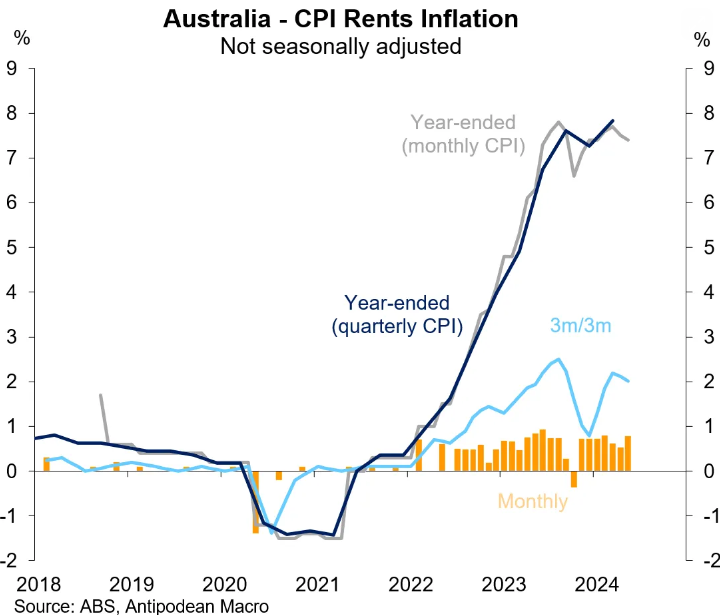
What we really need is for the federal government, which has many levers at its disposal, to help the Reserve Bank out and to bring down inflation with policy. The federal government can do so in a number of ways.
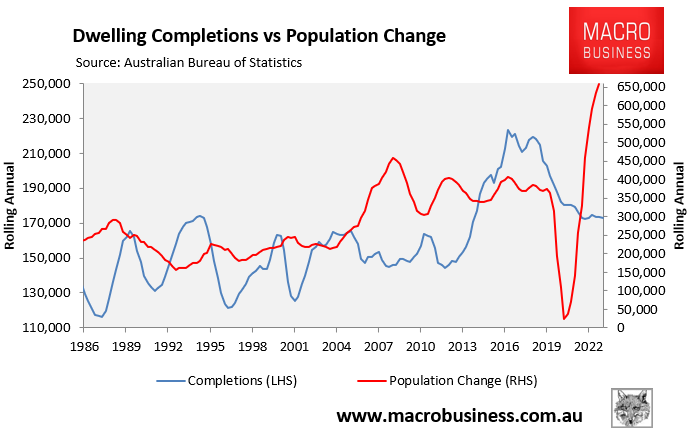
One of the main drivers of Australia’s inflation is housing—both rents and construction costs. Nearly one quarter of the inflation basket is housing-related.
I’d argue that the main driver of housing inflation is excessive immigration. We are bringing in near record numbers at the same time as we can’t build houses. And that is obviously driving the massive rise in rents that we are experiencing across the country.
The other area that the federal government needs to fix is energy.
Queensland, for example, is an energy superpower. It has unbelievable amounts of gas and coal. It is swimming in energy resources.
Yet, Queenslanders, if you exclude the state government subsidies, are paying some of the highest energy prices in the world. You are paying unbelievably high gas prices when you export almost all your gas overseas. And high gas prices then feeds into high electricity prices.
The reason for that is because the federal government approved the LNG export terminals in Gladstone without any domestic reservation.
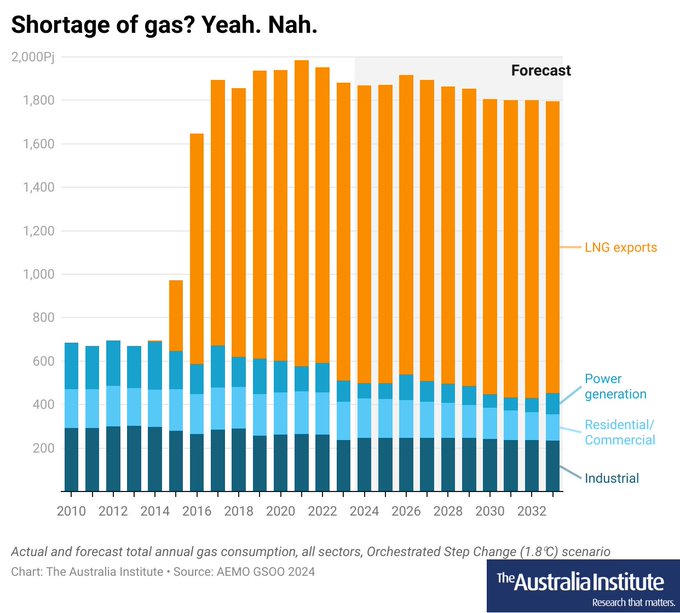
The East Coast of Australia is the only jurisdiction in the world that exports gas and doesn’t have a reservation scheme in place.
As a result, we have been left with a situation where we have an artificial shortage domestically, prices are extremely high, and we are paying some of the highest prices in the world despite exporting more than two-thirds of our gas overseas.
As a counterpoint, Western Australia is a separate gas market and exports over 80% of its gas. Yet, they have cheap gas and electricity prices because they have a domestic reservation scheme in place. This scheme ensures that Western Australians pay low prices and have abundant gas supplies.
The federal government has failed the East Coast on gas. And that is one of the reasons why Australia has sticky inflation. They have failed on energy and housing by running a high immigration program.
