
RBA caught between rock and hard place on interest rates
Over the weekend, I was interviewed by Luke Grant at Radio 2GB where I explained how the Reserve Bank of Australia (RBA) is caught between a rock and a hard place on interest rates.
Essentially, the RBA’s job is to balance price stability with full employment. Therefore, it is caught between stubborn CPI inflation on the one hand and a deteriorating economy on the other.
Edited Highlights:
The Reserve Bank of Australia is caught between a rock and a hard place on interest rates.
This week, we received data on retail sales for April, which collapsed to their lowest level in more than three decades in annual growth terms outside of the brief pandemic lockdown.
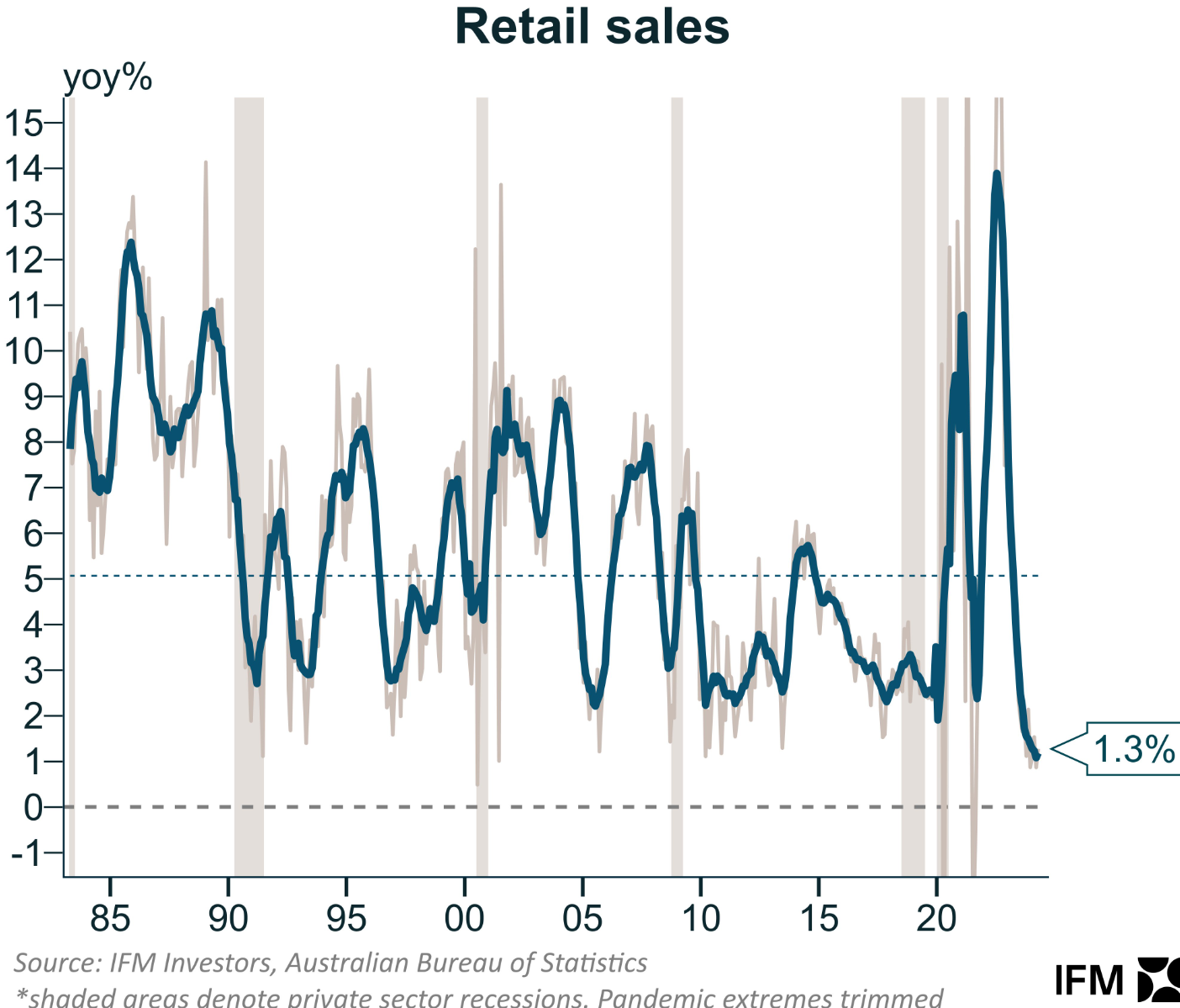
Annual retail sales grew by only 1.3% in the year April. And that’s way below CPI inflation of 3.6% and population growth of nearly 2.5%.
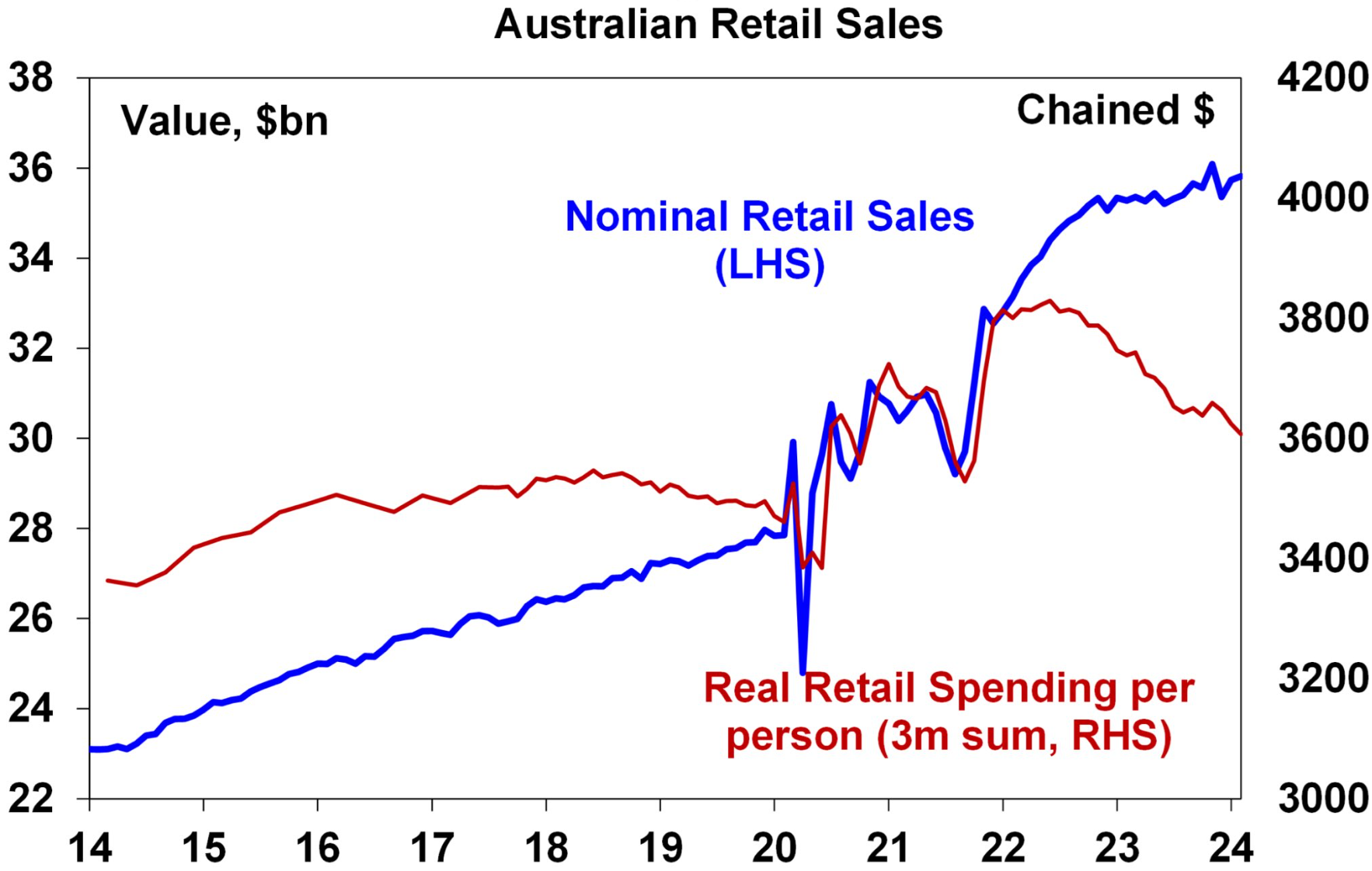
That means in per capita terms, once you adjust out inflation, retail sales are collapsing and this has basically continued the long run of weak economic data we have had over several months.
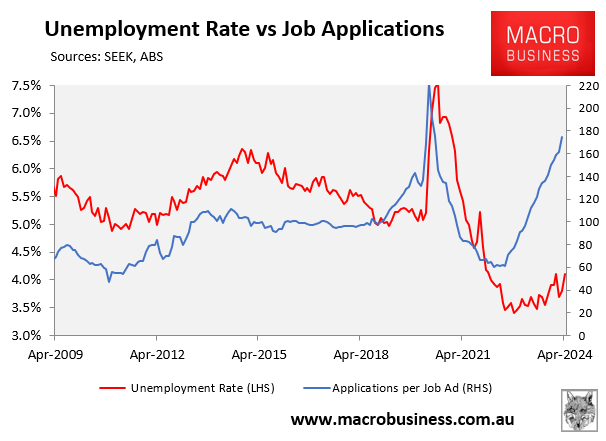
This includes the rising unemployment rate and the deteriorating labour market in general.
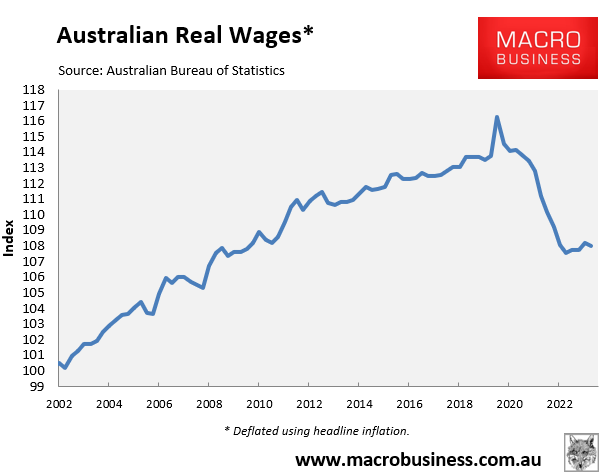
We have also seen falling real wage growth and most business activity indicators are really weak, which are a forward cast of the economy.
This coming week, we are going to get the March quarter national accounts for Australia, which is shaping up to be an absolute shocker.
Economists are tipping that the economy will barely have grown Q1 despite this turbocharged population growth.
Economists are tipping that annual GDP growth in Australia is going to fall to its lowest level since the early 1990s recession, outside of the brief lockdown during the pandemic, despite the fact that Australia’s population is growing at its fastest rate in more than 70 years, since about 1952.
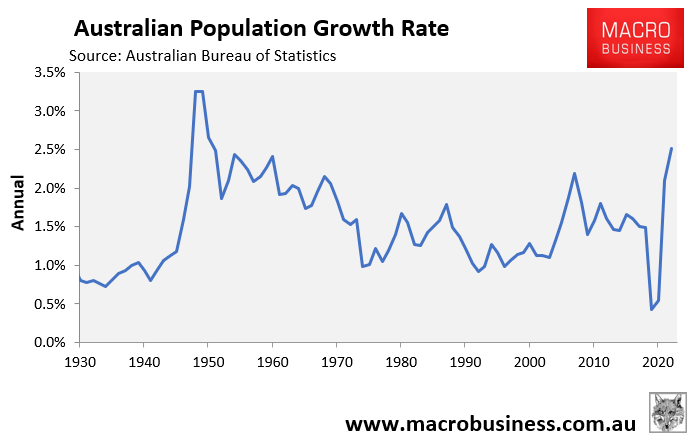
What this means is that Australia’s per capita economy is collapsing and that we have a really deep per capita recession that would normally prompt the RBA to slash interest rates.
However, this week we also received the monthly CPI indicator for April, which printed at 3.6% annual growth, which is a bit worse than what economists were expecting.
Economists tipped CPI inflation of 3.4%, but it came in at 3.6%. And core inflation—that’s basically where they strip out the most volatile items—rose marginally to 4.1% from 4.0% in March.
So, we have a poor economy, which is going backwards fairly quickly in per capita terms. The economic pie is growing very slightly because of this absurd population growth, however, everyone’s slice of the pie is shrinking at an alarming rate.
The annual economy is growing at its poorest rate since the early 1990s recession, despite the fact we have this 70-year high population growth. That would normally scream rate cuts.
The problem is that we have slightly higher inflation than we were expecting, which has prompted some economists to say that the RBA is going to hike rates.
However, after the poor Q1 national accounts come out this week, they will be calling for rate cuts.
The RBA is getting pulled and pushed at the same time. They are trying to weigh up the slightly higher inflation, which should mean rate hikes, with the collapsing economy, which should mean rate cuts.
This means that the RBA is going to keep rates on hold for the foreseeable future, in my view.
