Treasury Secretary Steven Kennedy contends that so-called ‘bracket creep’ has helped to reduce inflationary pressures in Australia over the last three years.
He has used an Australian Business Economists speech to argue that bracket creep has contributed significantly to the tax system’s automatic stabilising influence over the last three years.
His comments came as official ABS data released last week showed that the inflation rate edged up to 3.6% in April.
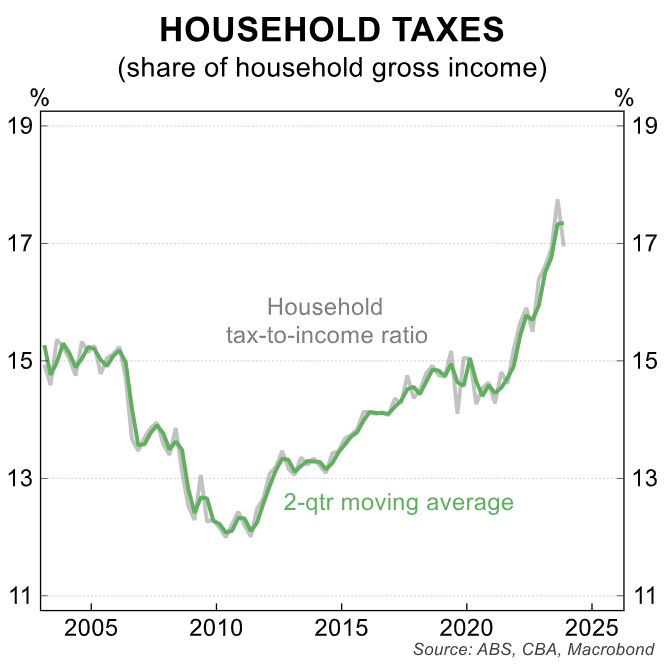
They also follow comments by former RBA senior official and current Westpac chief economist Luci Ellis, who suggested tax thresholds should be raised by 2.5% per year—the midpoint of the central bank’s inflation target zone—to prevent bracket creep.
“Bracket creep has been a helpful stabilising force over the past three years, contributing significantly to the automatic stabilising influence of the tax system”, Kennedy said.
“This stands in stark contrast to the US, for example, where the indexation of income tax brackets has worked against monetary policy and been pro-cyclical”.
“Not indexing income tax brackets, within a medium-term fiscal framework, allows fiscal authorities to both assist in the management of business cycles and ensure fiscal sustainability”, he said.
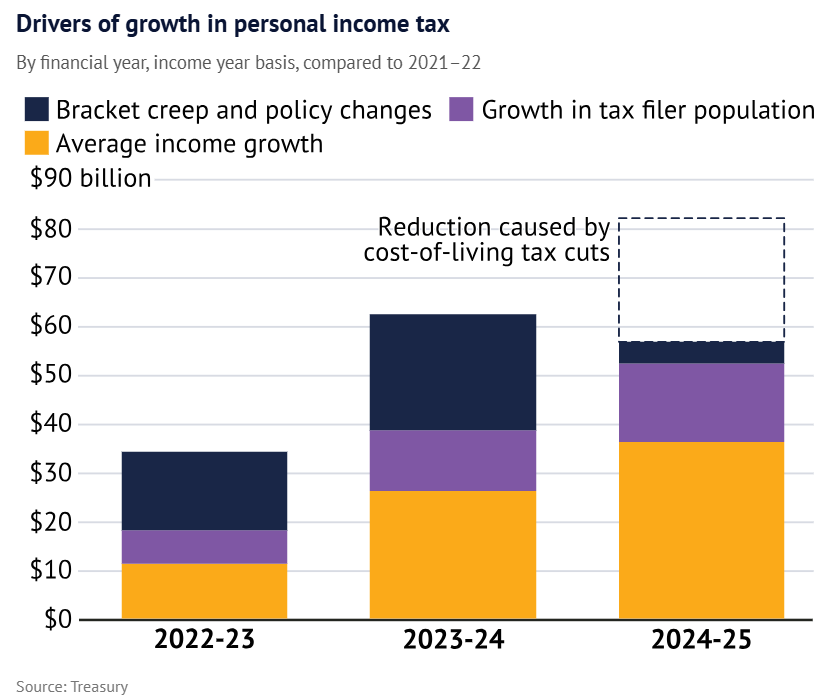
Steven Kennedy does have a point about bracket creep reducing the spending power of wage earners.
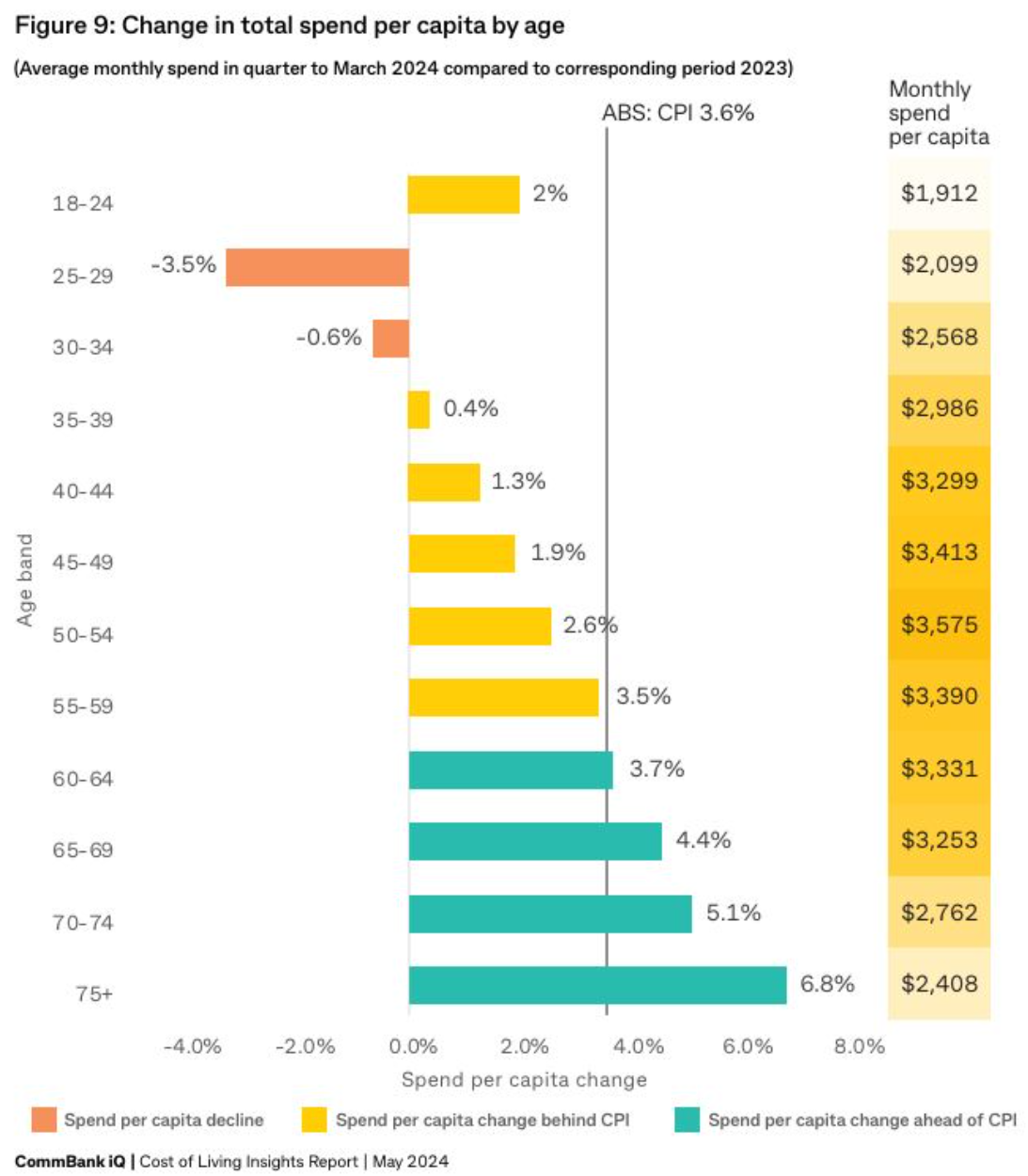
However, there is a large cohort of wealthy retired Australians who are insulated from rising interest rates and soaring rents because they own their homes.
These older Australians also do not pay income taxes and are spending like drunken sailors, which in turn is juicing inflation:
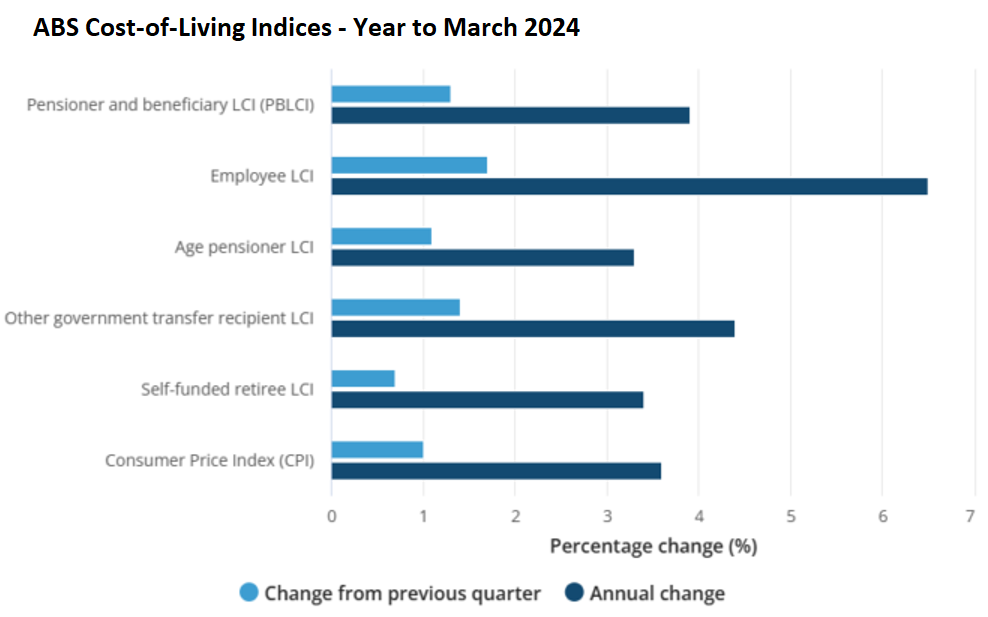
Older Australians’ cost of living rose by only 3.4% in the year to March, according to the ABS. This was 3.1% less than the 6.5% cost of living increase suffered by working Australians:
The above facts illustrate why Australia should raise the GST rate to 15%.
This would bring wealthier older Australians into the tax net, lessen reliance on personal income taxes, and slow spending and aggregate demand (other things remaining equal).
Equity concerns, such as the effects on low-income earners or Australians on fixed incomes, could be addressed through direct fiscal transfers or rebates to these groups.
Raising the GST in this manner would undoubtedly be more equitable than perpetually penalising one-third of Australians with owner-occupier mortgages with higher interest rates and punishing working Australians with forever higher income taxes.
The tax system as it stands now is an all-out war on young people and working Australians.