Bernard Keane of Wokey was full of climate hot air yesterday:
The Coalition’s formal position now is to go to the next election with a worse climate policy than Tony Abbott. Peter Dutton — apparently unilaterally, and certainly without the agreement of the joint partyroom — has not merely walked away from Labor’s 43% emissions reduction target for 2030, but will have no target of any kind for 2030.
It also means withdrawing Australia from the Paris Agreement, regardless of what Dutton or his media unit at The Australian insists.
But more to the point — a point widely missed — in doing so, Dutton has also dumped the 2030 target that was in place under three Liberal Prime Ministers: the 26-28% target agreed upon by Tony Abbott for Australia to take to the Paris climate talks in 2015.
Whether Dutton’s nuclear gambit makes sense is an open question. I don’t think so because it is so expensive. And his talk about using gas in the interim does not include any domestic reservation commitment so is useless on price.
The bigger question, however, is why these vague policy ideas are gaining traction with the polity:
Voters are split on Peter Dutton’s controversial proposal to abandon Australia’s 2030 emissions reduction target, despite rejecting his plan to wait at least 15 years for nuclear power to help achieve net zero by 2050.
The latest Guardian Essential poll of 1,181 respondents suggests Labor’s efforts to boost renewable energy are popular, but the Albanese government is vulnerable to a Coalition campaign focusing on the scale of Australia’s ambition to fight global heating.
The reason for this frustration with climate policy is the epic failures of the Albanese Government.
Albo came to power just as a once per lifetime gas crisis rocked the world after Russia invaded Ukraine.
This sent Australian gas prices from a historical average of $3Gj as high as $70Gj.
It also triggered a wild electricity price shock:
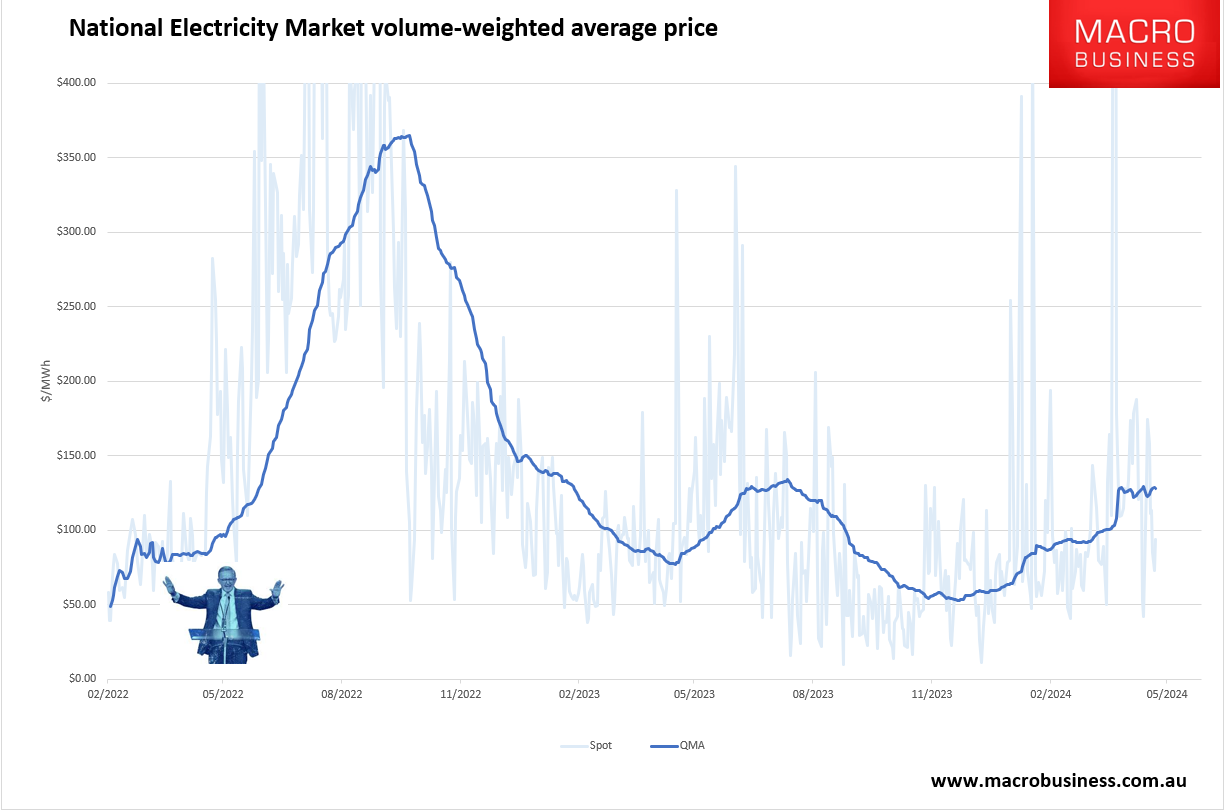
This was the most fantastic opportunity we will ever have to advance climate policy by forcing the gas export cartel to heal.
Either domestic reservation or export levies would have permanently dislocated the local gas (and electricity) price from international shocks thus freeing gas as the transitional fuel at home, crashing energy prices and advancing renewables.
Instead, Albo did nothing for eight months while gas cartel war profiteered then opted for a $12Gj price caps that he has abjectly failed to enforce. The price is sitting at $18Gj today:
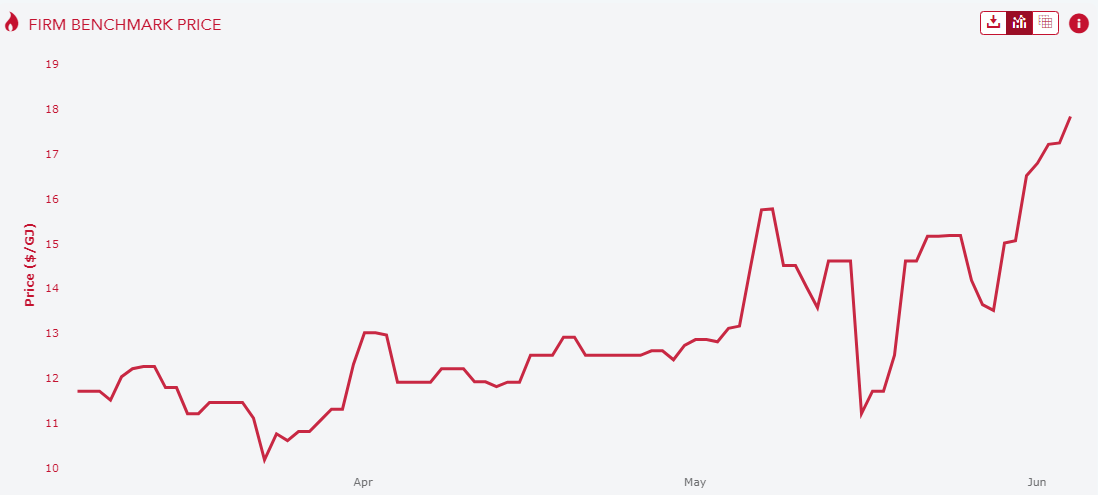
This injected an enormous inflation shock into the economy, central to crashed living standards.
This failure is the key reason Australia will both miss Paris targets, and widespread anger has erupted about climate policy being too expensive.
That’s the void Dutton’s nuclear policy is now filling.
Whoever it is that reserves gas will have the only climate policy that matters.