Housing construction won’t recover until interest rates are cut
Cameron Kusher from PropTrack posted the below chart on Twitter (X) showing the relationship between the official cash rate and annual dwelling approvals:
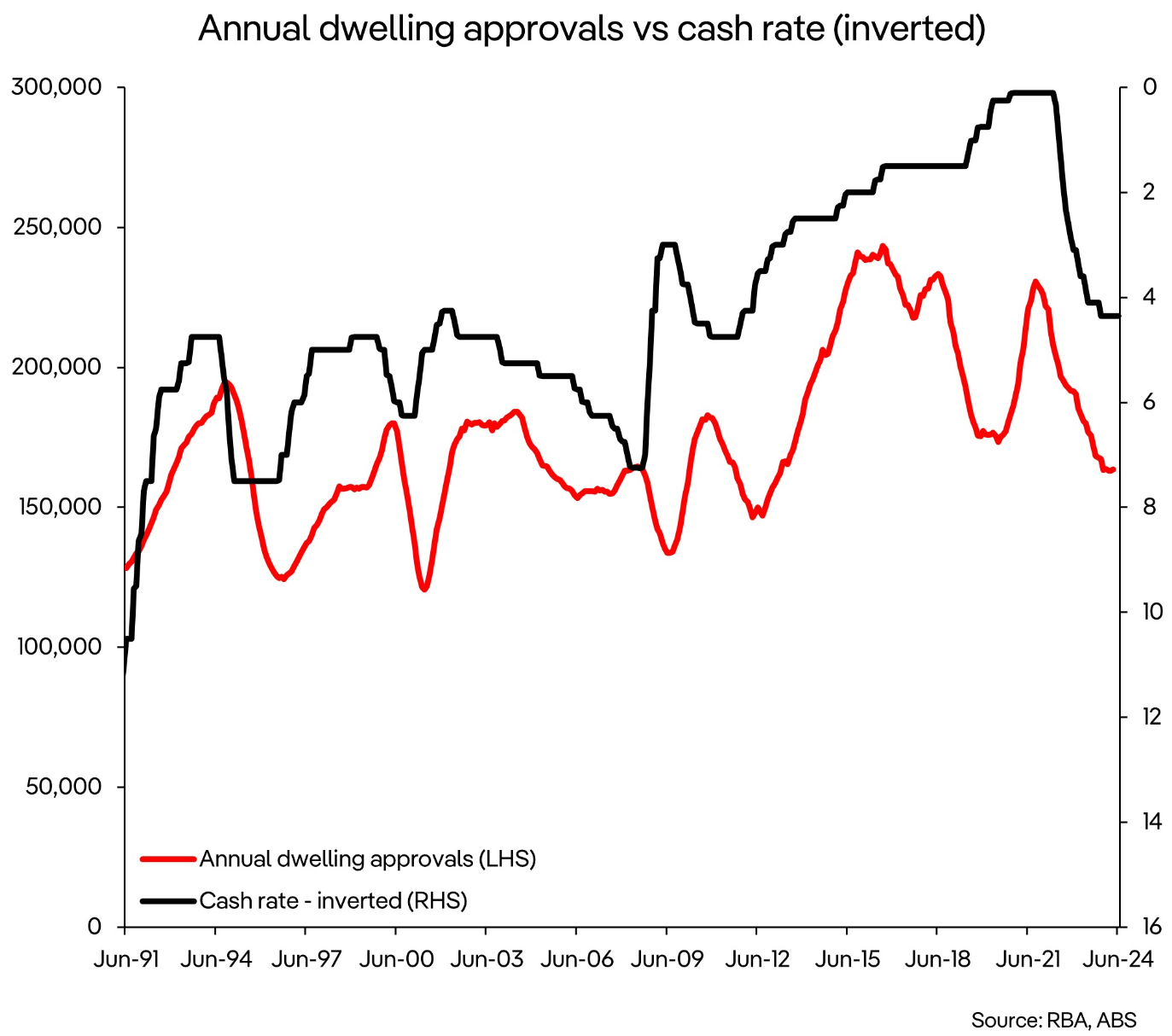
According to Kusher, “the last time the cash rate was higher than it is today (Nov 2011), there were 158,268 dwelling approvals over the year. Over the year to Apr 2024, there have been 163,493 approvals”.
“It’s almost as if approvals have fallen because interest rates are higher than they have been for 12 years”.
“Unless the cash rate gets back to the sub 2% rates that we had in the late 2010s and early 2020s, it seems pretty unlikely that we will get back to that volume of new housing unless there is a material change to funding and charging for new development”.
Kusher also added that “it is highly unlikely rates get back below 2% any time soon”.
I will add that material costs are also structurally higher than they were in the late 2010s and 2020s, which poses another serious barrier to housing construction.
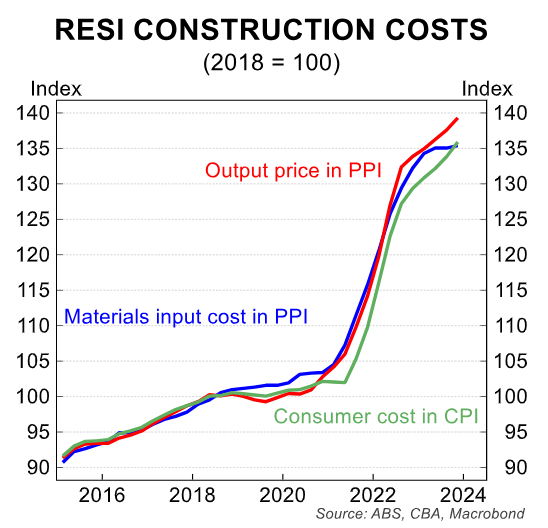
Even if material cost inflation were to ease back to pre-pandemic levels, builders and new home buyers would have to contend with the 30% to 40% increase in costs recorded since the start of the pandemic, which have become embedded.
All of which highlights, once again, that the Albanese government’s target of building 1.2 million homes over five years, or 240,000 homes annually, is a delusional pipe dream.
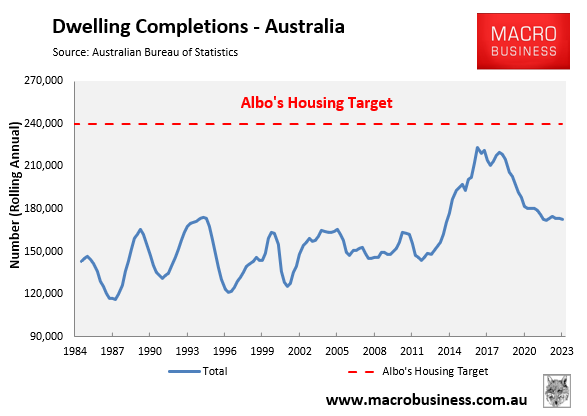
Australia has never built more than 223,000 homes in a single 12-month period.
Therefore, there is little hope of achieving 240,000 homes for five consecutive years when interest rate and building costs are structurally higher and builders are competing with state government ‘Big Build’ infrastructure projects for labour and resources.
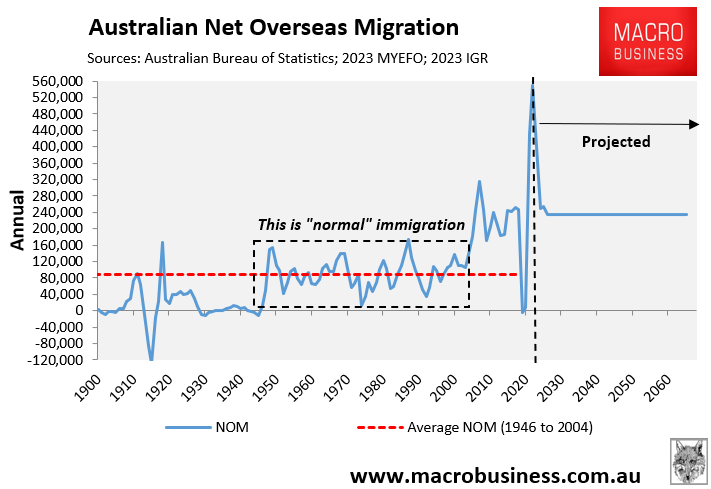
The only viable solution to easing Australia’s housing shortage is to slash net overseas migration to a level that is below the nation’s capacity to supply housing and infrastructure.
Sadly, the federal government’s immigration projections are far too high and will ensure that Australia’s housing shortage becomes permanent.