
I have never seen Australian home prices so detached from buyers’ capacity to pay.
The following chart from AMP chief economist Shane Oliver tells the tale, with a record gap opening up between incomes, mortgage rates, and overall capacity to pay, and the median home price:
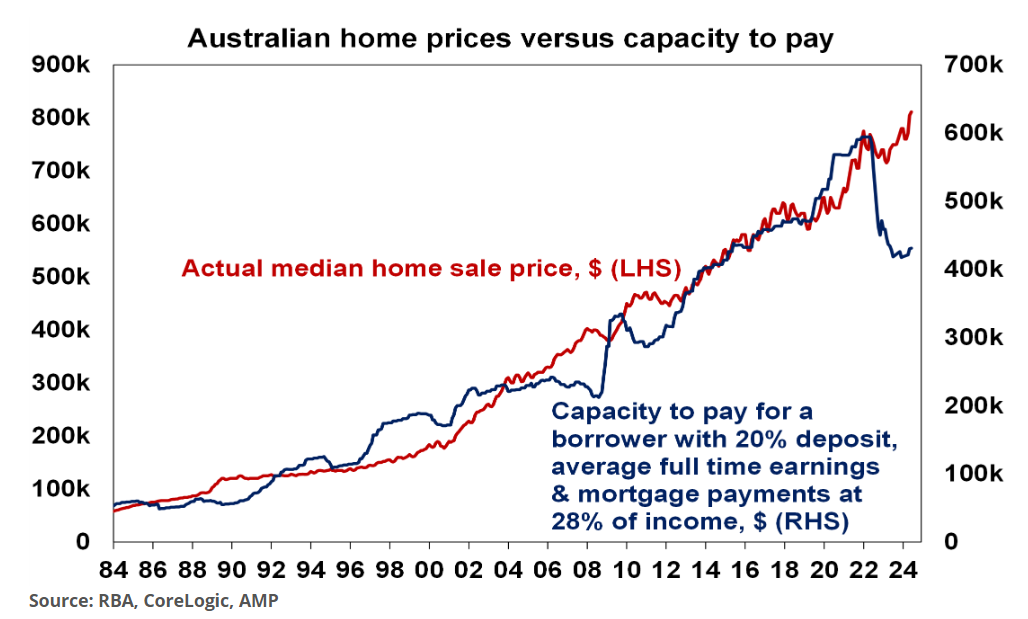
“For decades ever rising property prices relative to incomes were made possible by ever lower interest rates”, notes Oliver.
“But due to the rebound in interest rates from May 2022 and national average home prices on the rise again, there is now a wide divergence between buyers’ capacity to pay for property and current home prices – with the capacity to pay down by 27% on our estimates since April 2022”.
Shane Oliver gives a hint as to what might be behind the strong appreciation of home values despite 13 interest rate hikes from the Reserve Bank of Australia (RBA): record numbers of cash buyers.
“Access to ‘the bank of mum and dad’ and savings buffers built up through the pandemic appear to have protected the property market from high rates over the last two years”, noted Oliver.
“Anecdotes suggest that all cash purchases and access to ‘the bank of mum and dad’ reached a record last year”.
I suspect Oliver is correct in his analysis, as no other explanation makes as much sense.
That said, we have also seen anecdotal and official reports of growing activity by foreign buyers, who would overwhelmingly purchase with cash.
The latest housing finance data from the Australian Bureau of Statistics (ABS), released yesterday, also showed that average loan sizes continue to rise, as shown below by Justin Fabo at Antipodean Macro:
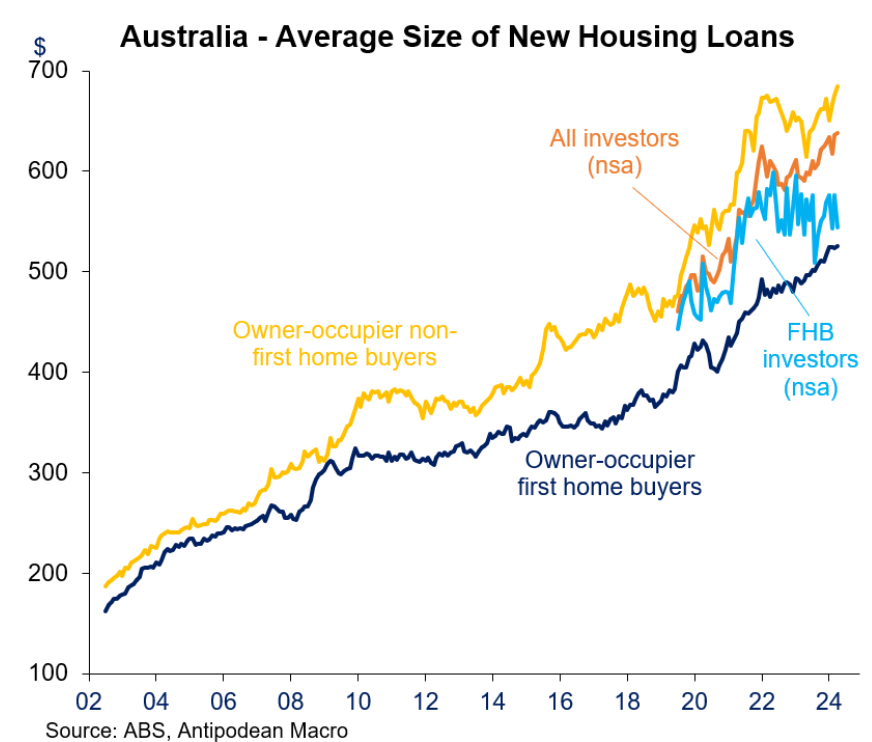
This, too, is contributing to house price appreciation:
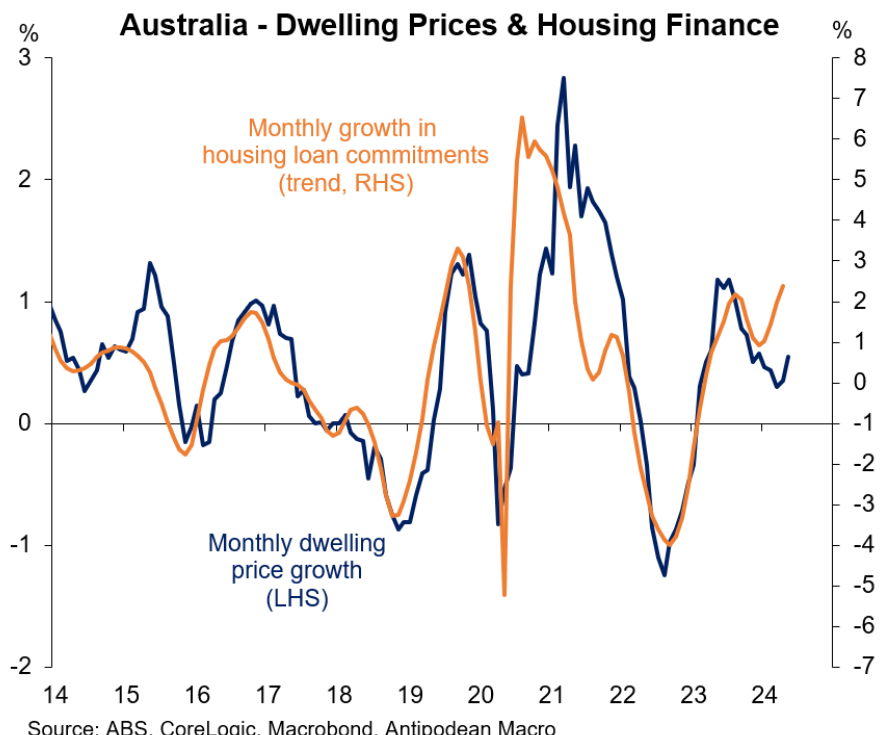
With Australian home prices having detached so far from borrowing capacity, Oliver argues that it leaves the market vulnerable to correction:
“In the absence of rapid interest rate cuts this continues to point to a high risk of lower property prices at some point”, Oliver notes.
“This is reinforced by ultra-low sentiment towards property. A sharp rise in unemployment in response to weak spending in the economy would add to the downside risks flowing to property prices from high mortgage rates”.
While those risks are clearly present, a more likely scenario is that the RBA would cut rates aggressively if needed, which would lift borrowing capacity and put a floor under values.
