
If it weren’t for record immigration and the National Disability Insurance Scheme (NDIS), Australia’s labour market would be in a deep funk.
Investment bank Jarden recently estimated that around one-third of jobs created last year were in NDIS-related sub-industries like allied health and non-childcare social assistance.
Now take a look at the following chart from Alex Joiner, chief economist at IFM Investors:
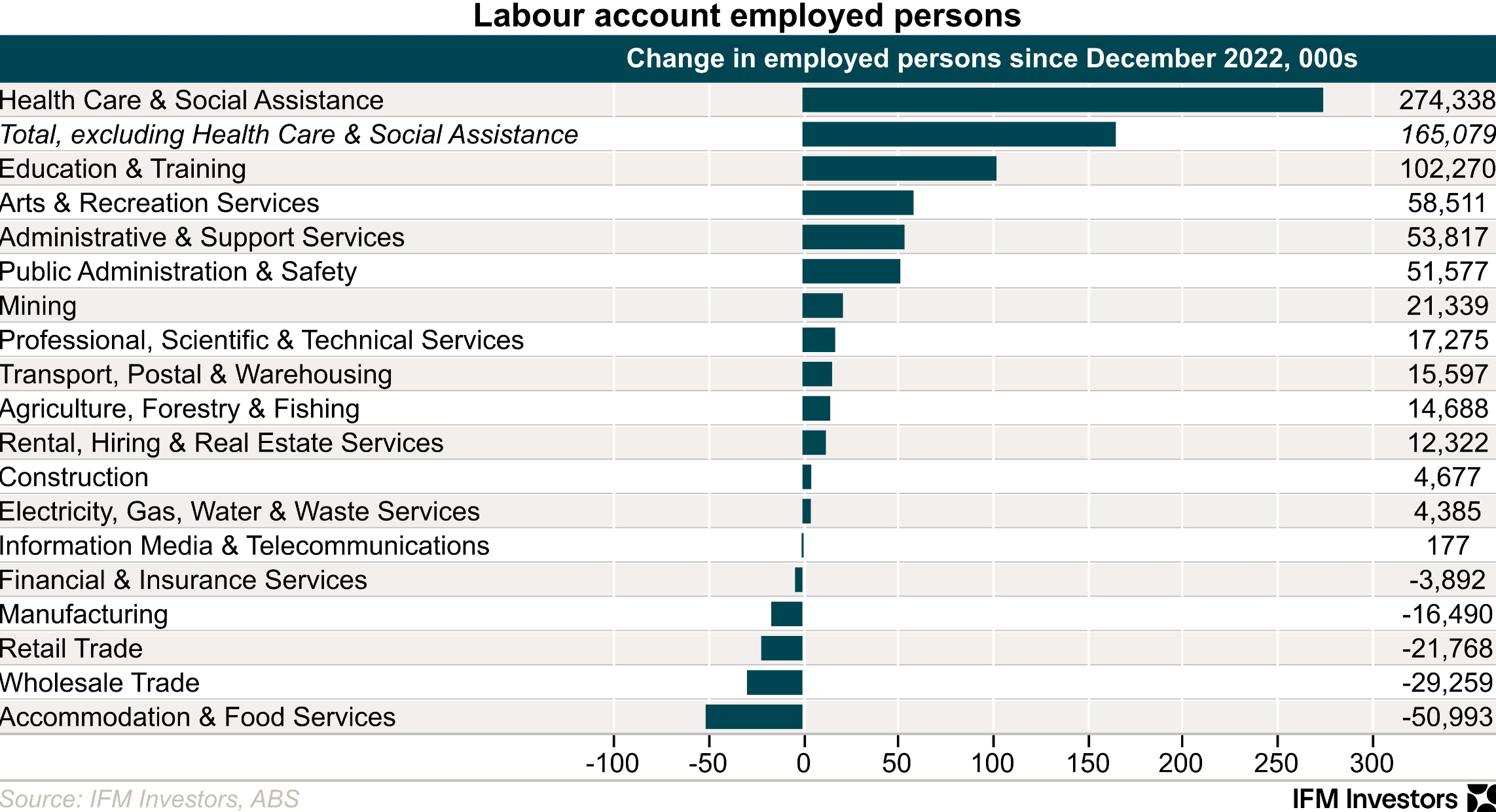
It shows that “the healthcare sector has added more than 100,000 more employed than all other sectors combined since Q4 ’22 – with education accounting another 100,000”.
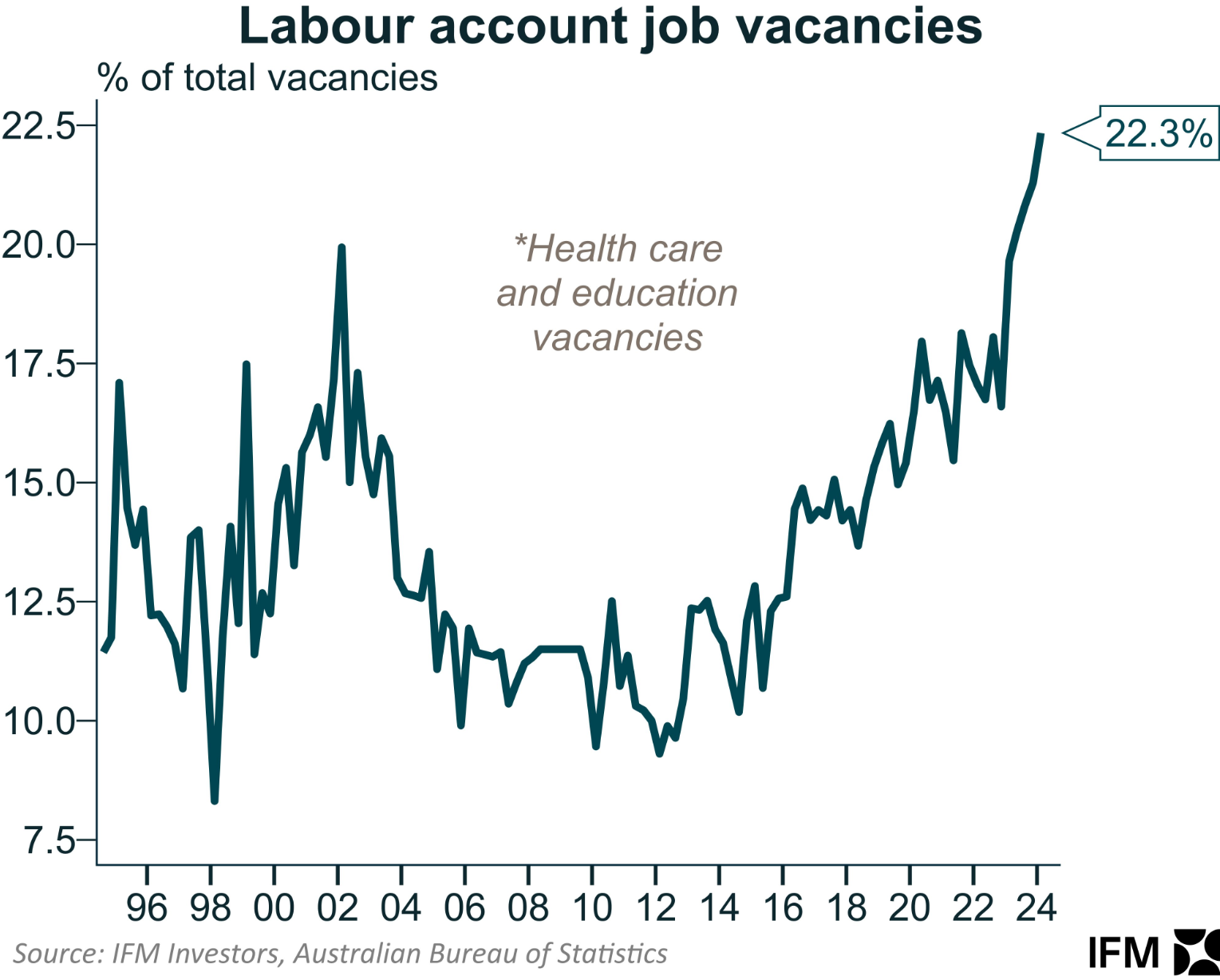
These two sectors—healthcare and education—now account for one in five job vacancies, according to Joiner:
Now look at the following chart from Joiner showing employment growth:
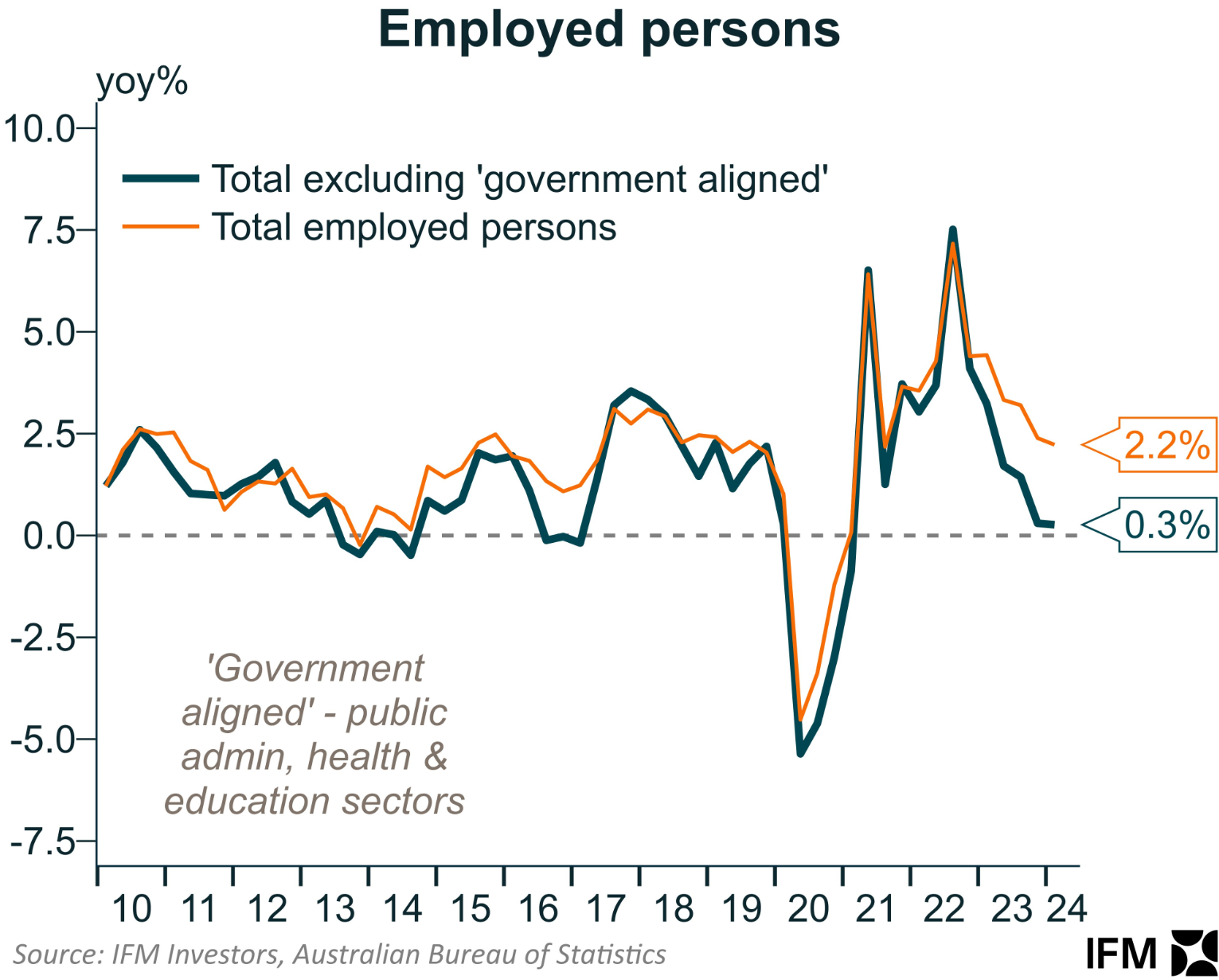
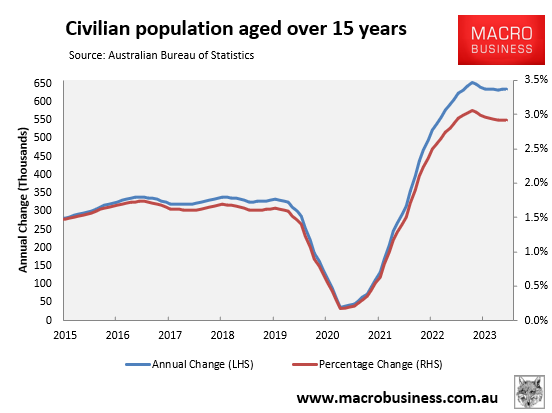
As you can see, excluding healthcare and education, Australia’s employment growth was close to zero (0.3%) over the past year, despite the near record 2.9% growth in the working age population:
These results are an ominous sign for Australian productivity, according to Joiner, because government-aligned jobs typically experience significantly lower productivity growth than the market sector:
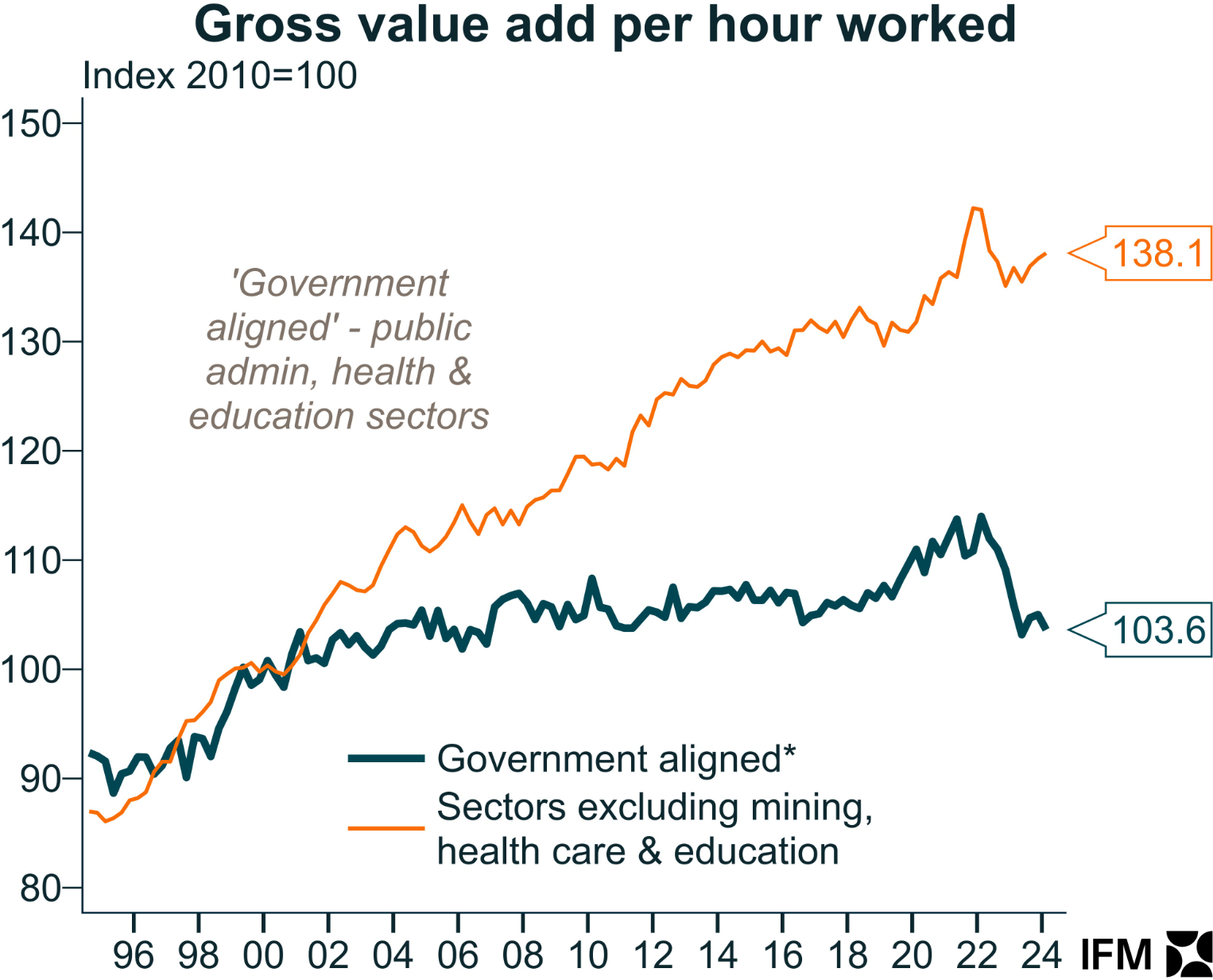
The bloated NDIS is not just swallowing the federal budget, but also the productive capacity of the nation.
