Albo’s broken energy grid continues to melt down today:
MST Marquee analyst Saul Kavonic said there was “no way” Australia would meet its renewable generation target – 82 per cent – by 2030, but added this was not crucial to achieve the broader emissions reduction goal set by Labor.
“It can be made up for elsewhere, but it does become harder with the electricity sector not carrying its planned share,” he said. “Falling short on the renewable energy target will mean other parts of the economy will need to shoulder a greater emissions reduction burden.
The pace of renewable energy growth had “collapsed over the last two years in the wake of regulatory, social licence and cost challenges,” he added.
That’s rather hopeful. Without decarbonised electricity, we cannot meet the Paris Agreement’s goals. Half of Australia’s emissions are from the energy grid and the transport network it would help decarbonise.
Meanwhile, as investment flags, prices rise.
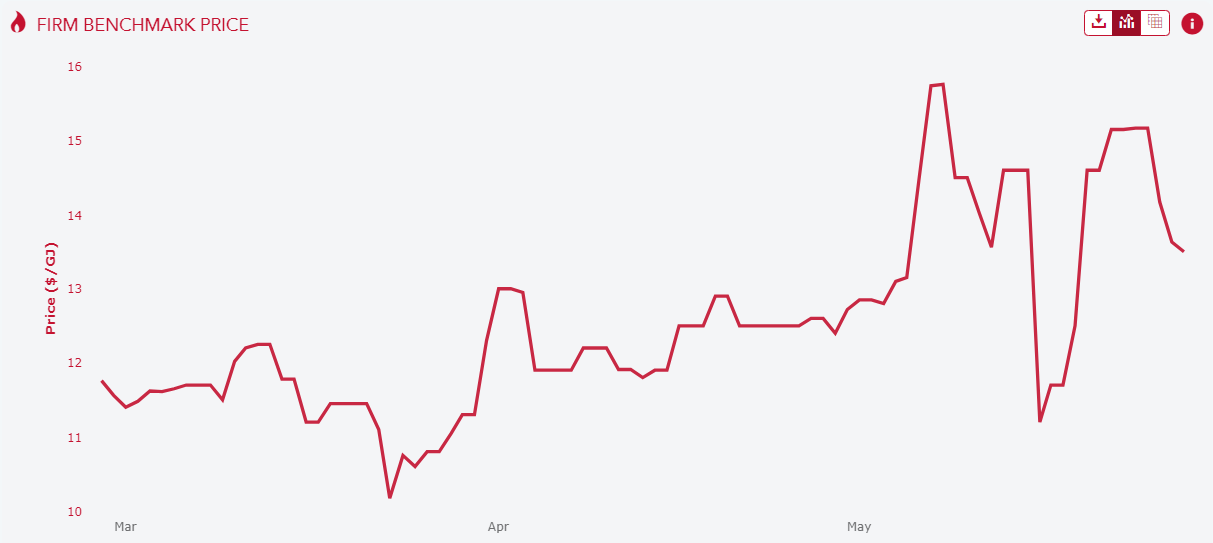
Crucially, the gas price is still well above Albo’s fake $12Gj contract price cap:
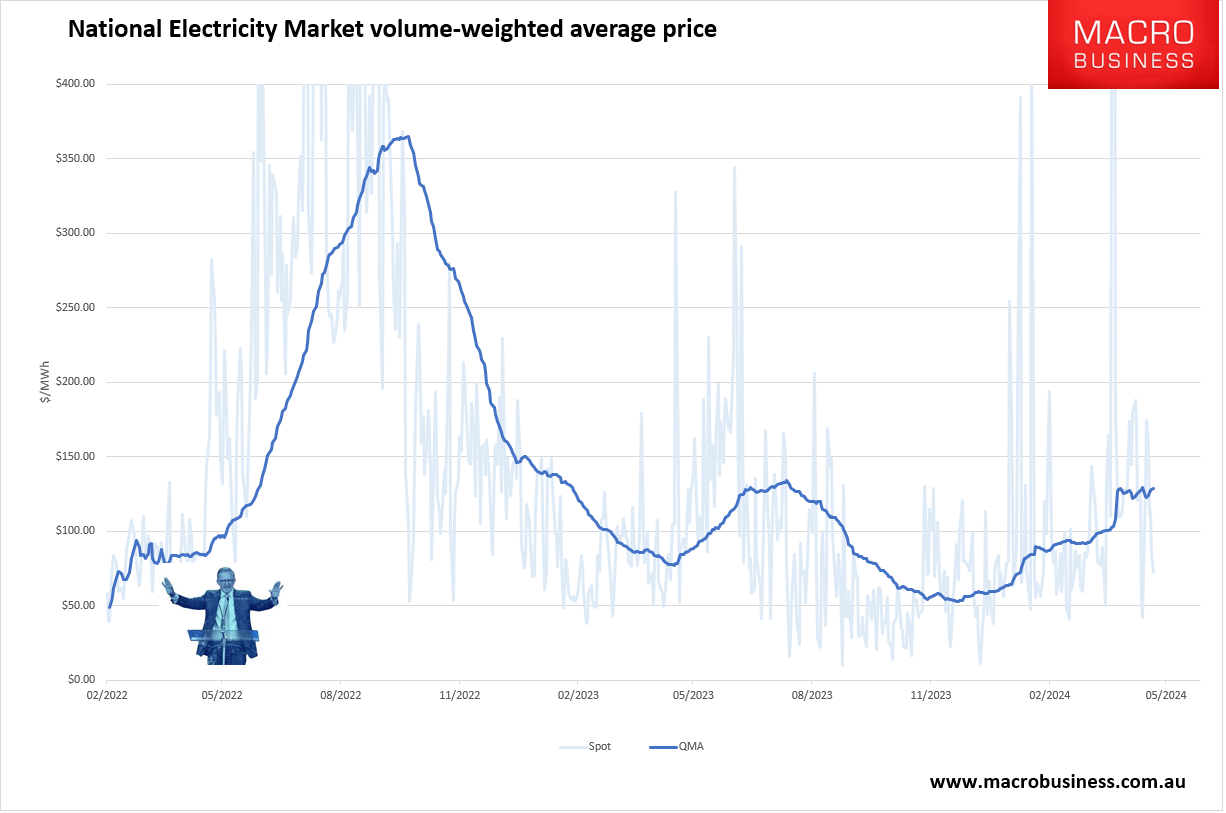
And power prices are galloping along as a result:
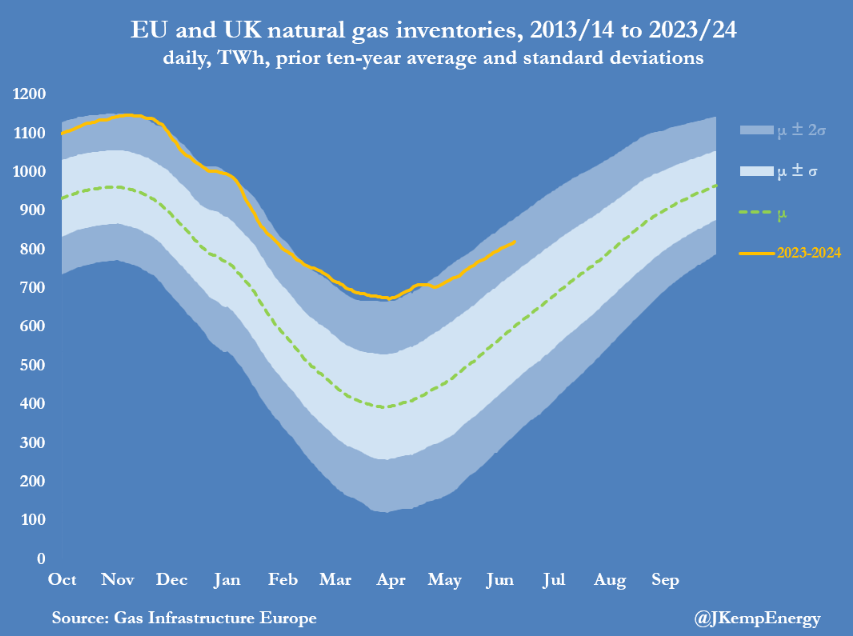
Short-term developments in global LNG are not encouraging for lower local gas prices, either. Europe’s restock has slowed materially:
Thankfully, the US is doing better:
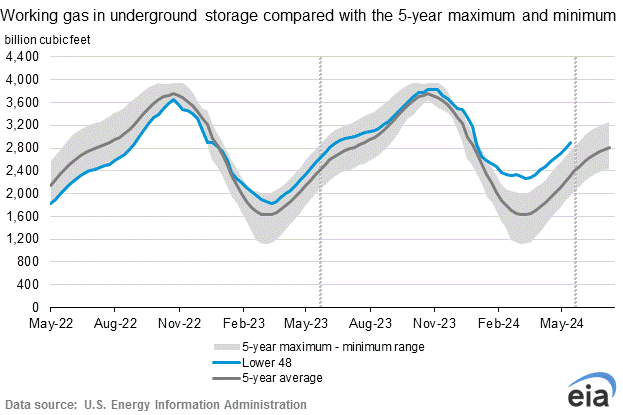
But so long as Europe lags, price pressures will remain.
This is the latest example of what has gone so wrong with Australia’s energy transition.
Without gas as the transitional fuel, renewable development is stalled because there is no security of supply for firming power.
Another report today from the Climate Council makes much more sense than Albo’s energy vandals:
The report reveals that, if Australia stops opening new gas projects now, supply from existing projects could meet our shrinking domestic gas needs for more than six decades—a clear signal that it’s time to turn off the gas tap for good as we accelerate towards a cleaner, more secure energy future.
Climate Councillor Greg Bourne said: “More gas means more harmful climate pollution, endangering our homes and the places we love and putting our kids’ futures at risk. It’s time for Australia to power past gas and turbocharge our switch to clean energy.”
The report emphasises that Australia does not need new gas projects, as the world will shortly be awash with cheap gas at the same time as this fossil fuel will play a shrinking role in our domestic energy mix and that of overseas trade partners like Japan.
“Gas has a small, shrinking and short-term role to play in our energy mix. We can already meet much of our energy needs with renewables, like solar and wind. If we stopped exporting so much gas, current projects would be enough to supply our domestic gas needs for more than 60 years,” said Mr Bourne.
I’d be entirely happy to prevent further gas development so long as we reserve enough for ourselves such that state governments can top subsidised coal.
The problem is simple: Canberra’s cowards only have eyes and ears for the gas export cartel.
Everything else comes last.