Albo would sell his mother for power. Indeed, he has by pawning her memory into a fake image of himself as a worker champion:
Anthony Albanese has accused the Coalition of “secret” plans to cut wages through changes to industrial relations laws.
The prime minister said the Liberal and National parties’ “gut instinct is always to gut workers’ rights” in an address to the Australian Council of Trade Unions conference in Adelaide on Wednesday evening.
The opposition leader, Peter Dutton, has opened up a new front on industrial relations by committing to repealing the right to disconnect laws and, in his budget reply, promising to “remove the complexity and hostility” of Labor’s laws, including changes to the definition of casual employment.
Right. Except Albonomics has delivered the largest smash to worker’s pay in modern history:
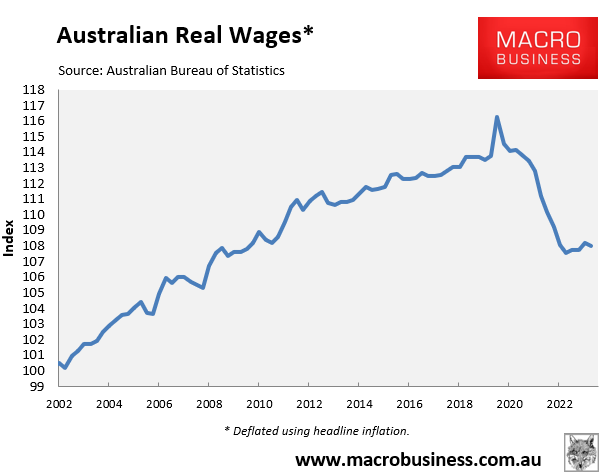
Albo achieved this by:
- refusing to act on Ukraine War gas profiteering;
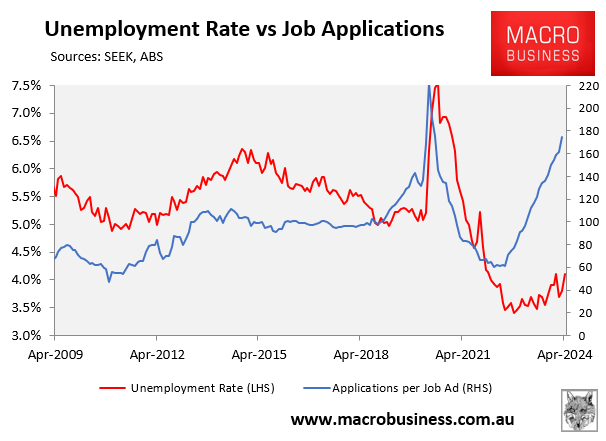
- massively overcooking immigration, which triggered a rent shock and falling wage growth via the foreign supply:
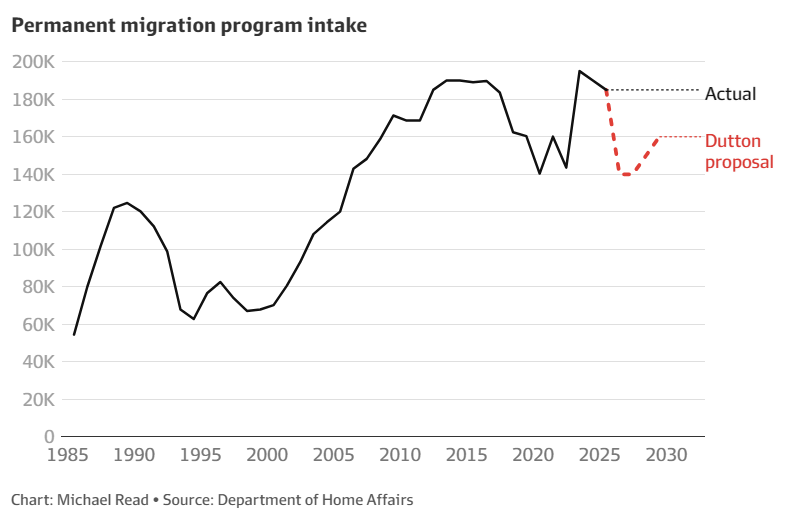
As we go forward, the Coalition has a better plan to restore real wage growth via tighter fiscal spending to drag down inflation and substantial cuts to immigration to ease the labour supply shock:
Don’t get me wrong. The LNP is no worker’s champion. But it is less hostile to working families than Albanese Labor, which despises them.