
The Albanese Government’s Future Gas Strategy calls gas “critical” to the economy.
A new report by The Australia Institute might lead Australians to ask why the majority of the country’s gas reserves are being handed away for free.
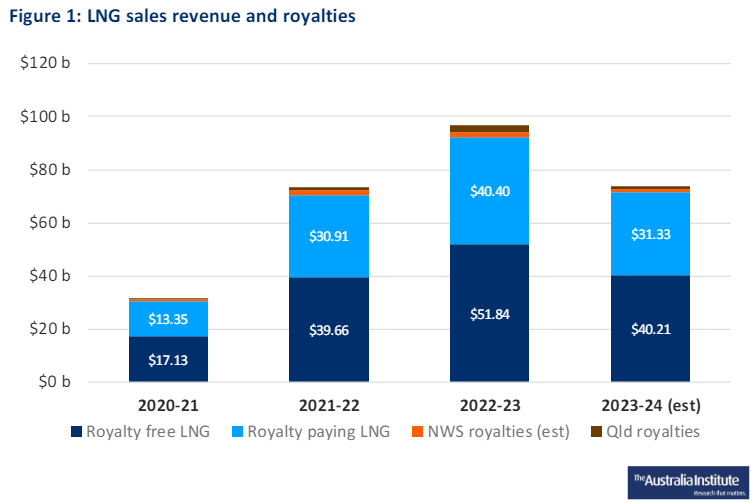
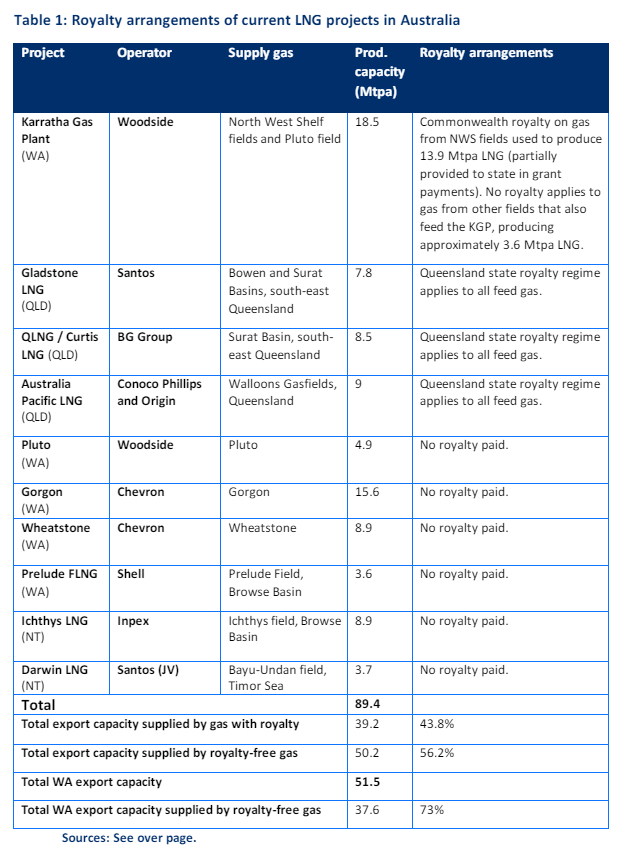
Australia exports LNG from 10 installations. Six of these projects—four of the five in Western Australia and both in the Northern Territory—pay no state or federal royalties. Australia exports 56% of its gas through these facilities.
Over the past four years, LNG exports totaled $265 billion. LNG exports from royalty-free gas totaled $149 billion.
As in Norway, billions of dollars in lost revenue from giving away Australian gas could be invested in a sovereign wealth fund or used to fund schools, hospitals, renewable energy, and other public infrastructure to boost productivity and living standards.
What about taxes? It is even worse.
Royalties serve as a resource acquisition price. In contrast, the oil and gas business is taxed on profits through company tax and petroleum resource rent tax (PRRT).
The ATO calls the oil and gas business a “systemic nonpayer” of tax. In 2020-21, Woodside, Exxon, Shell, Chevron, Inpex, and APLNG did not pay income tax or PRRT on $34 billion in income.
In 2021-22, corporations earned $56.3 billion with only $454 million in company taxes due to record pricing.
The accumulation of tax credits under present laws could allow the LNG business to dodge PRRT indefinitely, according to Senate hearings.
If we add the negative externalities of the sector, the picture becomes dire.
The over-exporting of gas has driven East Coast gas prices 400% higher than historical average prices.
This has two negative consequences: higher inflation and a stalled energy transition.
Without cheap gas to act as a source of firming power to renewables, the National Electricity Market is lurching from one grid-scale power crisis to another, and the average price has doubled since the Albense Government came to power:
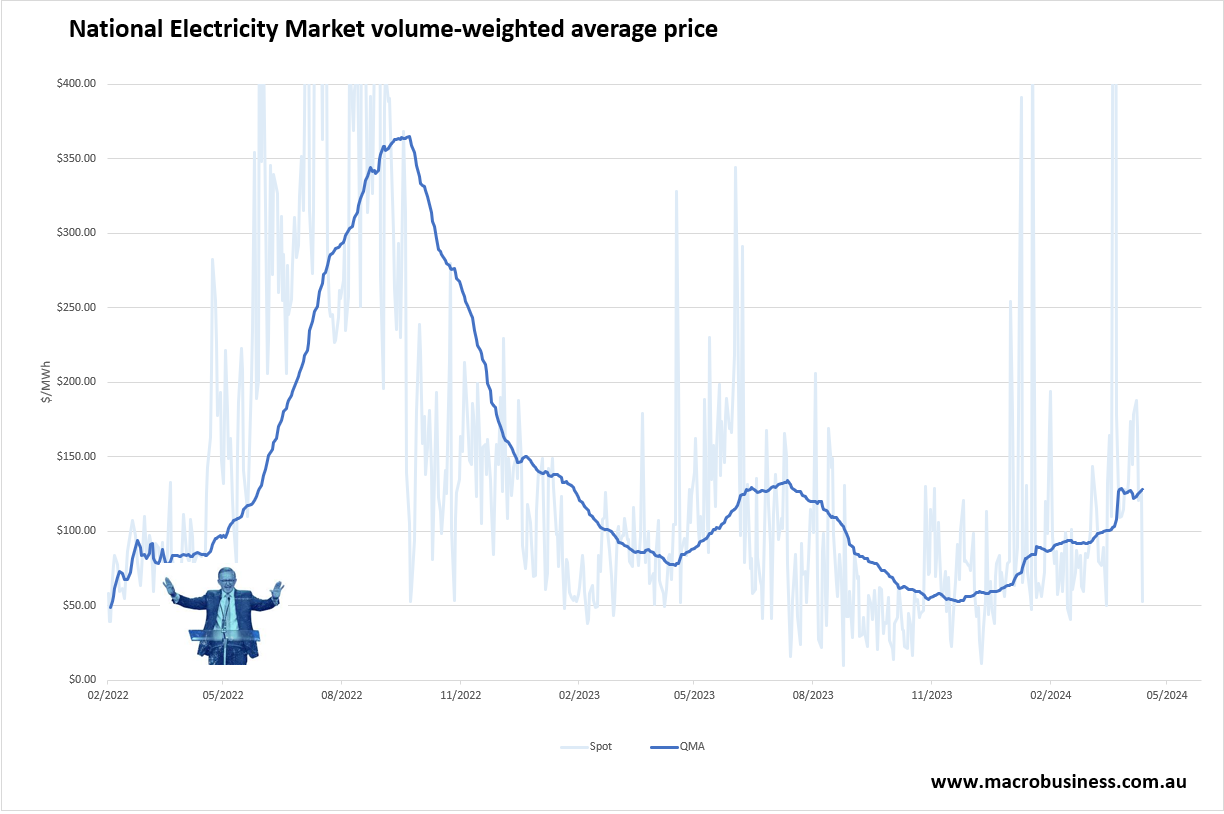
This is a huge blow to living standards via direct bill shocks and spillovers to energy-intensive manufacturing, which includes building materials, making the housing crisis worse.
It is no exaggeration to say that if the Federal government fixed gas, it would pretty much fix everything.
