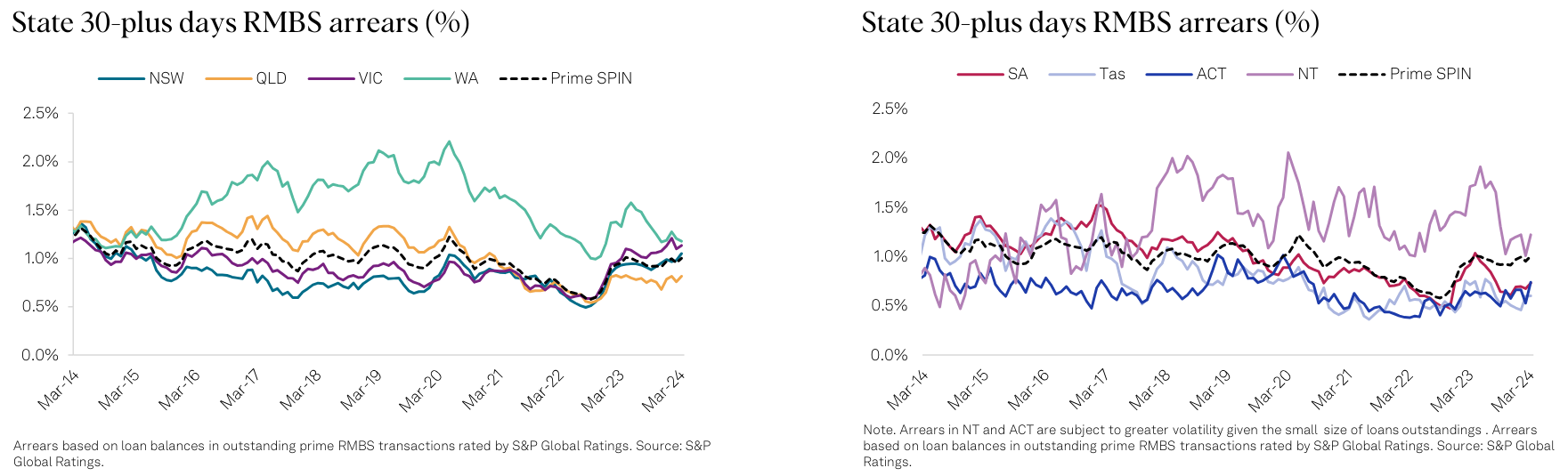
According to S&P, refinancing opportunities, financial buffers, and low unemployment have all contributed to minimal arrears, notwithstanding their recent rise.
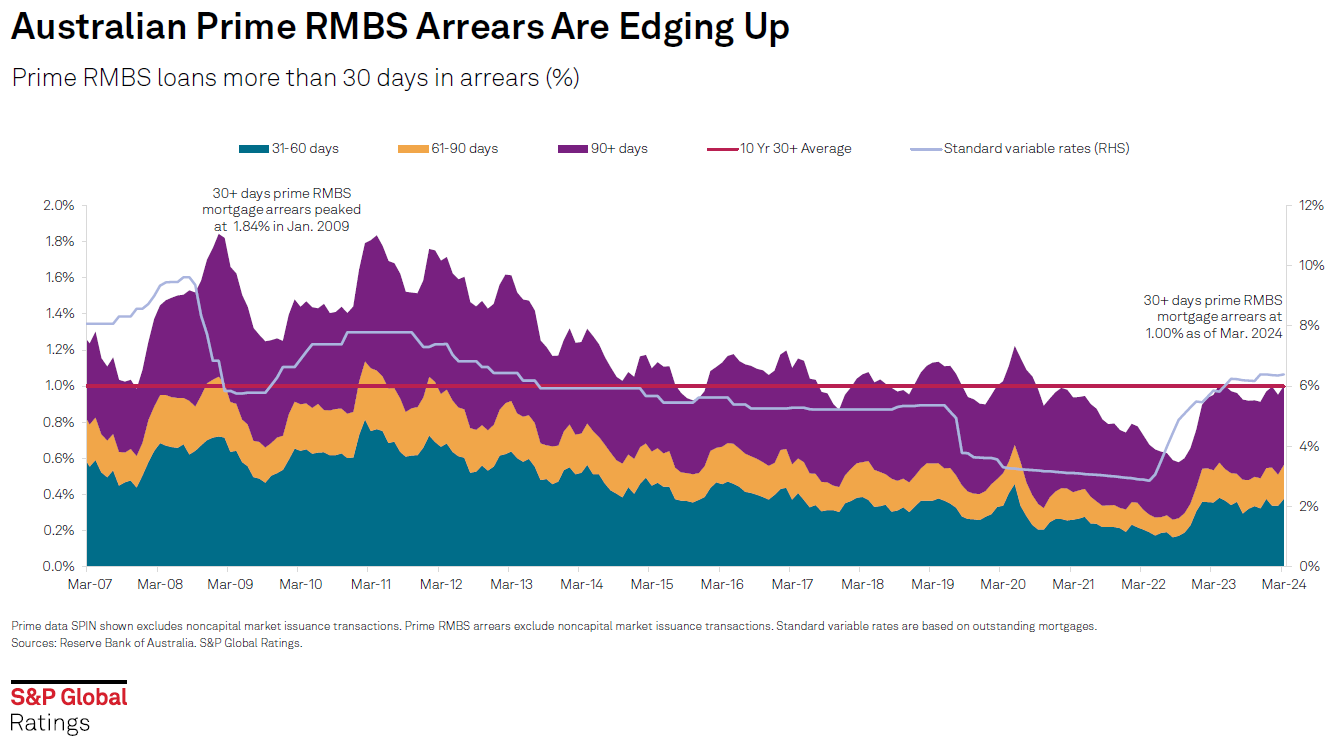
In order to minimize their loan servicing costs, borrowers have also been frugal with their spending.
While interest rates are still high, households continue to place a higher priority on their debt obligations than on discretionary spending. This warning conduct is keeping overall arrears low.
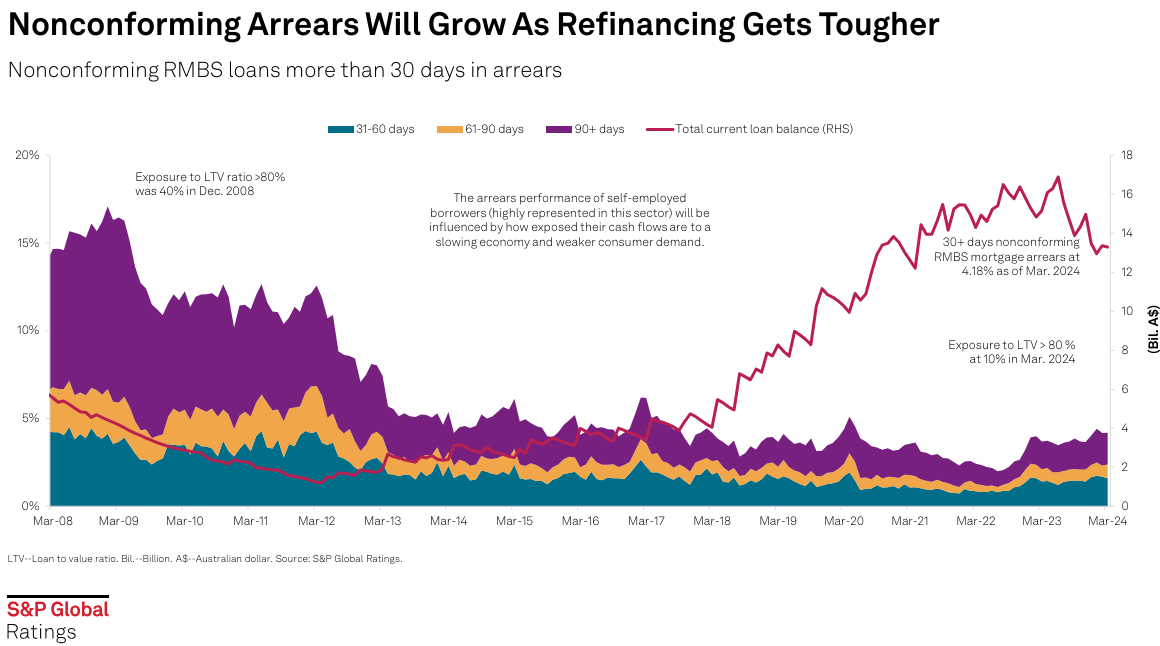
A recent increase in gross discretionary income has helped to offset rising mortgage servicing costs. Future debt serviceability constraints will also be lessened by impending tax reductions.
These factors have somewhat strengthened the household savings ratio, which increased from 1.9% in Q3 to 3.2% in Q4. Even with the latest increase, family savings remain significantly lower than their 24% epidemic levels.
According to Reserve Bank of Australia statistics, the proportion of housing loans with an offset account is rising as well, as borrowers who are able to do so turn to these products to lessen their obligations related to debt serviceability.
Even though S&P predicts higher unemployment, it will still be below levels seen before the outbreak. Increases in property values also give current homeowners more freedom to handle their finances and get out of debt.
Increased unemployment will inevitably result in increased arrears. However, we do not anticipate that these gains will be significant as long as the unemployment rate is low overall.