
It will not go away if you don’t fix the real problem. Behold the work of the East Coast gas cartel as Albo’s feeble $12Gj contract price cap is blown apart:
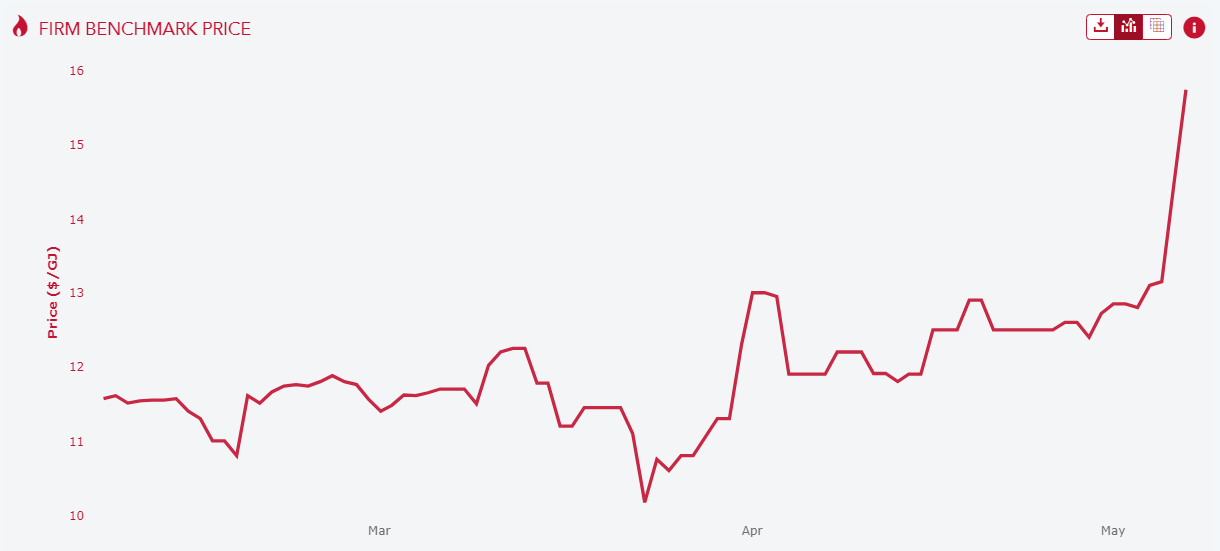
The local price is roughly tracking the Asian price through its summer restock.
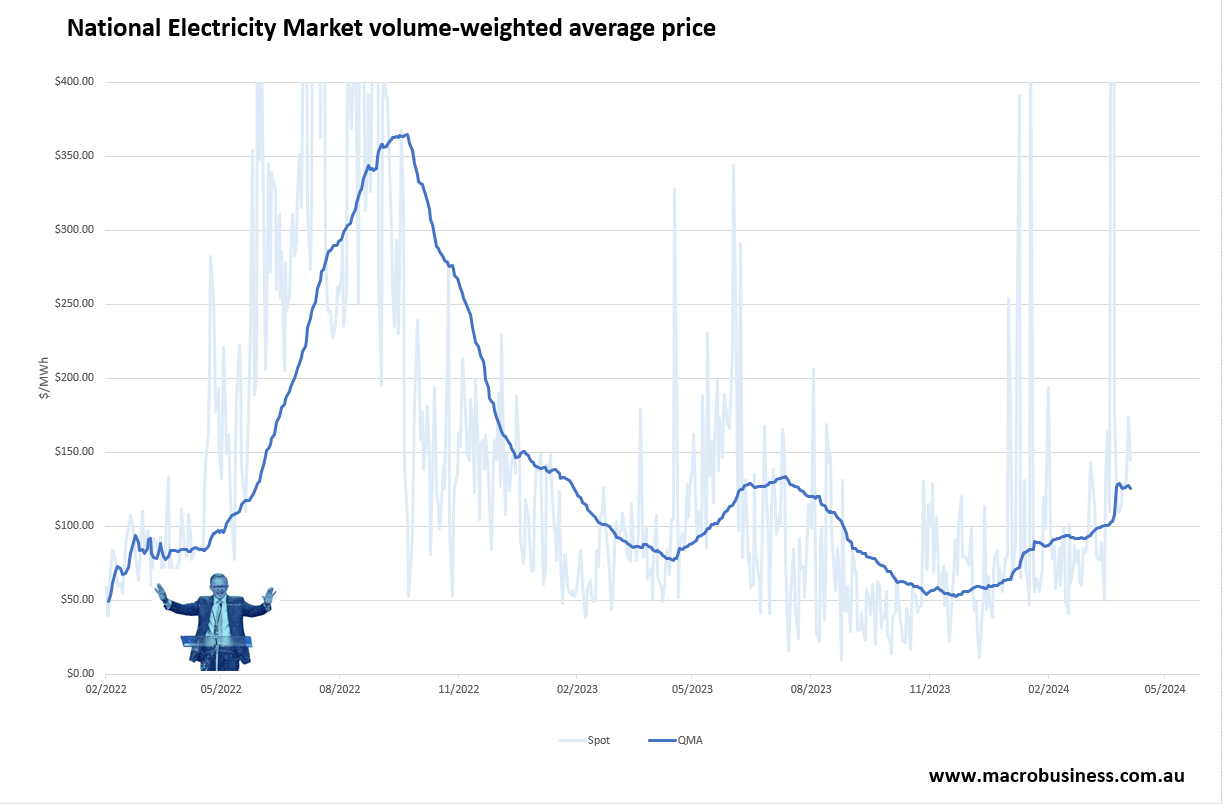
Another power bill shock is building as gas prices depart Earth:
The Minister responsible for controlling the cartel is busy with other things:
Federal Resources Minister Madeleine King has accused Opposition Leader Peter Dutton of jeopardising national security and stoking class warfare by opposing the government’s multibillion-dollar production tax credits for miners.
That statement of labour betrayal is about as blunt as you will ever witness.
Roll out some more:
- bill subsidies to hide collapsing living standards in higher taxes;
- billionaire subsidies to stimulate development of power-hungry industries for whom there is no power;
- collapse of existing manufacturing dependent upon a gas code of conduct joke, and
- net zero lies and secret subsidies for coal power stations to keep the lights on as power storage takes decades to build instead of cheap and easy gas peakers:
Tunnelling problems are plaguing the $12 billion Snowy 2.0 hydropower project, with a boring machine previously bogged in soft ground now wedged in hard rock and struggling to move.
The tunnel boring machine named Florence had been making slow progress in recent weeks as it cut through hard rock at the Tantangara site, one of several drilling locations in Kosciuszko National Park.
The ABC understands that earlier this month, Florence was mistakenly turned too sharply from a straight line into a curve, causing part of the cutting head to become wedged. Further boring compounded the problem, with the machine making only incremental movements since.
It was always going to be an ambitious undertaking. When first announced by the Malcolm Turnbull government in 2017, it had an estimated cost of $2 billion and was expected to deliver its first power in 2021.
A succession of cost blow-outs and time delays mean it is now slated to cost $12 billion and deliver its first power in late 2027.
Domestic gas reservation, anyone?
