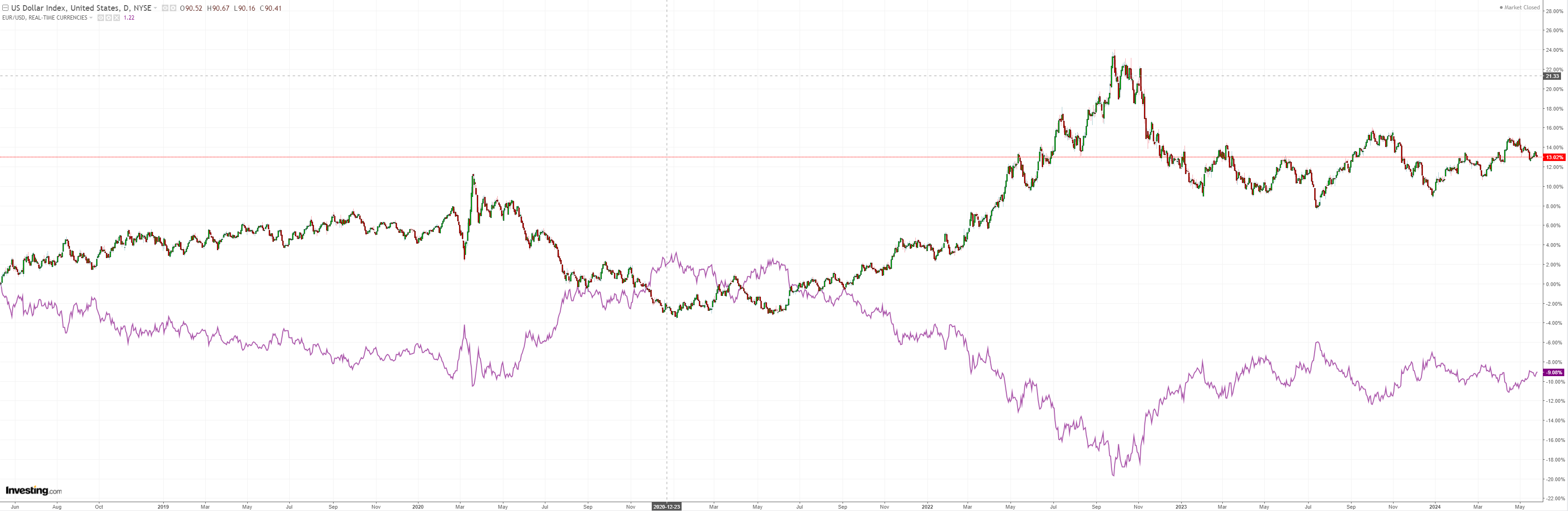
DXY eased on Memorial Day:
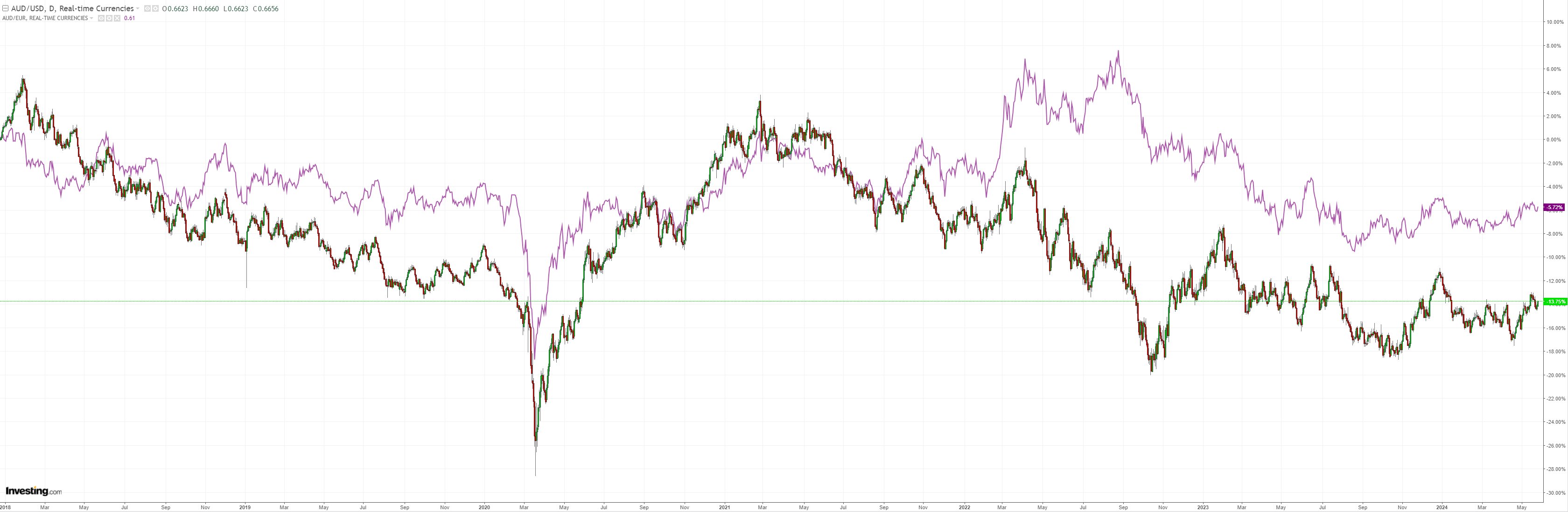
AUD firmed:
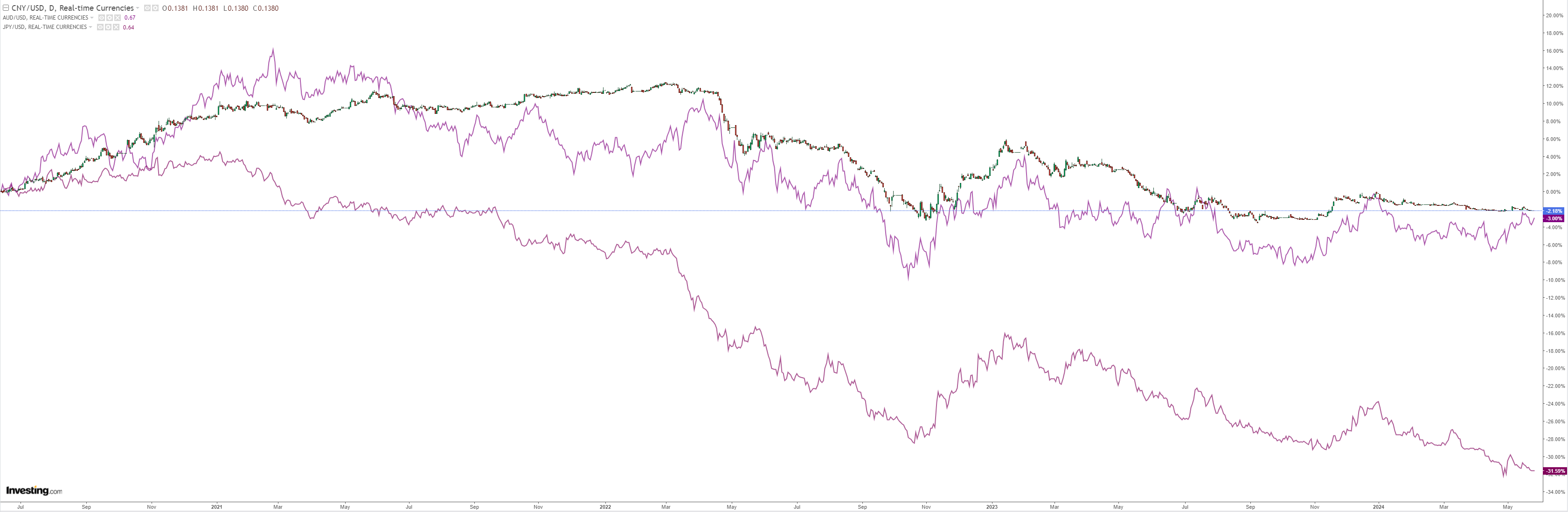
No help from North Asia:
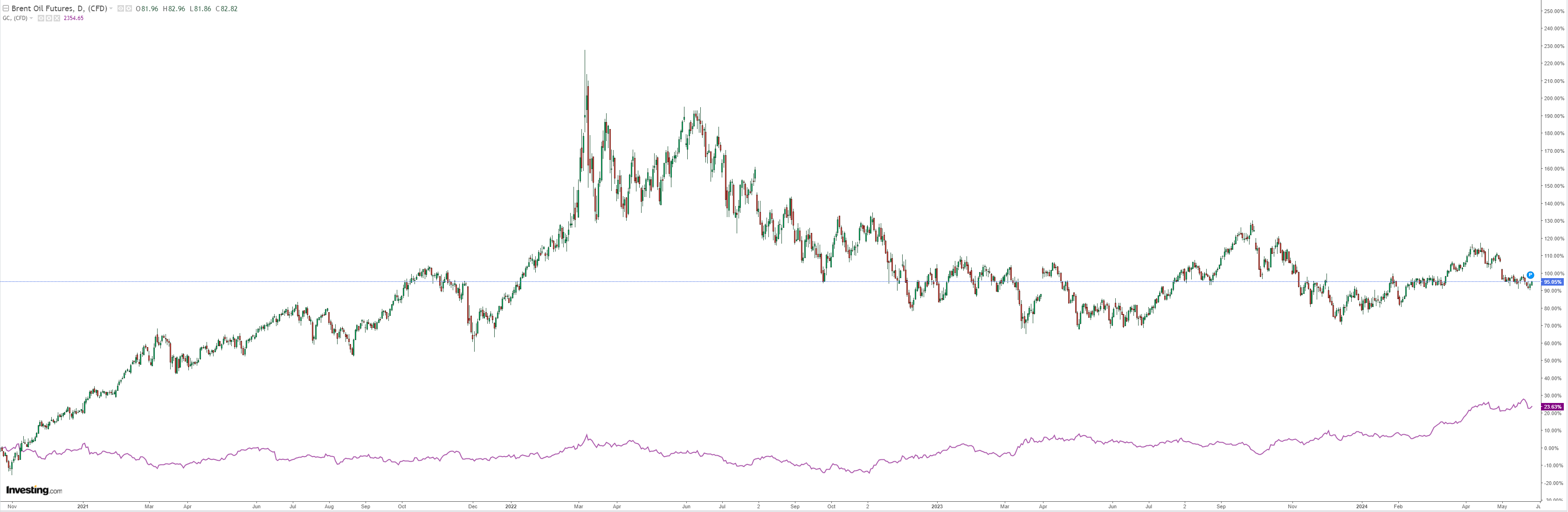
Oil and gold found buyers:
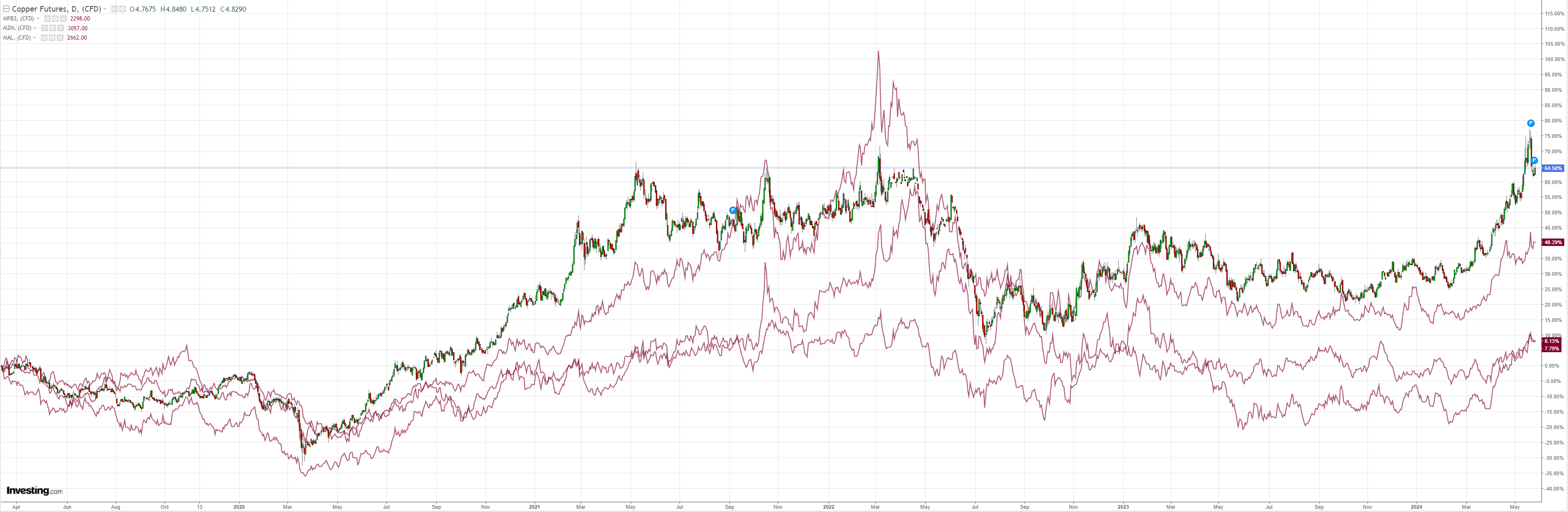
Dirt too:
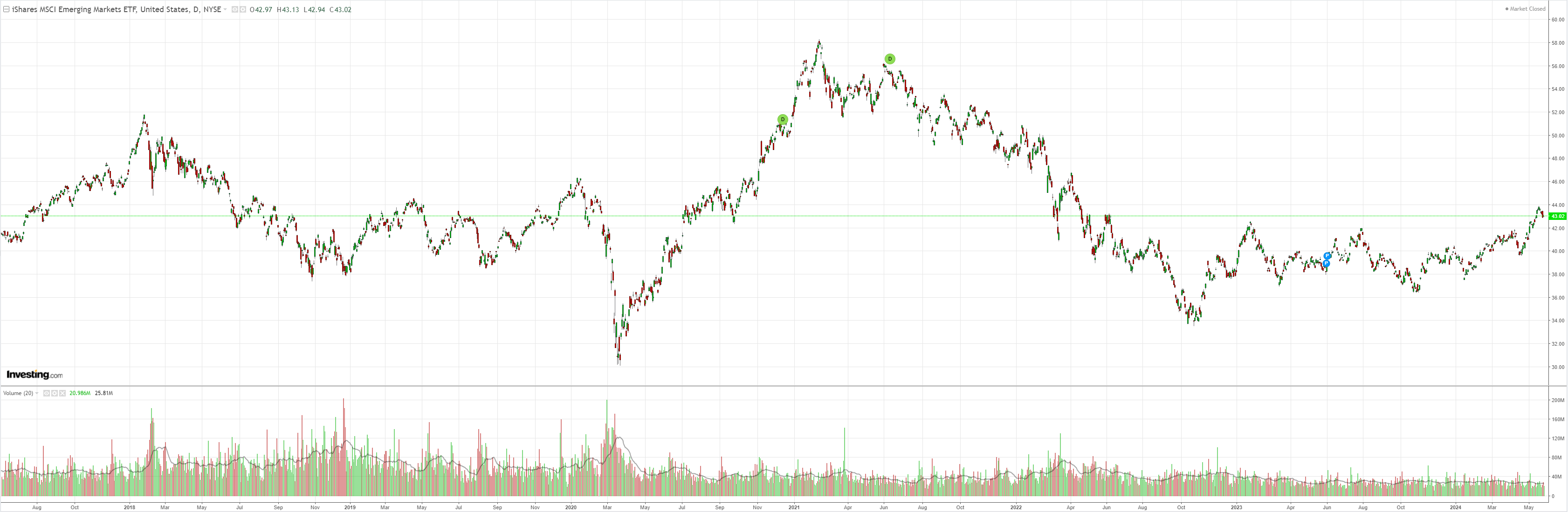
EM stocks are testing support:
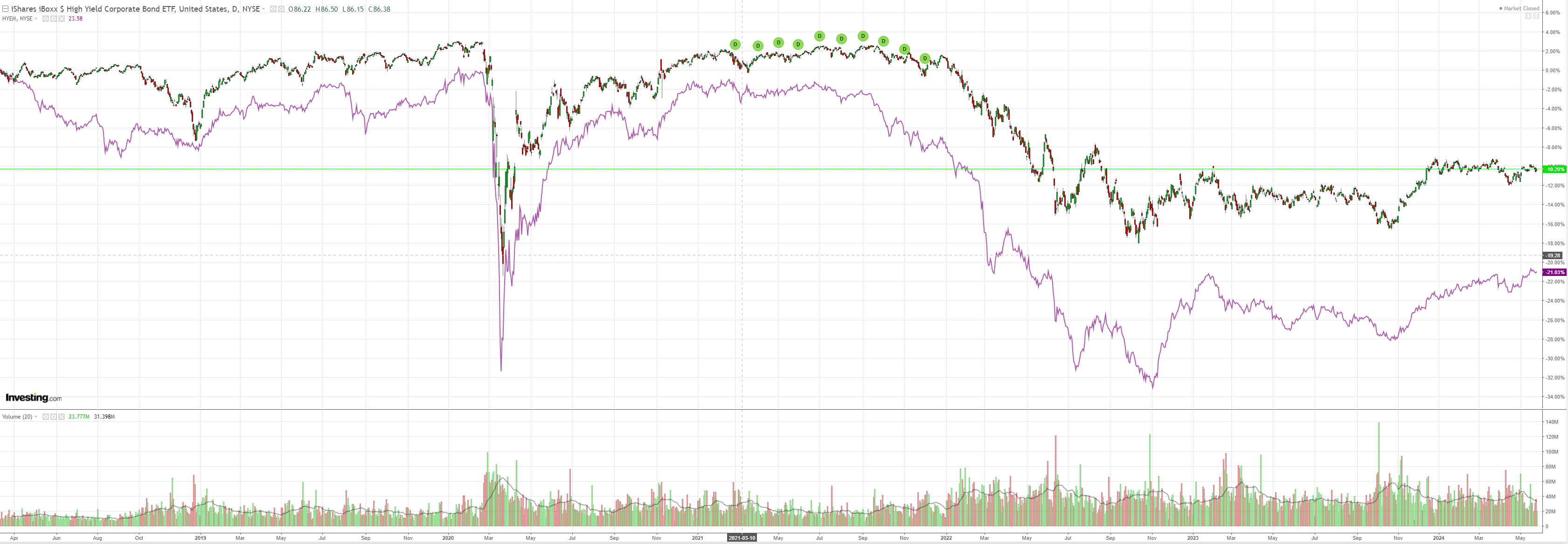
Junk warmed:
US markets were shut for Memorial Day.
The AUD is still stuck in a rut.
According to Goldman, it is becoming more and more obvious that the FOMC will not be able to lower rates based just on inflation in the foreseeable future.
The core PCE report, which Governor Waller gave a “C+,” is expected to reveal mixed results next week.
Goldman says the quickest route to rate reductions would have to be the different route that Chair Powell has indicated—an unanticipated decline in the labor market.
Last week contributed to the confirmation that although US data are no longer consistently exceeding forecasts, the economy has not collapsed.
In contrast, it is noteworthy that the mood has improved over a large portion of the rest of the world as well, and the Fed is by no means the only central bank dealing with a “last mile” that is a little steeper than anticipated.
Goldman believes that this has significantly reduced the case for greater divergence and larger FX swings in the near future.
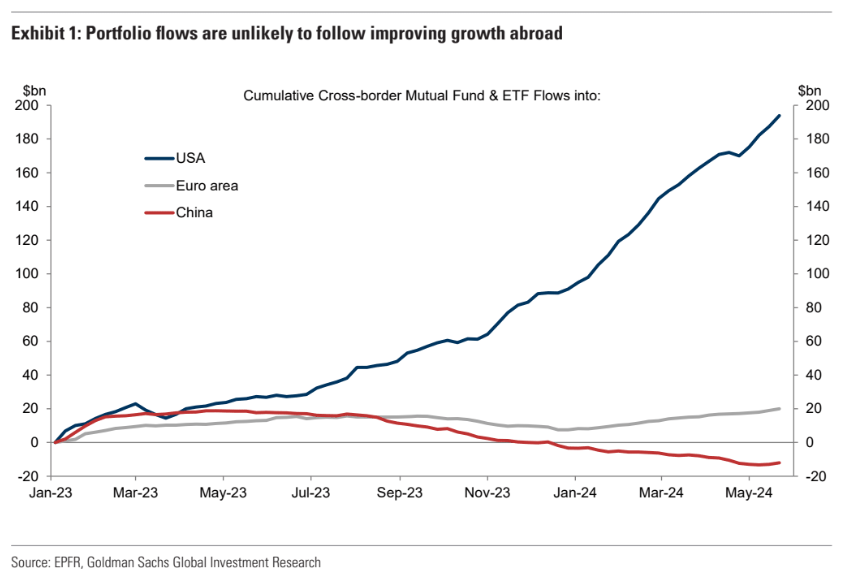
In this environment, portfolio flows are unlikely to follow better GDP to the extent that they might otherwise and it will be difficult for the Dollar to fall significantly ahead of the US election.
If new inflationary catalysts like tariffs or increased fiscal expansion some to bear then a “breakout” in favor of Dollar strength is more likely than breakdown.