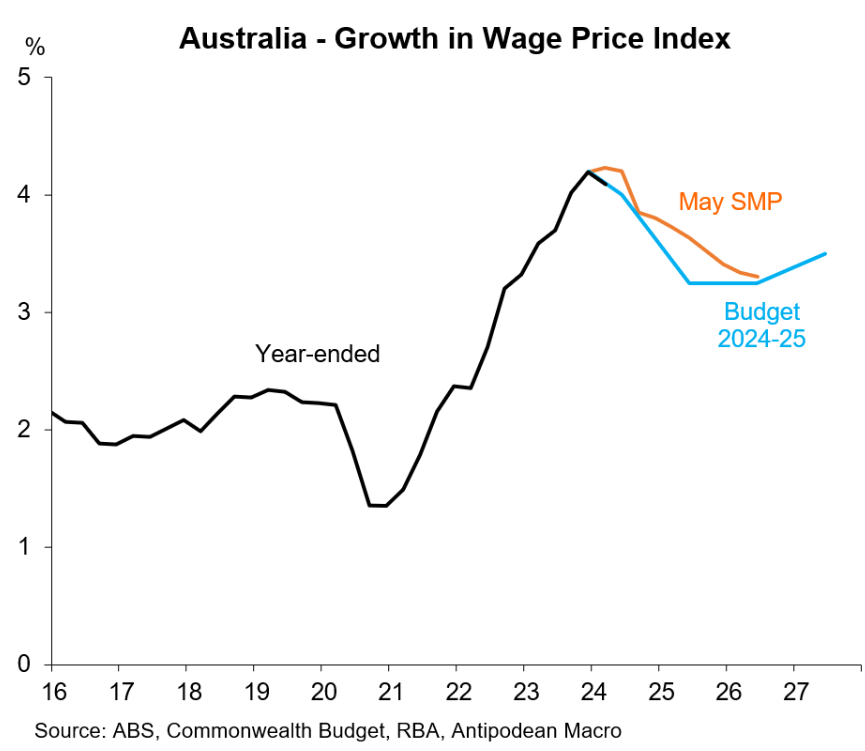
The Australian Bureau of Statistics (ABS) on Tuesday released data on Australian wage growth, which recorded only 0.8% growth over the March quarter, which was below economists’ expectations of a 0.9% rise.
As illustrated in the following charts from Justin Fabo at Antipodean Macro, wages grew in line with Tuesday’s federal budget forecasts but below the Reserve Bank of Australia’s (RBA) expectations:
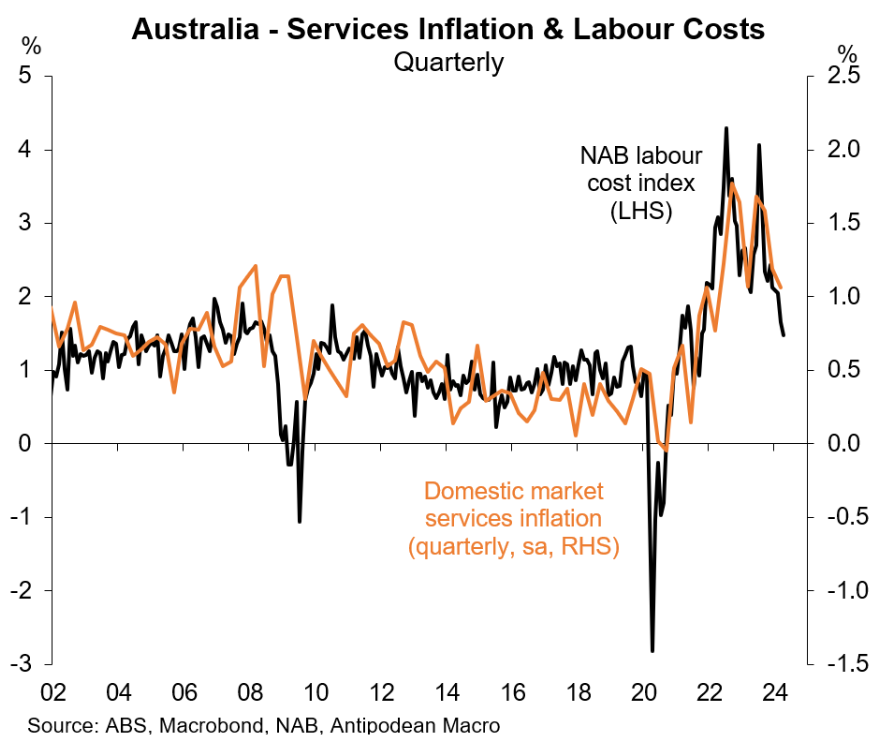
The result followed the wages wipe out recorded by this week’s NAB Business Survey:
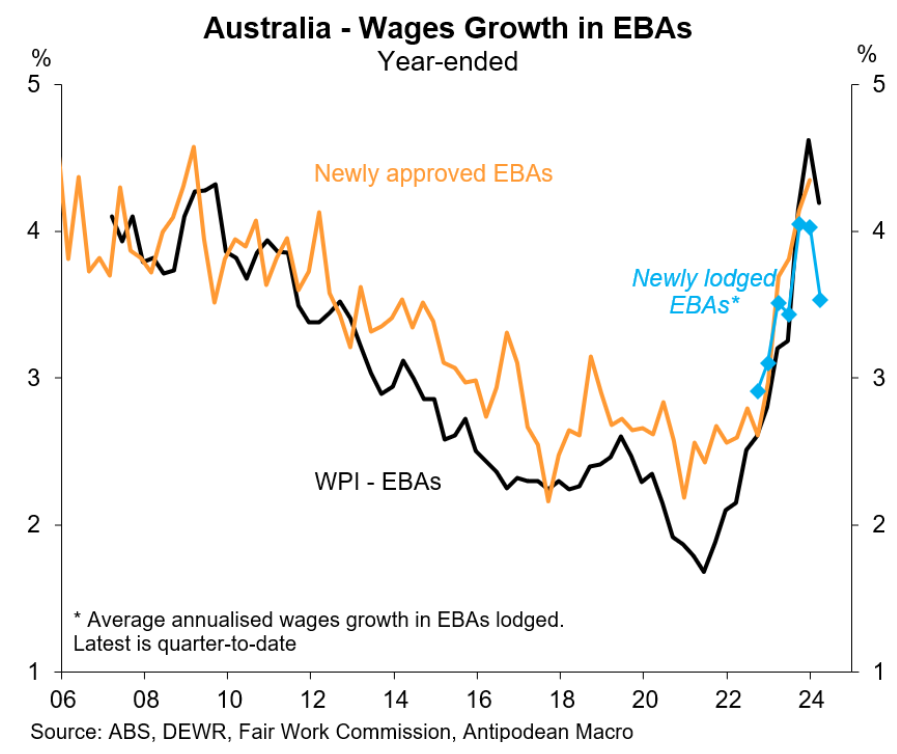
Wage growth in EBAs lodged with the Fair Work Commission has also slowed considerably:
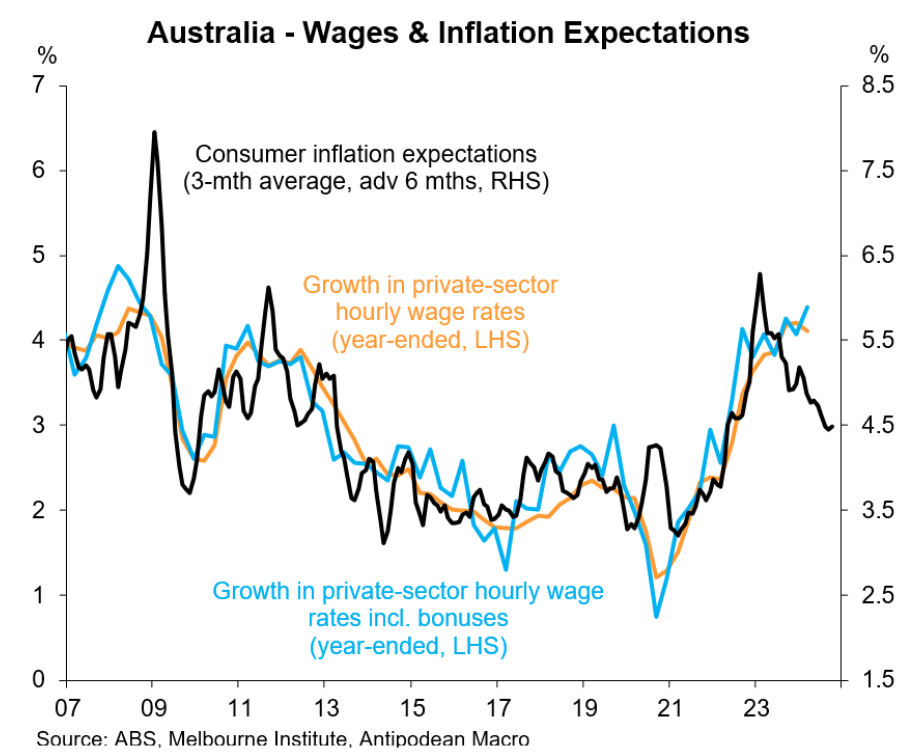
Whereas consumer inflation expectations are pointing to lower wage growth ahead:
The slowing of wage growth makes sense given the blowout in the number of applicants per job ad recorded by Seek:
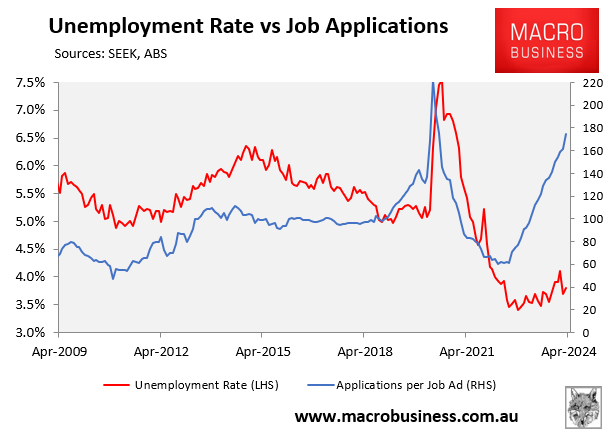
According to Seek, the number of applicants per job ad is currently running 55% above the same time in 2019. This suggests that there are far more workers competing for fewer jobs.
Finally, with quarterly wage growth (0.8%) running below headline (1.0%) and underlying (1.1%) CPI inflation, Australian real wage growth resumed falling in the March quarter:
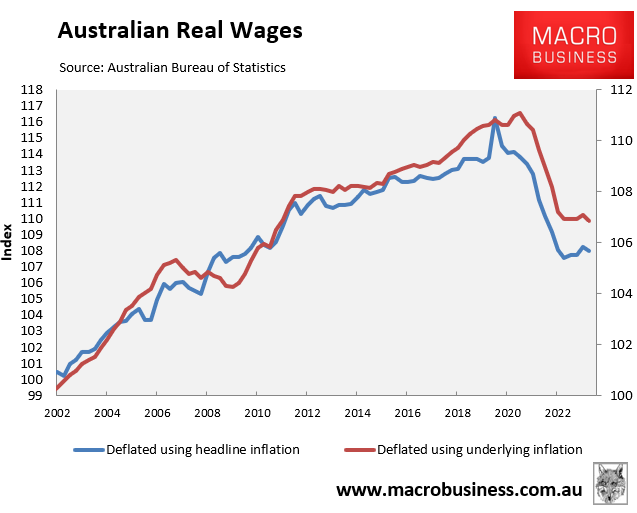
Australian real wages are now tracking 7.1% below their June 2020 peak when deflated by headline CPI inflation.
When deflated by underlying inflation, Australian real wages have declined by 3.1% from their June 2021 peak.
When this wage data is viewed alongside the weakening economy, there is little likelihood of the RBA raising interest rates further.
The next move in rates is almost certain to be down. It is only a question of when.