
On Thursday, I was interviewed by Tom Elliott on Melbourne’s 3AW Morning show where I explained the recession afflicting Australian households.
Below are the highlights.
Tom Elliott:
The economy appears to be stuffed. Economic figures that came out yesterday showed that for most of 2023, we were in what is called a per capita recession.
You will not hear the government talking about this but it is important.
Leith, what exactly is a per capita recession?
Leith van Onselen:
A per capita recession is when the economy doesn’t grow as fast as the population grows.
Last calendar year, the economy grew by 1.5%. That growth sounds okay on the surface. It’s weak but it’s growth.
The problem is the population grew by 2.6% over time. So effectively, the overall economy grew but everyone’s slice of the pie shrank and we went backwards.
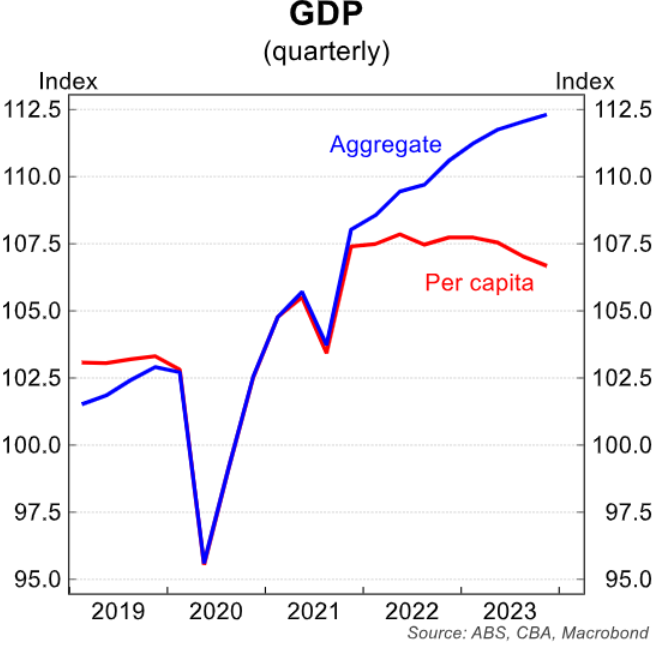
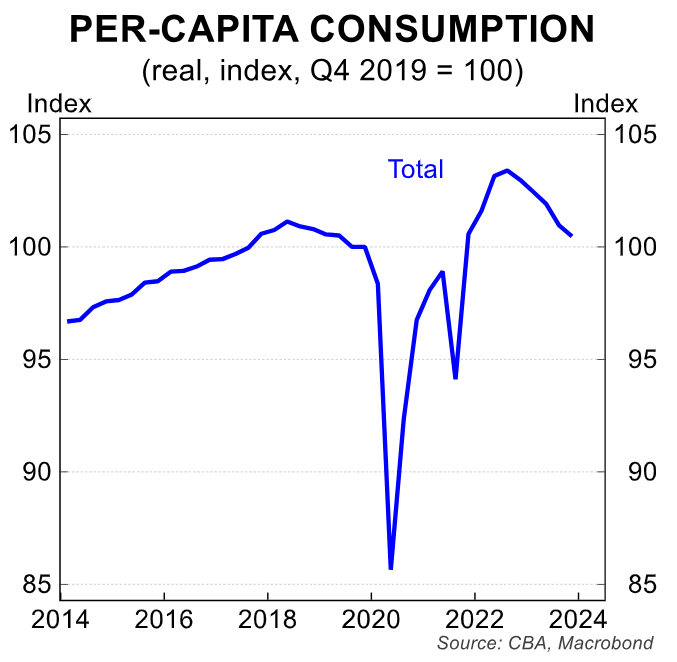
The data is actually worse than the headline suggests. The segment that we all care about is households because that’s where we live. We’re all households, so we care about our welfare.
Household consumption, once you adjust for population growth, fell by 2.5% over the year. So households are going backwards faster than the economy is going backwards in per capita terms.
Tom Elliott:
So when people sort of say that I’m getting paid the same as what I got a couple of years ago, but it doesn’t seem to be going as far, I mean, they’re right with that feeling?
Leith van Onselen:
Absolutely. Australian households have just been through their biggest ever decline in real disposable income.
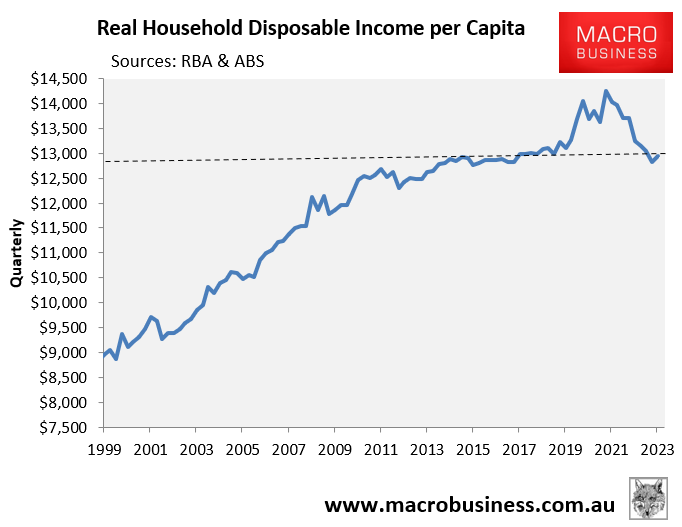
There’s a few reasons for that. We’ve had high inflation. Our wage growth, despite all the talk from the government, has been weaker than just about anywhere else in the world. We’ve also had a massive increase in mortgage payments. And lastly, and this is important, personal income tax bills have gone through the roof because of bracket creep.
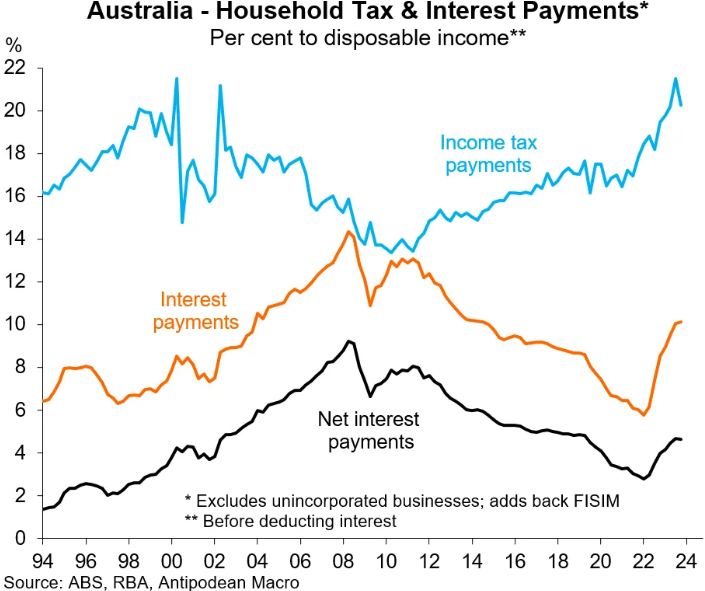
What it’s done is basically drain households of income. And we’ve had one of the biggest losses of household disposable income in the world.
Tom Elliott:
Okay, so when we got the immigration numbers a few months ago, we found out that almost 600,000 net migrants came to Australia in the past 12 months. I said then that I thought this was like a government Ponzi scheme. That the government knew the economy was weak. So they’ve flooded Australia with immigrants to try and cover that up. Do you think that’s
what’s happened?
Leith van Onselen:
Absolutely. To be honest, it’s happened for the last 20 years. Australia’s net overseas migration was ramped up from about 2005. It was more than doubled then, and now it’s doubled again.
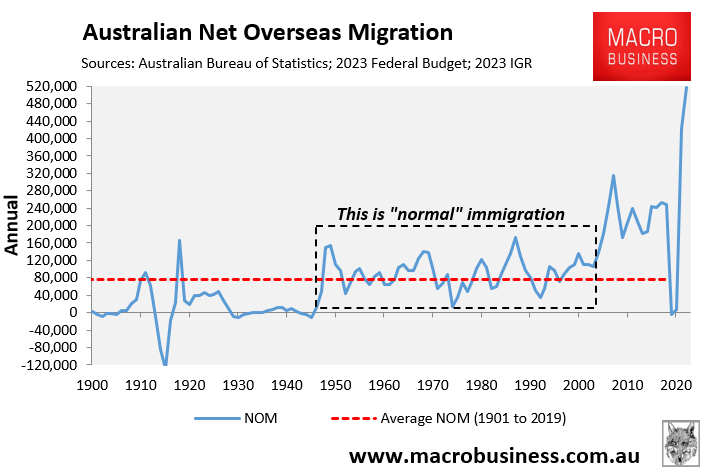
What that’s done is hid the very poor poor performance of the Australian economy.
Australia’s per capita GDP growth has been poor for 20 years. The problem is we’ve run a higher immigration program than just about anywhere else. So that’s made our growth look better than it was.
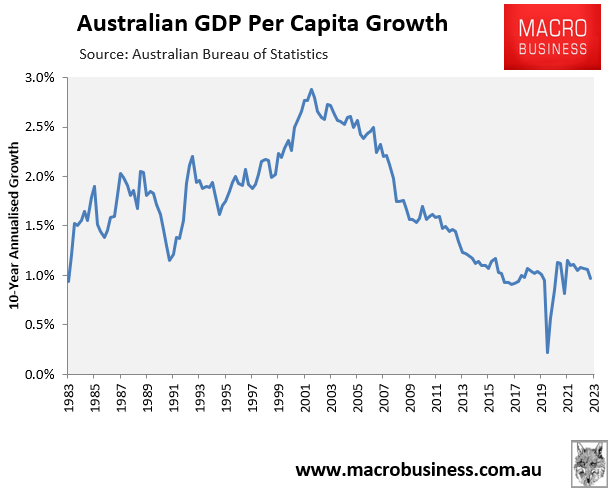
Individually, our living stands are going backwards. Not just from poor GDP and household incomes, but also because we’ve got more traffic congestion.
We’ve got a rental crisis. Liveability generally has been trashed, especially in big cities like Melbourne and Sydney.
