
2023 witnessed record labour supply growth across Australia, with the civilian population aged 16-plus growing by 643,000 (3.0%) in the year to November:
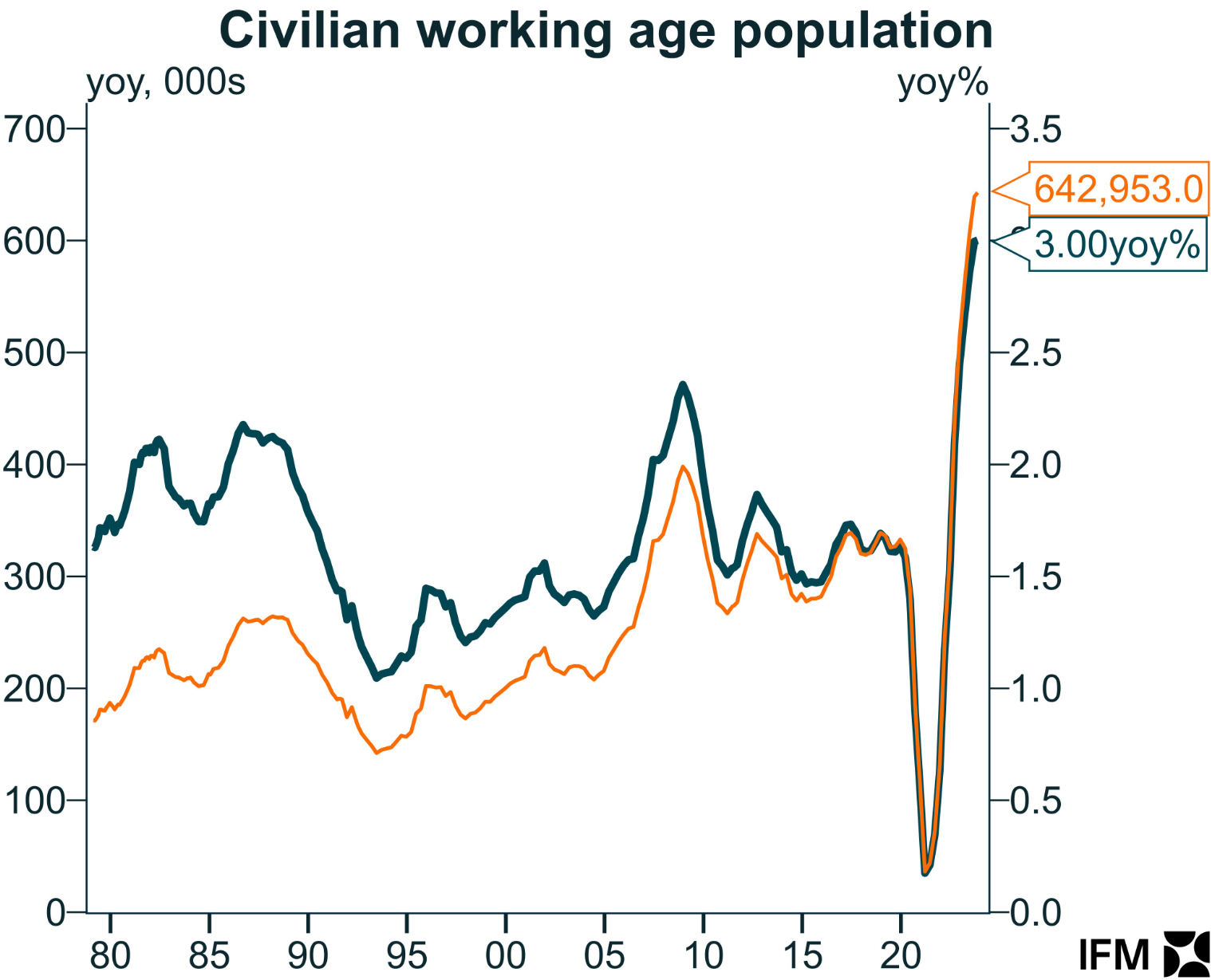
Source: Alex Joiner
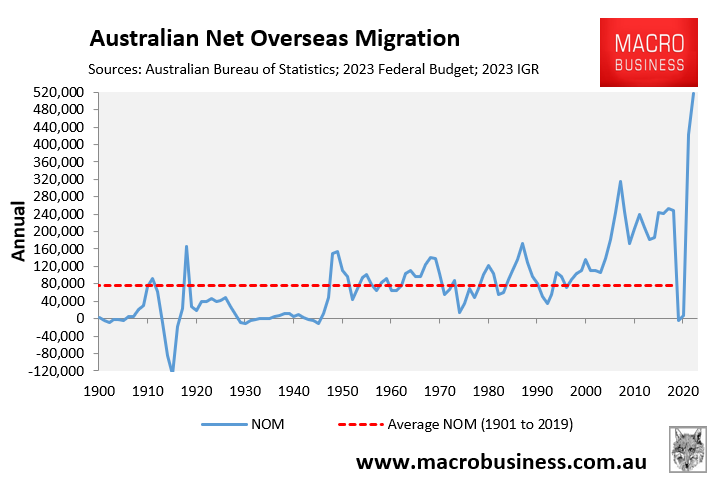
The drivers of this expansion in the labour supply were: 1) record net overseas migration recorded (see below chart); and 2) Peter Costello’s Baby Bonus kids hitting working age:
The combination of surging labour supply and softening demand (following 13 interest rate hikes by the RBA) means the balance of power in the labour market is gradually shifting back to employers.
This is one of six hiring trends that recruitment firm Robert Half has identified for 2024, with another major trend including a moderation in salary offers.
Robert Half director Andrew Brushfield says employers are no longer hiring people simply to prevent them from joining a rival firm.
“Andrew Brushfield, a director at the agency, said demand for labour across the roles he recruits had cooled significantly since 2022 and the early part of 2023 when “everyone and his dog was hiring”, The AFR reported.
“Where some companies were once hiring candidates just to prevent them from joining a rival – and paying hand over fist to get them through the door – now they were only bringing in fresh recruits when the need was acute, he said”.
“Employers are probably giving [the recruitment] the time and headspace and thought process that it deserves, versus a couple of years ago when there was a real sense of, ‘if I don’t hire this person, and hire them quickly, I’m going to lose this person’”, Mr Brushfield said”.
The salad days for Australian workers are clearly coming to an end.
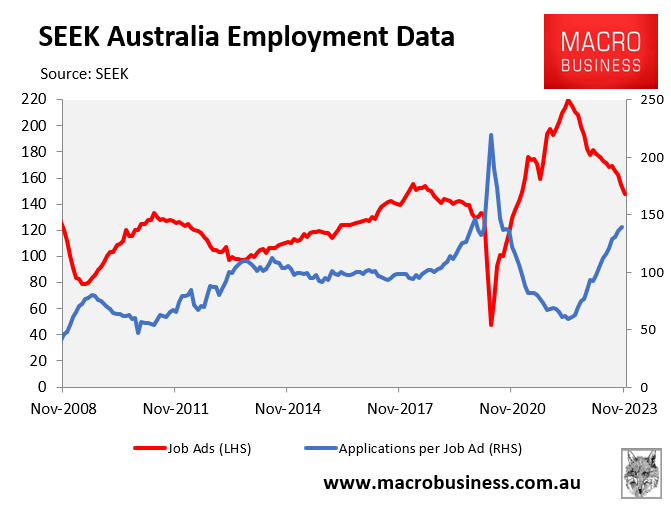
The number of job ads dropped sharply last year and the number of applicants per job ad has risen well above pre-pandemic levels (indicating the mix of declining ads and growing labour supply):
Meanwhile, the sharp lift in the number of applicants per job portends a significant increase in Australia’s unemployment rate this year:
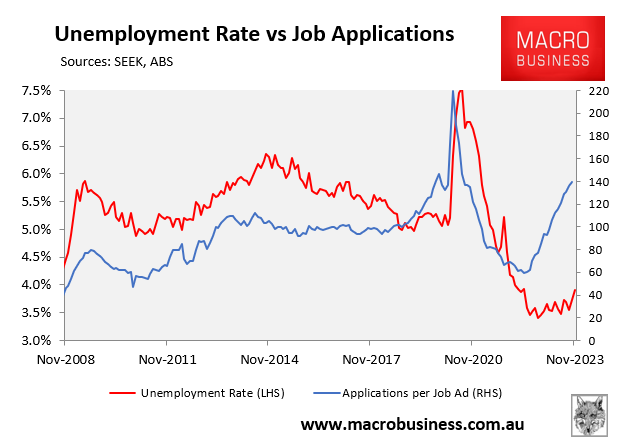
Rising unemployment inevitably also means that wage growth will decline.
Indeed, the next chart from Justin Fabo at Antipodean Macro shows a sharp fall in the rate of job switching, which also portends slower wage growth in the period ahead:
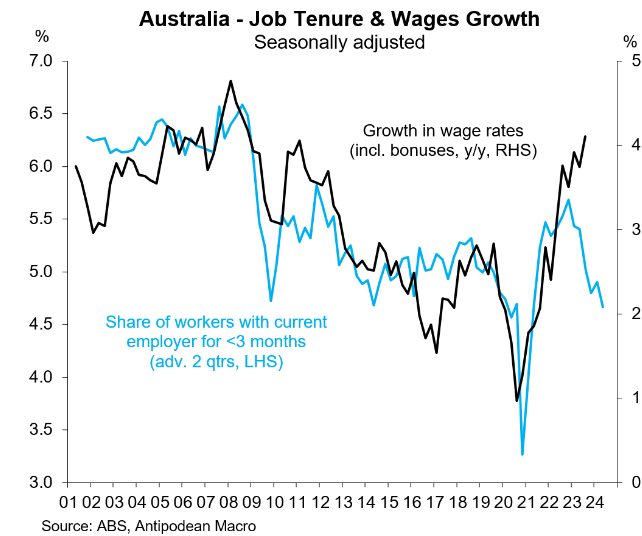
I am tipping that Australia’s official unemployment rate will be close to 5% by year’s end with wage growth also falling.
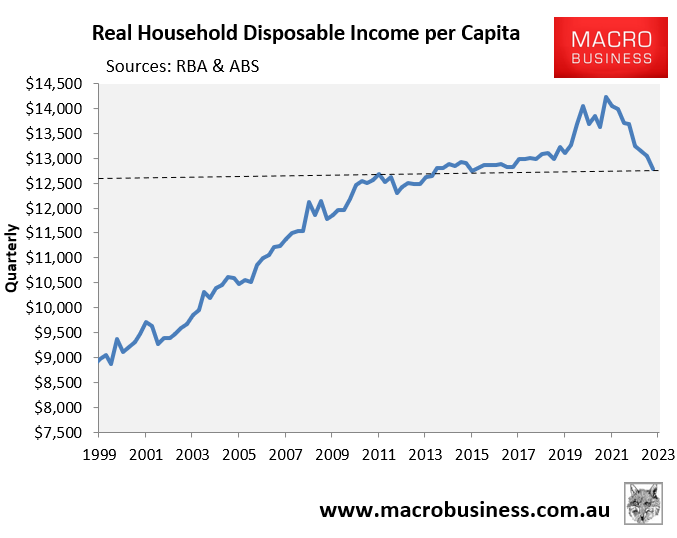
This is not the news you want to hear when the nation has just experienced its biggest fall in household disposable income on record and weak consumer spending has already plunged the economy into a per capita recession.
It also augers badly for the Albanese government, which will head to the polls in the first half of 2024.
