Credit Agricole with the note.
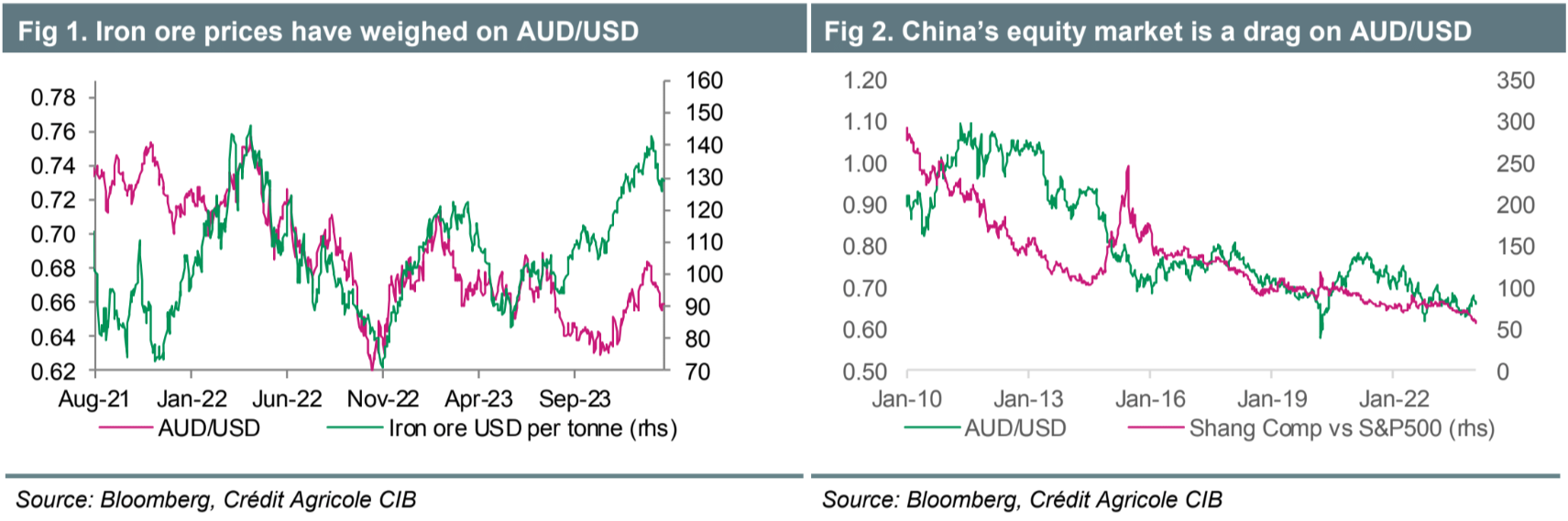
A drop in iron ore prices and repricing of the Fed have weighed on AUD/USD in early 2024.
We maintain our AUD/USD forecasts of 0.68 and 0.72 for Q1 and Q4, for several reasons:
1. Peak China pessimism: we forecast China’s real GDP growth to slow further in 2024.
But investor pessimism towards China’s economy could be nearing a peak given recent efforts by policymakers to stabilise sentiment.
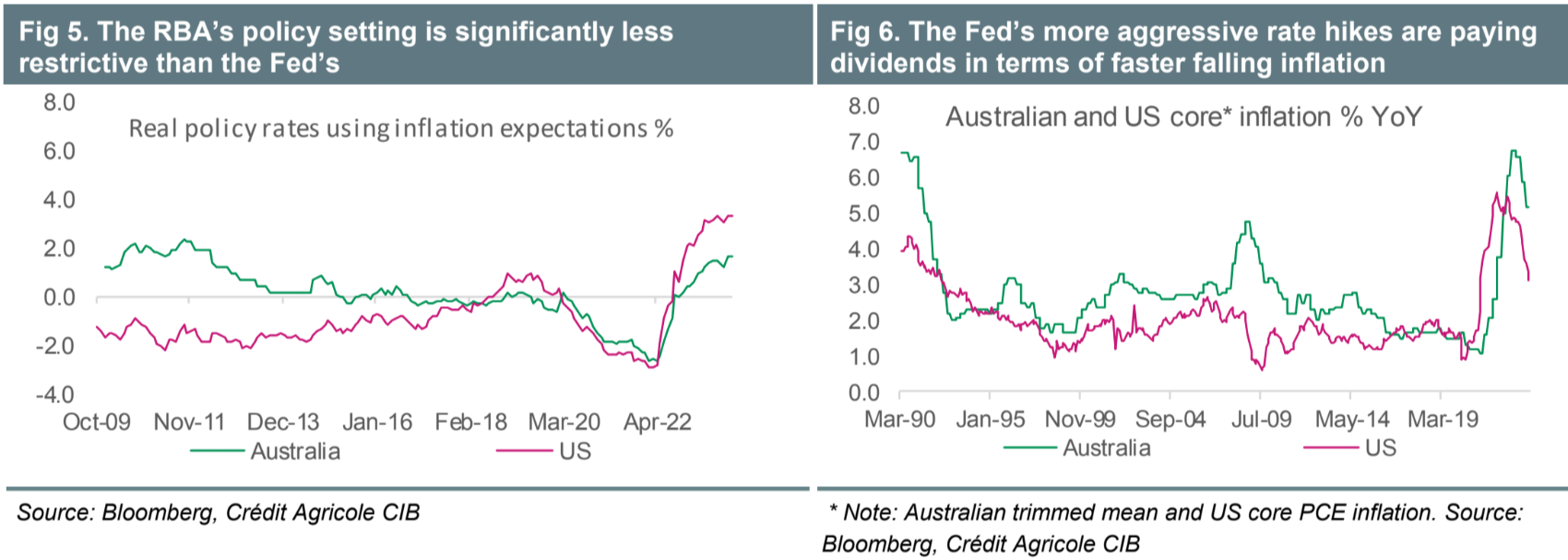
2.RBA to lag the Fed in cutting rates: US core inflation is receding faster than Australia’s due to the Fed’s more restrictive policy setting relative to the RBA.
This will allow the Fed to cut rates sooner and by more than the RBA.
3.Loosening fiscal policy Down Under: the Australian government’s tinkering with the Stage 3 income tax cuts and likely further cost of living relief measures mean fiscal policy is providing more of a boost to the economy than previously assumed by the RBA.
I more or less agree, but my target prices for AUD are lower because:
- We are not at “peak China pessimism” because the problem is not sentiment, it is structural adjustment.
- The RBA will only lag the Fed because the Australian cycle is six months behind due to lockdowns. Real Australian rates are lower than the US, but the household debt burden is MUCH higher. The direct impact on mortgages and the household sector by the cash rate mean the RBA is just as tight as the Fed. Aussie inflation is higher owing to unique immigration and energy screwups.
- Tax cuts will add to inflation a little, but other fiscal supports take away it and might as well be permanent. The gas cartel and immigration rental shocks aren’t going to stop.
- Alboflation is also offset by the higher inflation target and a much weaker wages outlook in Australia versus the US.
I expect the RBA to end up catching down to Fed cuts in due course.