
Analysts at Citi have warned that Australian housing construction could hit an “air pocket” in 2024 as the backlog on homes under construction finally catches up with falling approvals.
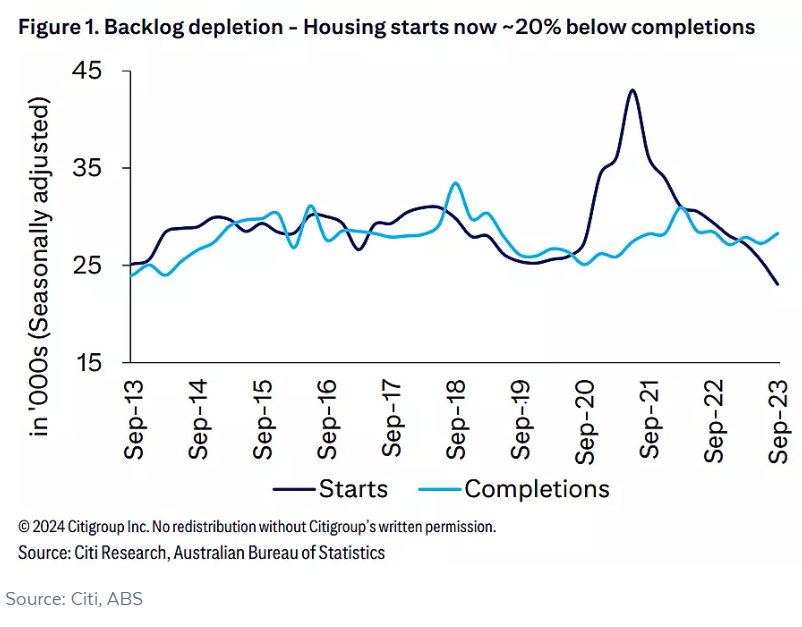
“We continue to take a cautious stance on construction activity in calendar 2024, and our best estimate is the data points to a potential “air pocket” at least in the second half of calendar 2024”.
“Subsequently, we have a relatively neutral/cautious outlook for Australian housing construction exposure in calendar 2024”, Citi Vice President and Analyst Samuel Seow wrote.
Seow pointed to several data points suggesting the construction outlook has worsened, namely:
- Home approvals fell circa 2% in November, and on a trailing 12-month basis these are now running at only around 100,000.
- New home sales are running below pre-pandemic levels after declining 30-40% year-on-year.
- Vacant land sales at large REITs are underwhelming.
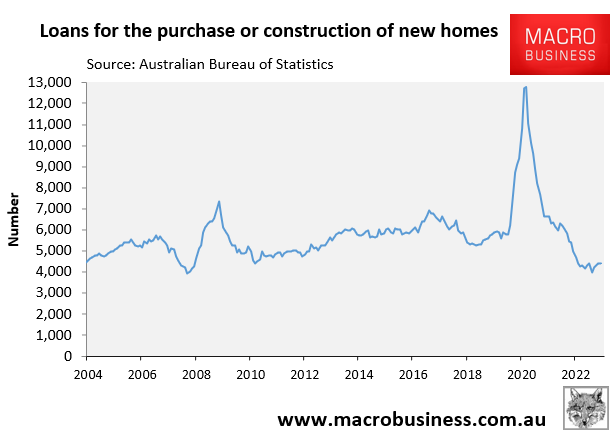
The data is certainly dire, with the number of loans for the purchase of new homes running at historically low levels:
Dwelling approvals, commencements, and completions are each tracking around decade lows at the same time as the nation’s population is growing at a record pace:
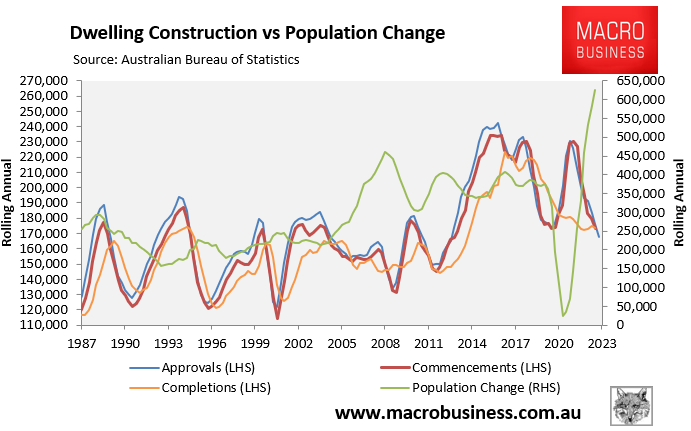
The upshot is that there is no end in sight to Australia’s housing shortage, with demand via population growth certain to continue overrunning supply.
It also means that the Albanese government’s target of building 1.2 million homes over five years has zero chance of actually being achieved given the numbers are running in the opposite direction.
Instead of dreaming up fanciful housing targets, the Albanese government should instead take the pressure off demand by slashing net overseas migration to sensible and sustainable levels below 150,000 a year.
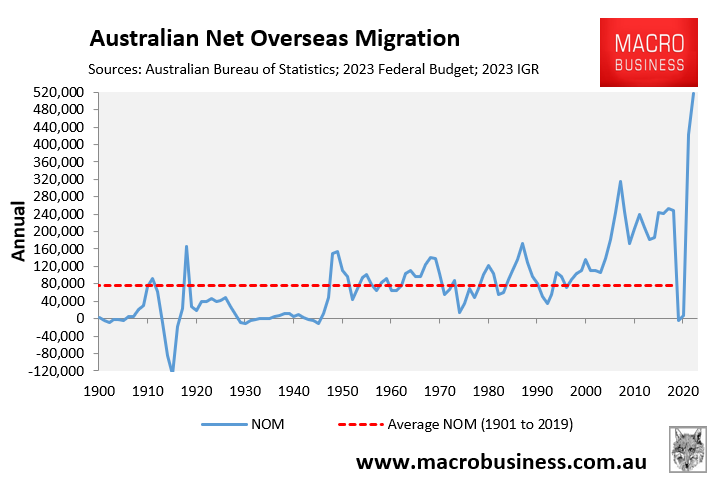
Otherwise, the housing shortage circus will roll on and on.
