
Record high international students, decade low domestic students
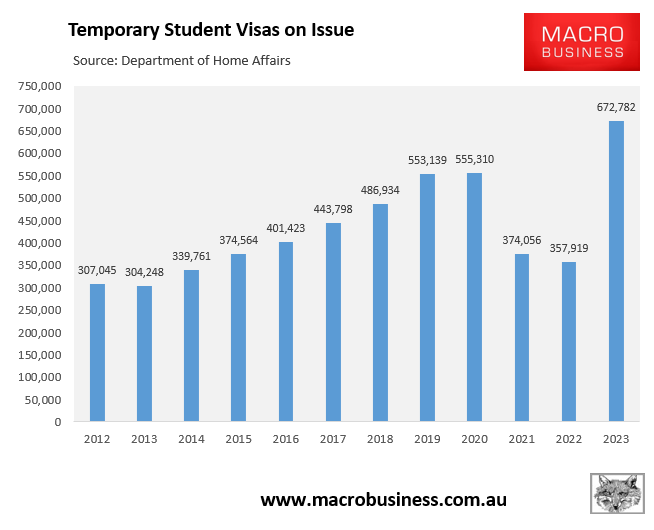
The latest data from the Department of Home Affairs showed that there were a record 673,000 temporary student visas on issue in October:
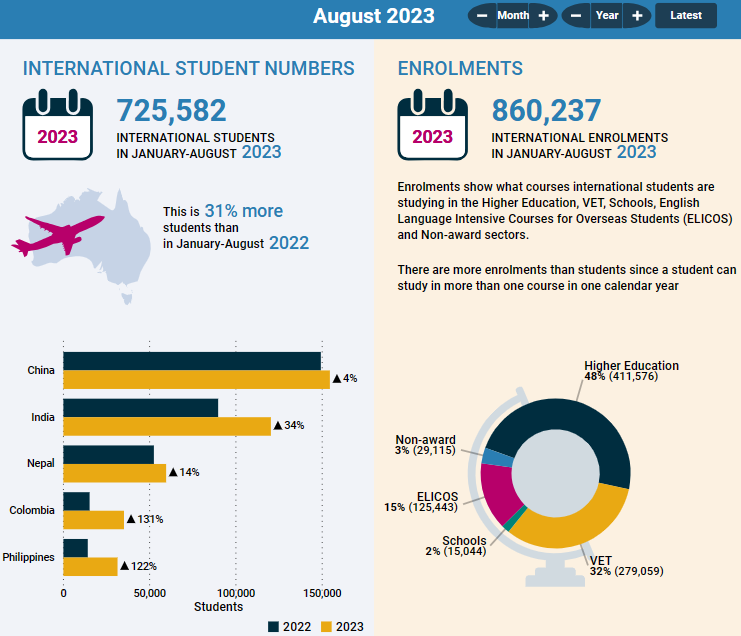
This surge in student visas has been driven by low-income nations such as India and Nepal, according to the Department of Education:
At the same times as international student numbers are at all-time highs, domestic enrolment applications have plunged to a decade low:
Year 12 applications through the University Admissions Centre are at the lowest level in more than a decade as demand for higher education falls.
The decline in applications means the ATAR cut-off for some degrees could fall as students defer their studies or choose to work in the face of the increasing cost of living.
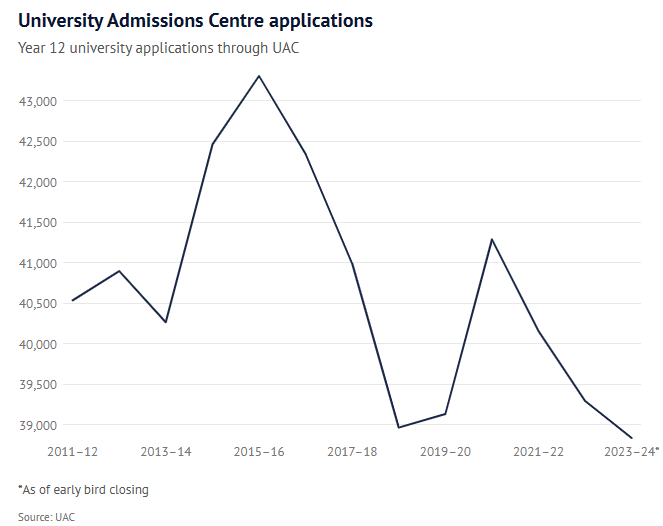
Despite a larger cohort of HSC students, the number of all applications through the University Admissions Centre as of November dropped 2% compared to last year. The number of early offers through UAC fell about 10%.
Kim Paino, the general manager of marketing and engagement at UAC, said the high cost of living, stronger job market and increased costs of university degrees could all be contributing to the softening of demand.
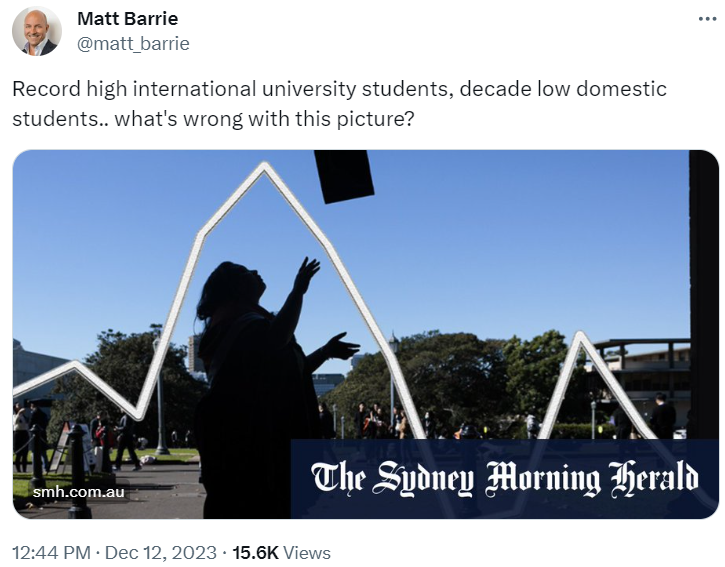
Matt Barrie was quick to highlight the divergence between domestic and university enrolments:
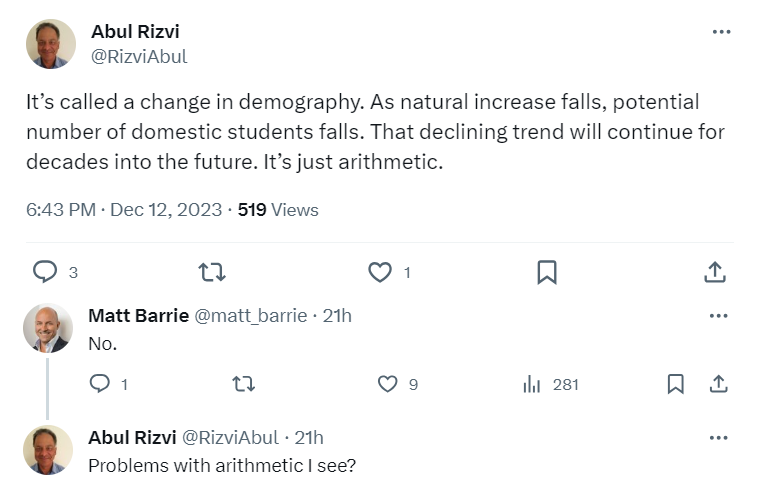
As usual, immigration influencer Abul Rizvi ran interference, wrongly claiming that the decline in domestic applications reflects demographics:
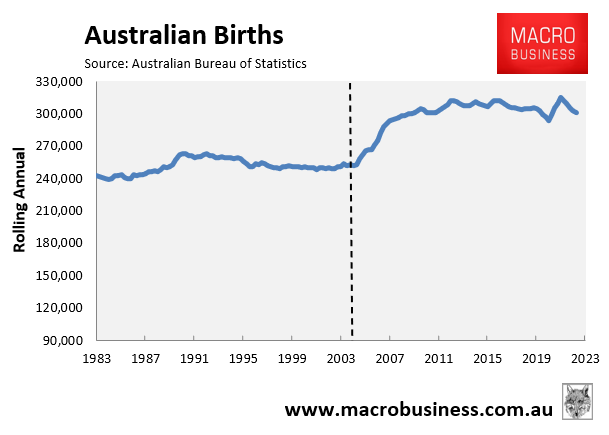
Clearly, Abul Rizvi has “problems with arithmetic”, given Peter Costello’s baby bonus kids are hitting university age, meaning that enrolments should be booming based on the “change in demography”:
We all know the real reason why international student numbers are booming. It’s because of Australia’s generous work rights and prospects for permanent residency.
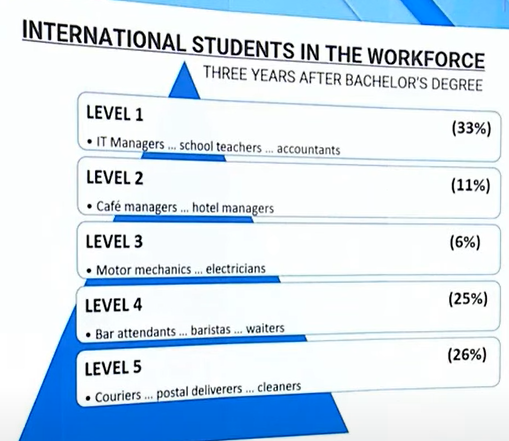
Meanwhile, international graduates continue to add to Australia’s pool of working poor, primarily working in low-skilled and low-paid jobs:
They also suffer much higher unemployment, lower participation rates, and lower median salaries than domestic graduates:
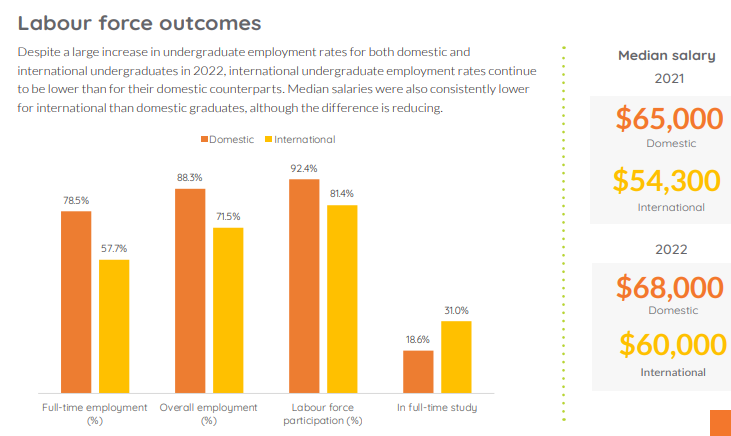
Source: Graduate Outcomes Survey (2022)
It’s no wonder Australia suffers from chronic skills shortages given what the higher education sector is churning out.
Australia’s international education ponzi scheme has literally delivered a gigantic low-paid, low-skilled migrant underclass.
If you took away Australia’s generous work rights and made it far harder to stay in Australia post study, international students would stop coming and the whole stinking edifice would collapse.
