
Goldman with the note.
USD: Pivot party. Following downside inflation surprises and this week’s FOMC meeting, our US economists made a significant change to their Fed call.
They now expect 5 rate cuts next year, compared to just one in our initial 2024 Outlook.
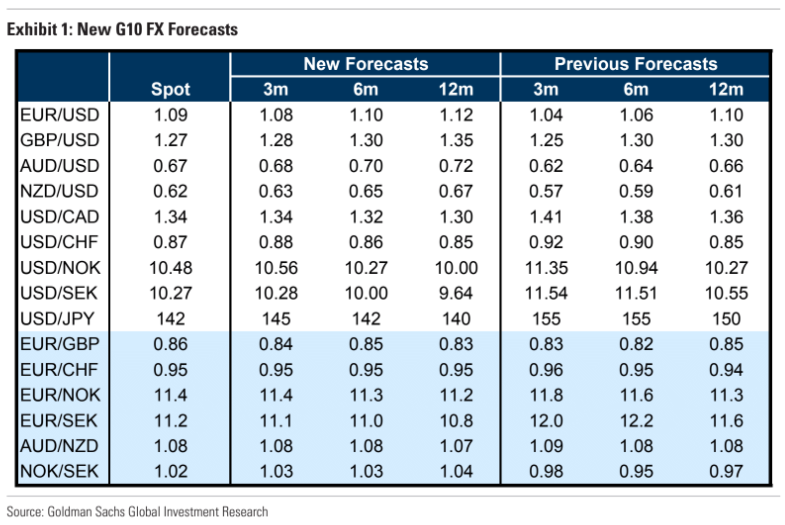
As a result, we are making a number of changes to our FX forecasts, in a more pro-cyclical direction.
In our FX Outlook, we had argued that the Dollar should be “stronger for longer” given our view of US growth outperformance, limited rate relief, and ongoing struggles in the major “challengers.”
However, we flagged that the key downside risk to this view was a faster move towards non-recessionary Fed cuts.
With the FOMC seemingly putting more weight on an improving inflation picture, we are incorporating that scenario more squarely in our forecasts.
That said, we see a number of reasons why the “pivot party” should be more limited in FX than some other asset classes.
First and foremost, while the Fed appears to be turning towards rate cuts as a policy preference, cuts priced and being delivered in some other jurisdictions—especially the Euro area and China—look like much more of a policy necessity.
In other words, we think the Fed has already shown its dovish hand, but the ECB for example could (and probably will) shift further than it did this week.
That should still keep some support for the Dollar, especially if the Fed ultimately takes a shallower path in response to the firmer growth that we expect.
Because the inflation trend has been a global one, the FOMC’s evolving narrative could even open more space for other central banks to respond more aggressively to falling inflation, which would for example allow EM duration to outperform currency returns.
As a result, our new forecasts incorporate more Dollar weakness than before, with three key features.
First, the biggest revisions to our forecasts are in the rate-sensitive currencies that would have struggled under a “higher for longer” rates regime (such as JPY, SEK and IDR).
To a large extent, we are just embracing the marked shift in these currencies over the last two months.
Second, we see the most “room to run” from current levels in pro-cyclical currencies that should benefit from the Fed loosening its grip on financial conditions and adding to the case for a soft landing (including KRW, ZAR, AUD, NZD and GBP).
Third, we expect relatively contained returns from current levels in the key challengers that still face a number of idiosyncratic domestic hurdles (EUR, CNY and JPY).
Effectively, evolving expectations for the Fed make it a little more comfortable for the cyclical parts of FX to be “living in a Dollar world,” but we are still “waiting for a challenger” to be able to take the lead and fully erode the Dollar’s strength.
Sounds right to me.
