
The Australian Bureau of Statistics (ABS) on Thursday released its Household Spending Indicator for August, which revealed that spending in real terms is falling led by heavy falls in discretionary spending.
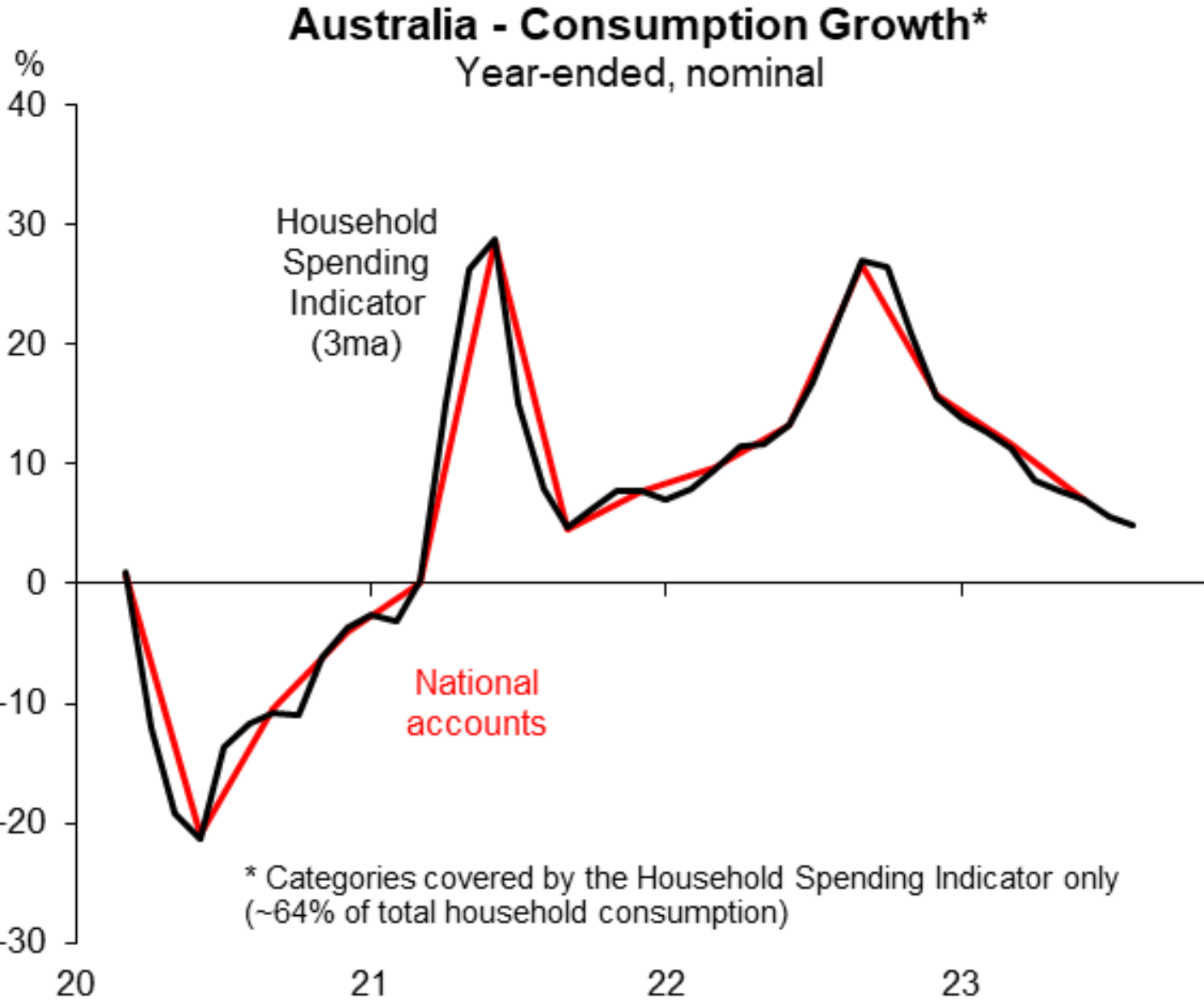
Macquarie Group senior economist, Justin Fabo, has created the below charts tracking the ABS’ monthly spending indicator against quarterly household consumption in the national accounts.
The first chart below shows that Australia’s consumption spending, as measured in the national accounts, will post another fall when the September quarter national accounts are released in December:
Source: Justin Fabo (Macquarie Group)
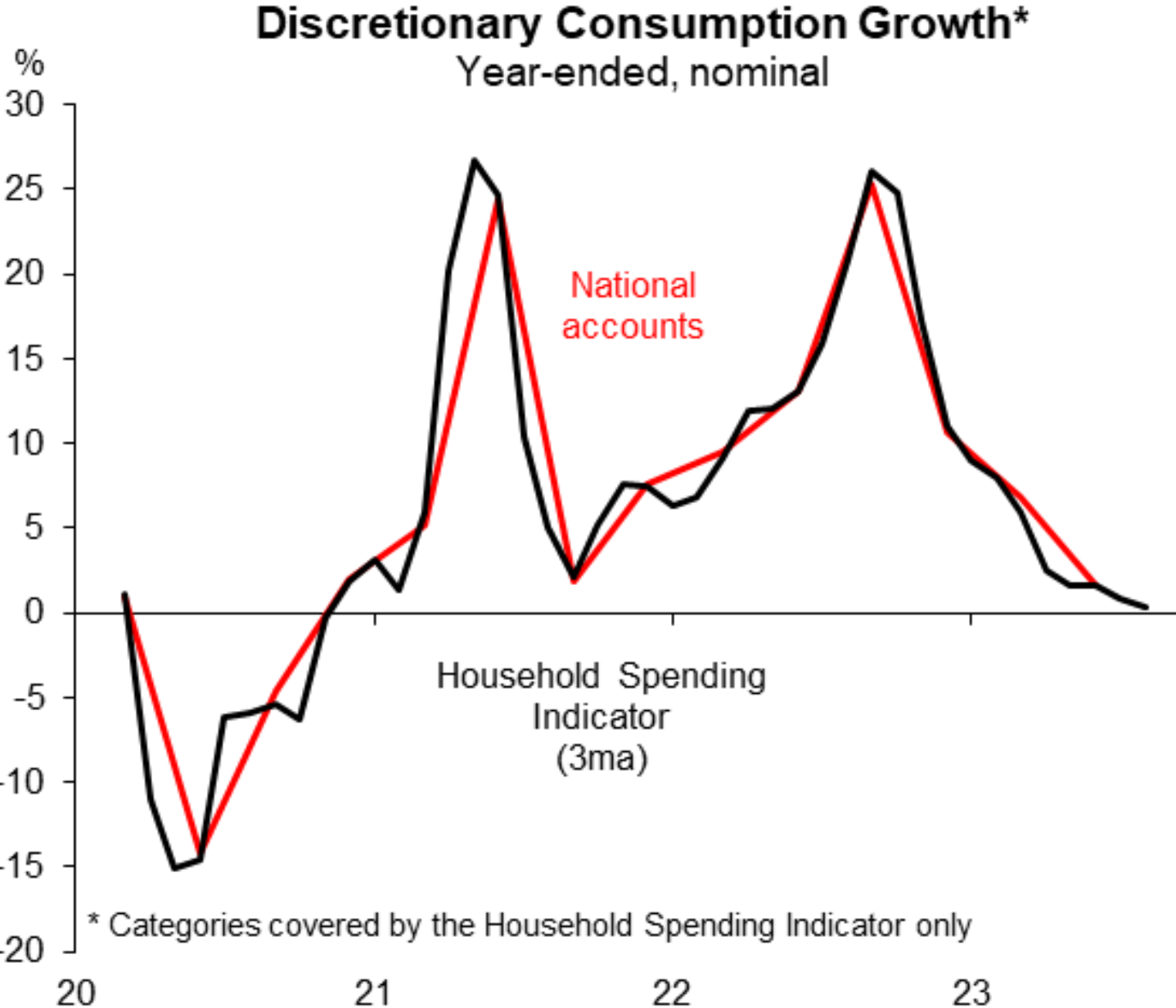
The next chart from Fabo shows that discretionary consumption will lead the decline in growth:
Source: Justin Fabo (Macquarie Group)
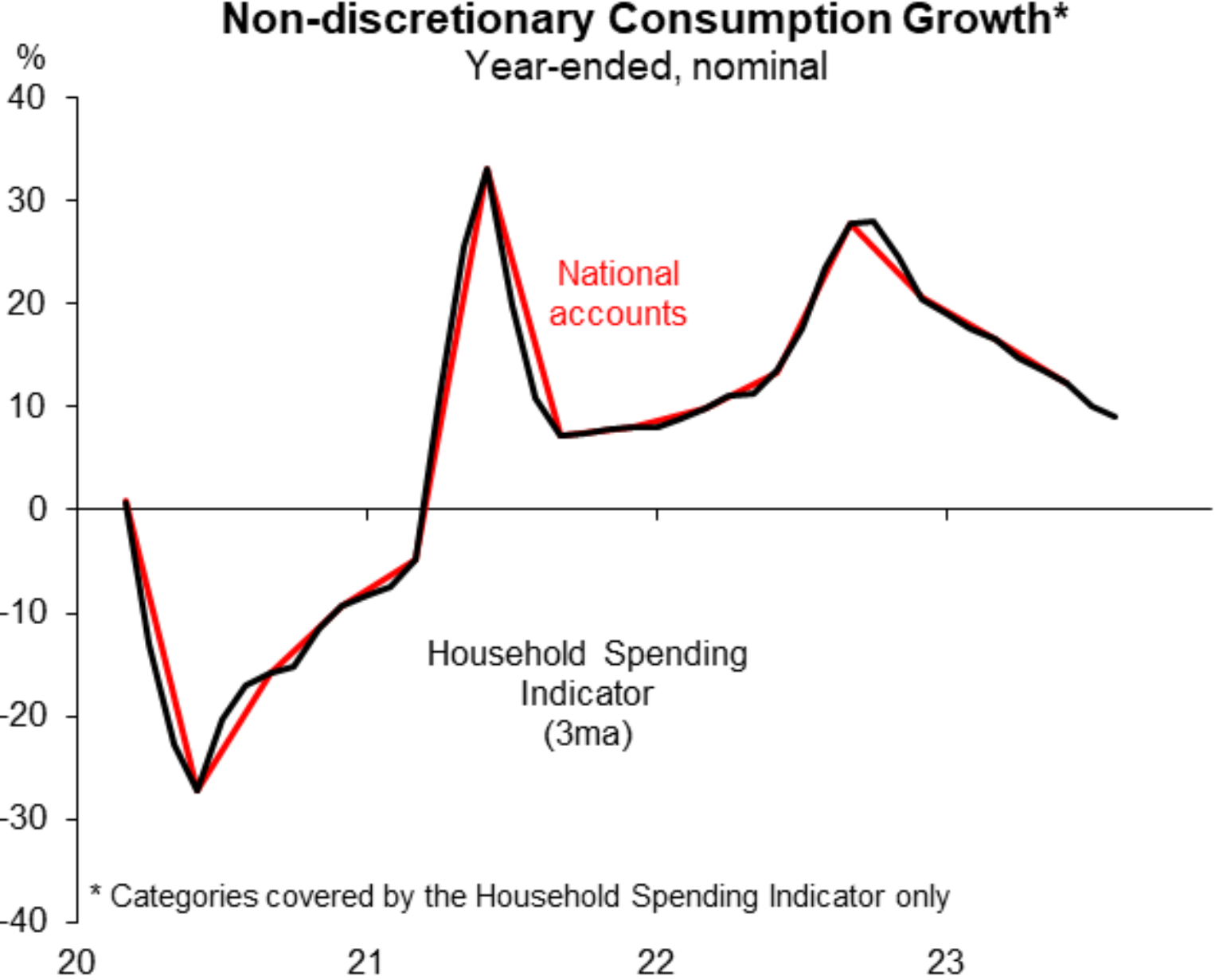
Non-discretionary spending growth will also decline, but from a much higher level:
Source: Justin Fabo (Macquarie Group)
This is obviously bad news for the Australian economy, which was already experiencing a per capita recession in the June quarter:
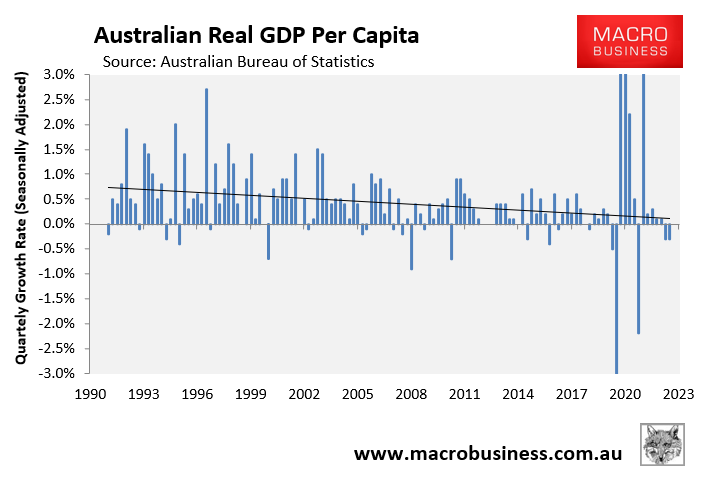
This recession has been driven by the decline in real household consumption per capita, which fell by 0.2% in the year to June:
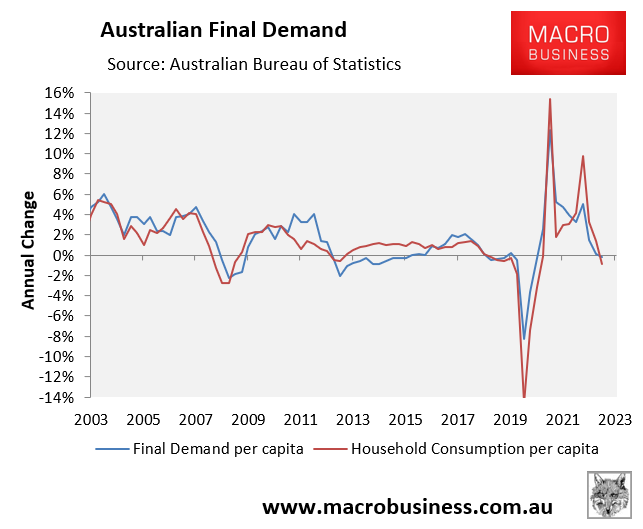
Household consumption accounts for more than half of the nation’s economic growth. Therefore, where it goes, the economy usually follows, as illustrated clearly in the chart above.
Indeed, the OECD recently forecast that Australia will suffer a two-year per capita recession, with 2024 expected to be even worse than 2023.
The only thing stopping Australia from entering a “technical recession” – i.e. two consecutive quarters of negative economic growth – Albanese Government’s record immigration program.
However, while the overall economic pie continues to grow amid record population growth, everybody’s share of the pie is shrinking and living standards are declining.
