
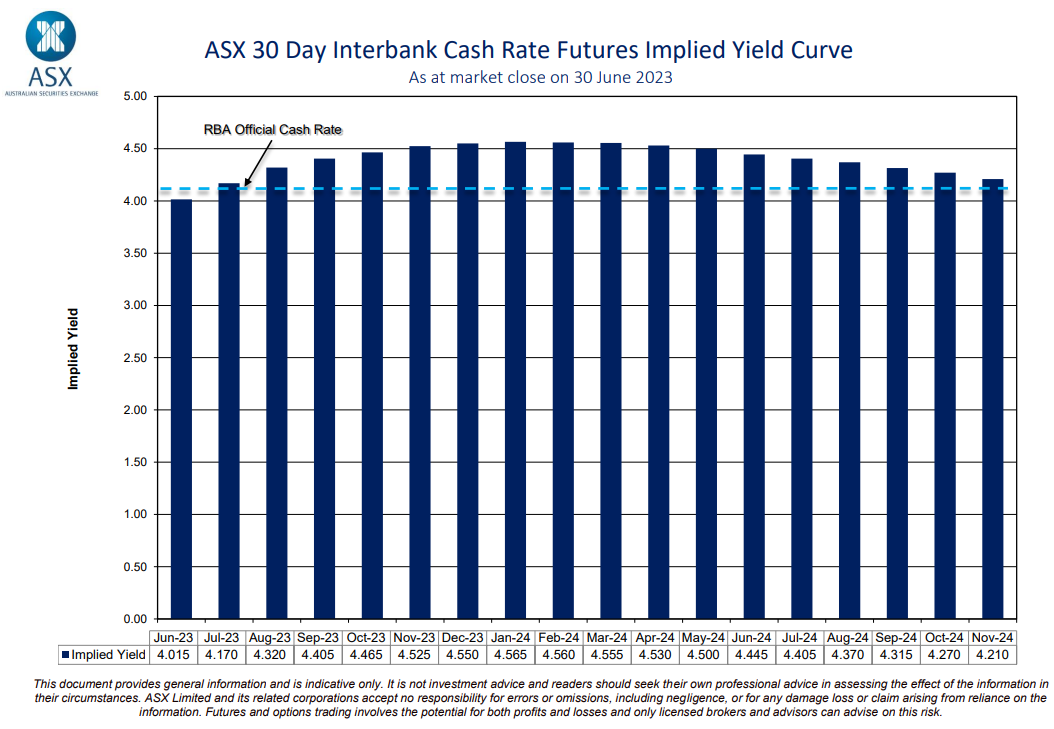
Financial markets are telling the Reserve Bank of Australia (RBA) to hike the official cash rate (OCR) another two times before the end of the year:
Martin North explained the ructions over the weekend on Digital Finance Analytics.
“According to some economists, and into expectations that the RBA may deliver one further interest rate rise, is an increase in long dated yields, both locally and abroad”.
“Long-term US bond yields galloped higher since July alongside strong economic data. An unexpected increase in planned bond issuance to finance the US government’s yawning budget deficit, which Fitch expects to be 6.3% of GDP this year, the yield on the 30-year US Treasury hit a 16-year high of 4.95% on Tuesday”.
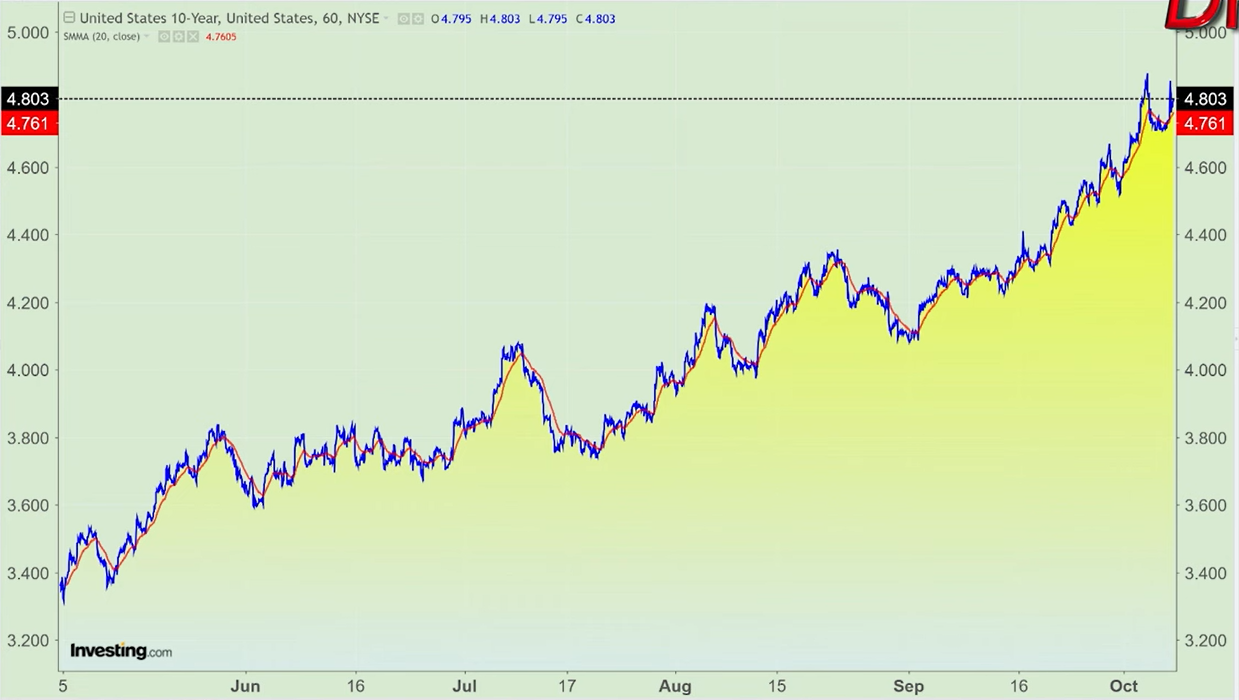
“But the RBA decision to leave the cash rate at 4.1% earlier in the week comes amid a rout in global equity markets triggered by a surge in those long-dated US bond yields, which has raised expectations interest rates will have to be high for longer, and by the way briefly drove the Australian dollar as low as 62.9 US”.
“Traders ascribe a one in three chance that the RBA board will raise the cash rate to 4.35% in its November 7th board meeting and a 57% chance of a cash rate rise by 5 December”.
“JP Morgan’s Chief Economist Michael Knox said Bullock would ultimately be forced to raise the cash rate in response to the increase in long data us yields, which he said were being dragged higher by an unsustainable US budget deficit”.
“Vanguard senior economist, Alexis Gray, said her biggest concern was that core inflation was not falling fast enough”.
“She expects one or two more interest rate rises in the next few months, as evidence mounts that inflation is proving stickier than forecast. It’s driven by the fact that you’ve got a very tight labour market, unemployment is still pretty close to record lows, wages are growing quickly, and although goods prices have come down, we are seeing more services based inflation”.
My view is that the RBA will remain on hold for a prolonged period.
The average interest rate paid in Australia will continue to rise for around another six months as the fixed rate mortgage reset runs its course. This means that monetary setting will tighten organically without further rate rises.
Moreover, while petrol prices have provided a positive impulse to inflation, and services inflation remains sticky, this is offset by the fact that the domestic economy is weakening.
Household consumption is falling in real terms. The economy is in a per capita recession. And broad indicators show the labour market is easing, which will temper wage growth.
The RBA has suggested that it will remain on hold unless there is a positive surprise in the macroeconomic data.
This is the right course of action. And for the above reason should see the RBA remain on hold well into 2024.
