
Australian real wages have fallen at a record pace over the past 18 months as growth has failed to keep pace with inflation:
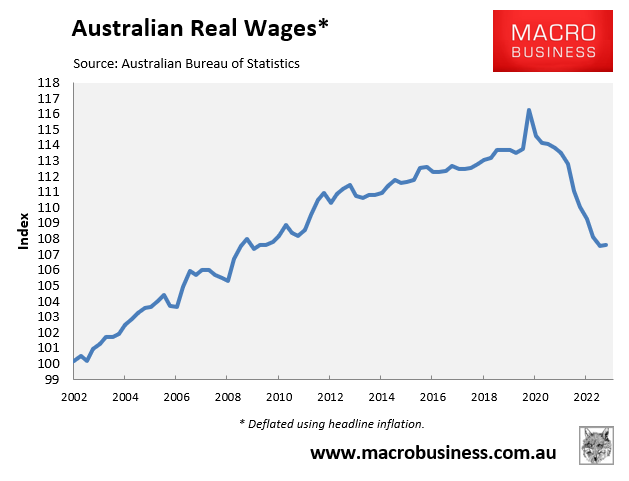
The latest labour force data from the Australian Bureau of Statistics (ABS) and elsewhere suggests that nominal wage growth should moderate, suggesting real wages will continue to fall for some time yet.
The ratio of applicants per job ad is now tracking well above pre-pandemic levels, according to SEEK:
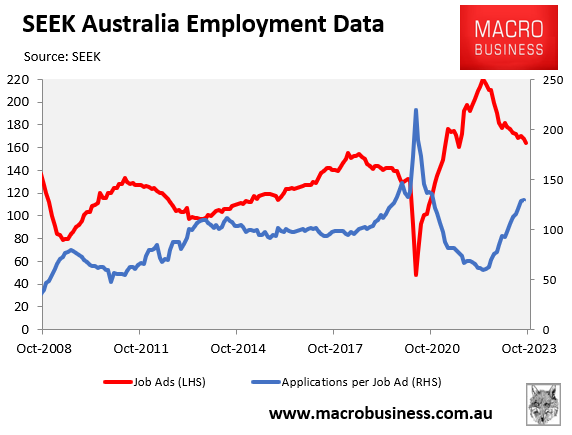
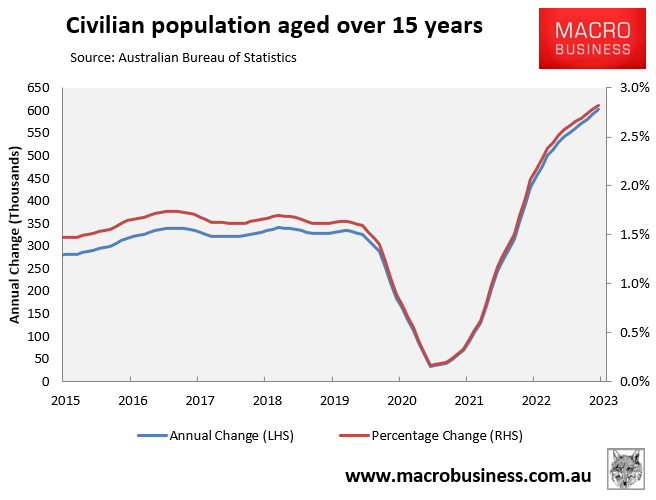
This reflects both lower job demand (falling job ads) as well as record labour supply growth:
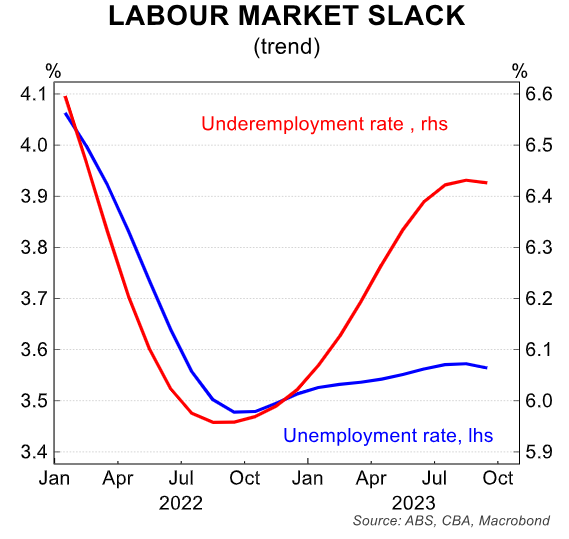
While the ABS’ official unemployment rate fell by 0.1% in September, reflecting lower labour force participation, underemployment has been trending higher, signaling rising labour force slack:
Reflecting this, CBA’s wage indicator, which is a leading indicator for the official ABS wage price index, has stalled despite the impetus from the recent Fair Work minimum and award wage decision:

IFM chief economist, Alex Joiner, posted the below charts on Thursday showing that “the full time hiring boom that characterised the pandemic seems like it is over with growth in part-time jobs dominating recently”:
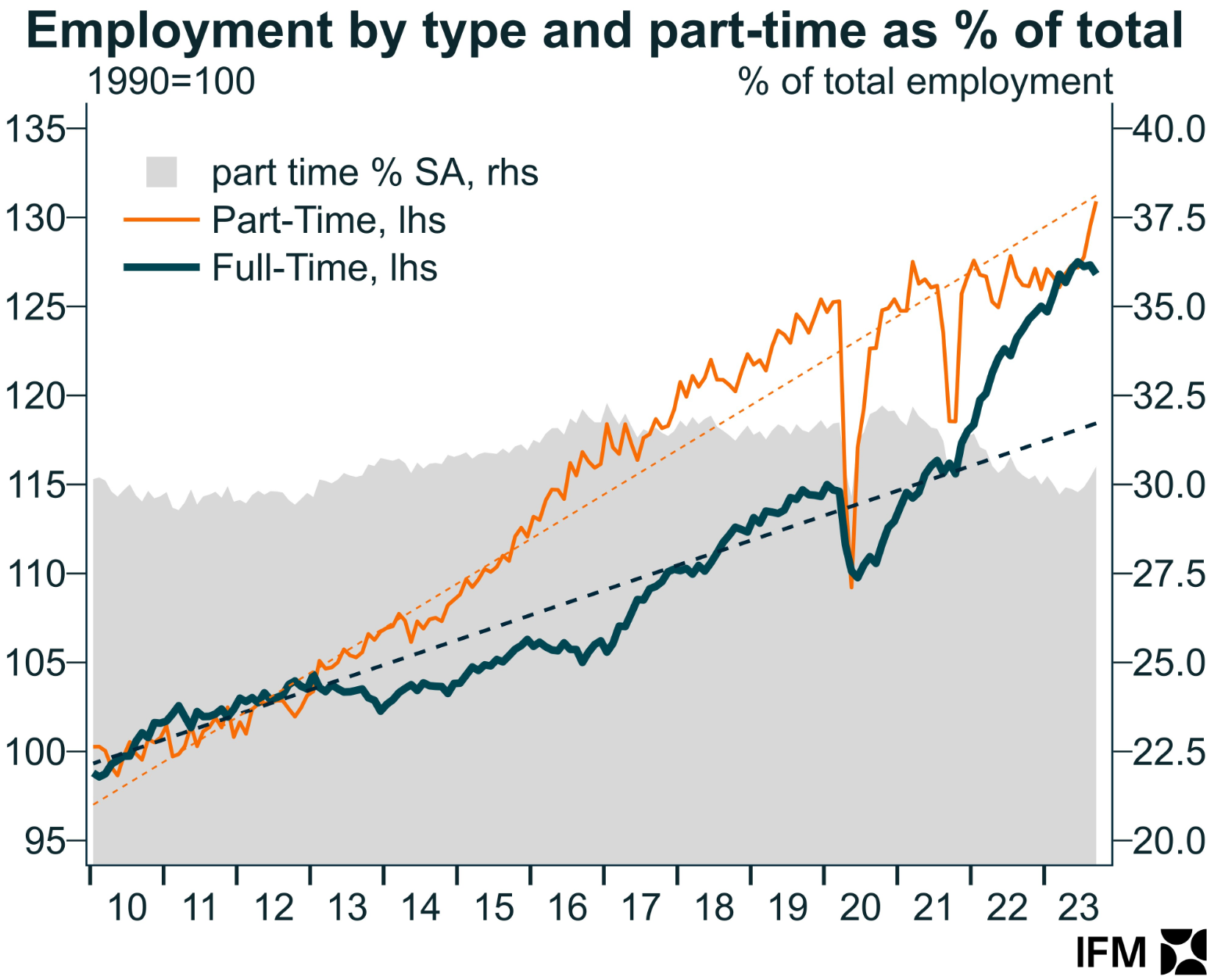
Source: Alex Joiner
Moreover, Joiner notes that “with part-time employment comes more flexibility with hours, this will be reflected in underutilisation and then potentially in wages growth”:
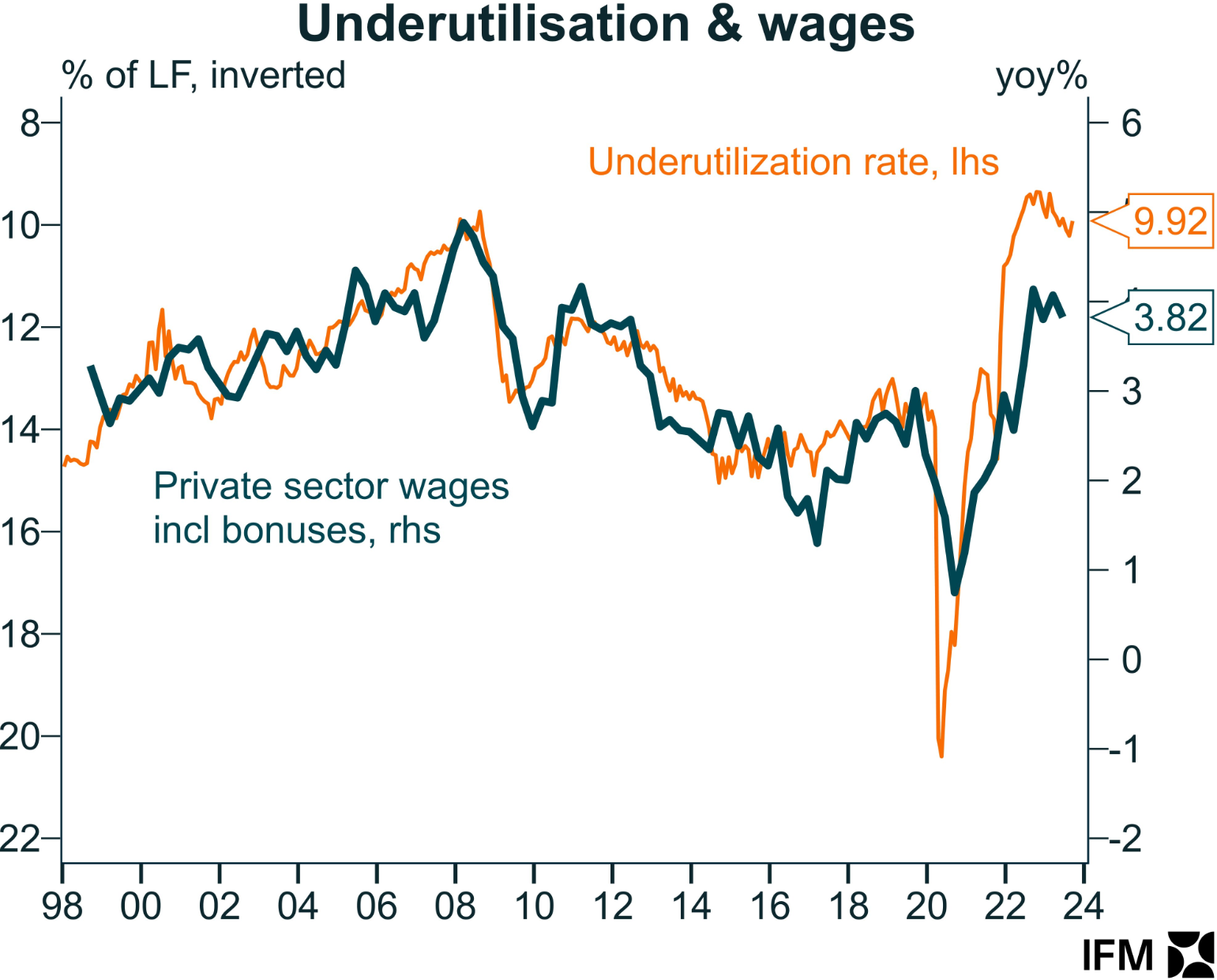
Source: Alex Joiner
Given the record labour supply growth alongside the resurgence of inflationary pressures (e.g. petrol prices), Australian real wages face a prolonged period of falls.
