
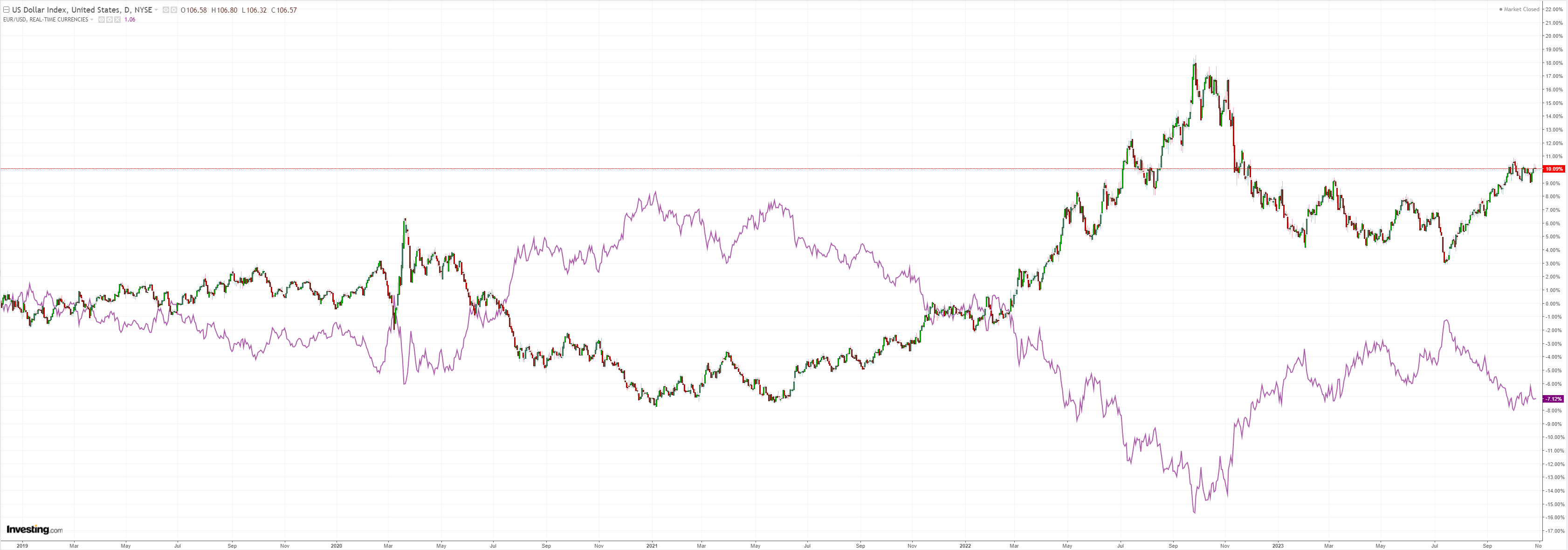
DXY is holding at the highs:
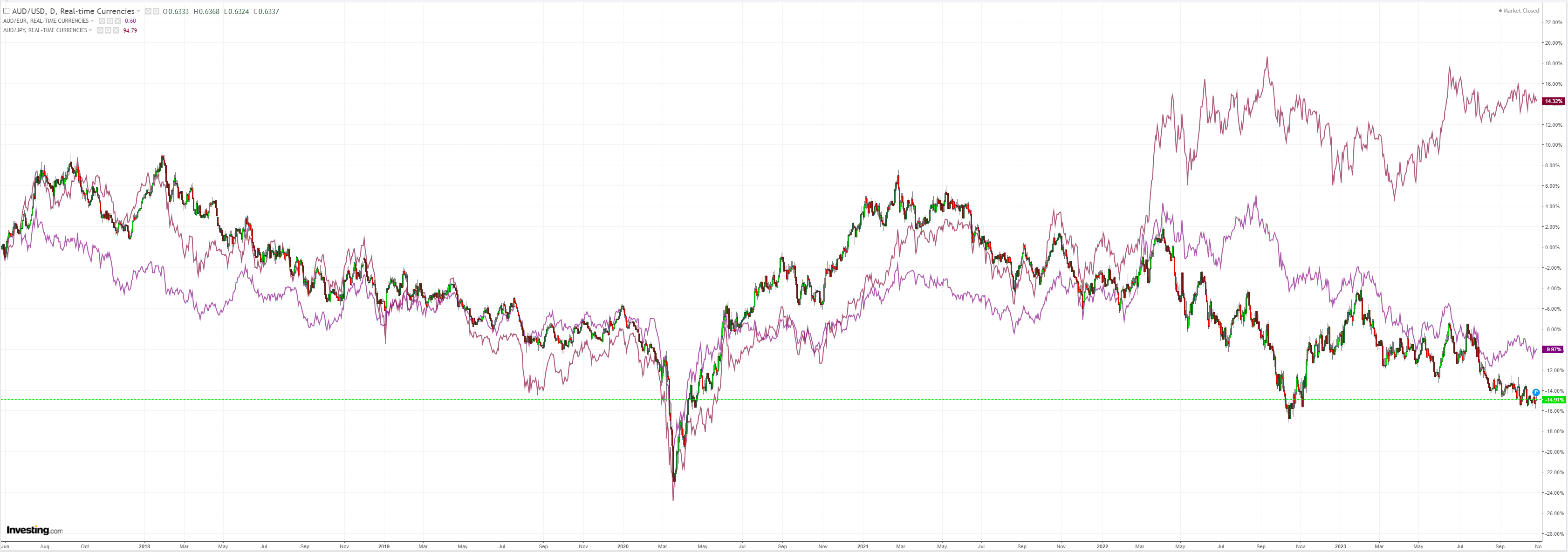
AUD is likewise at the lows:
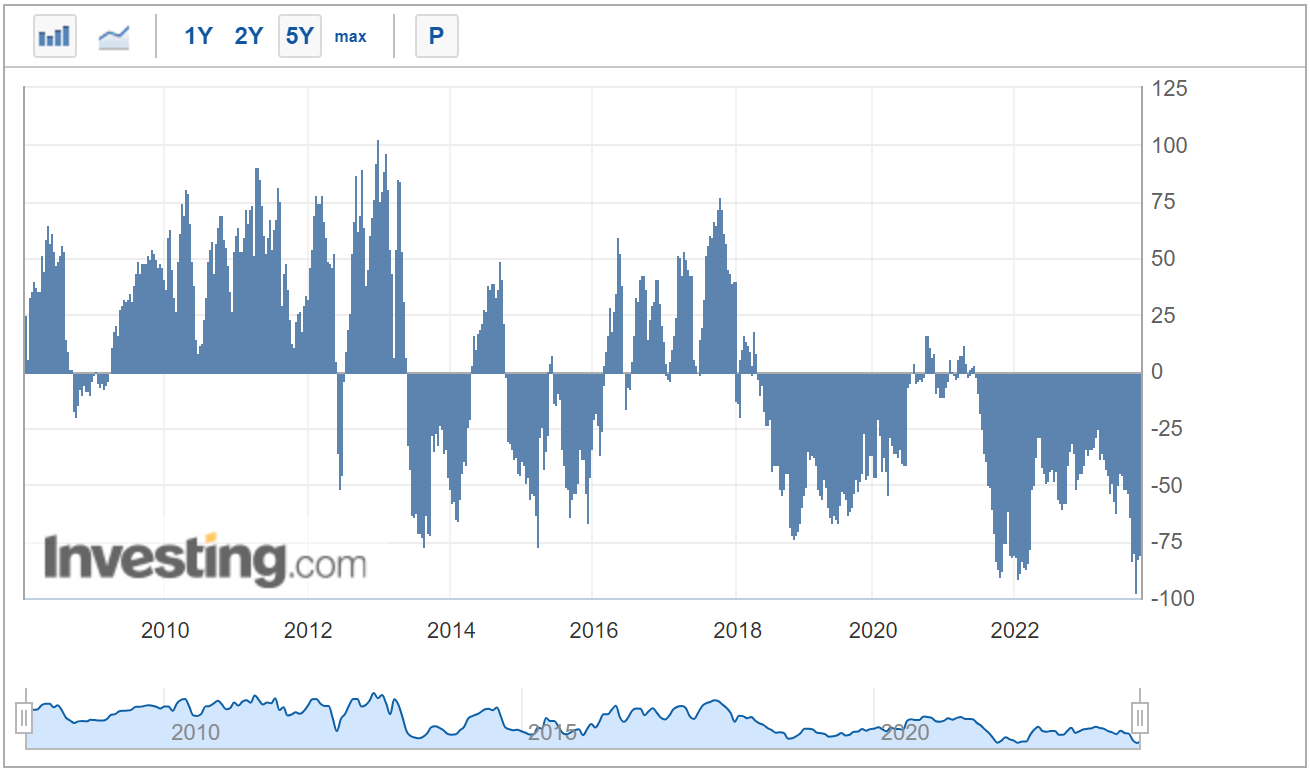
CFTC remains very short:
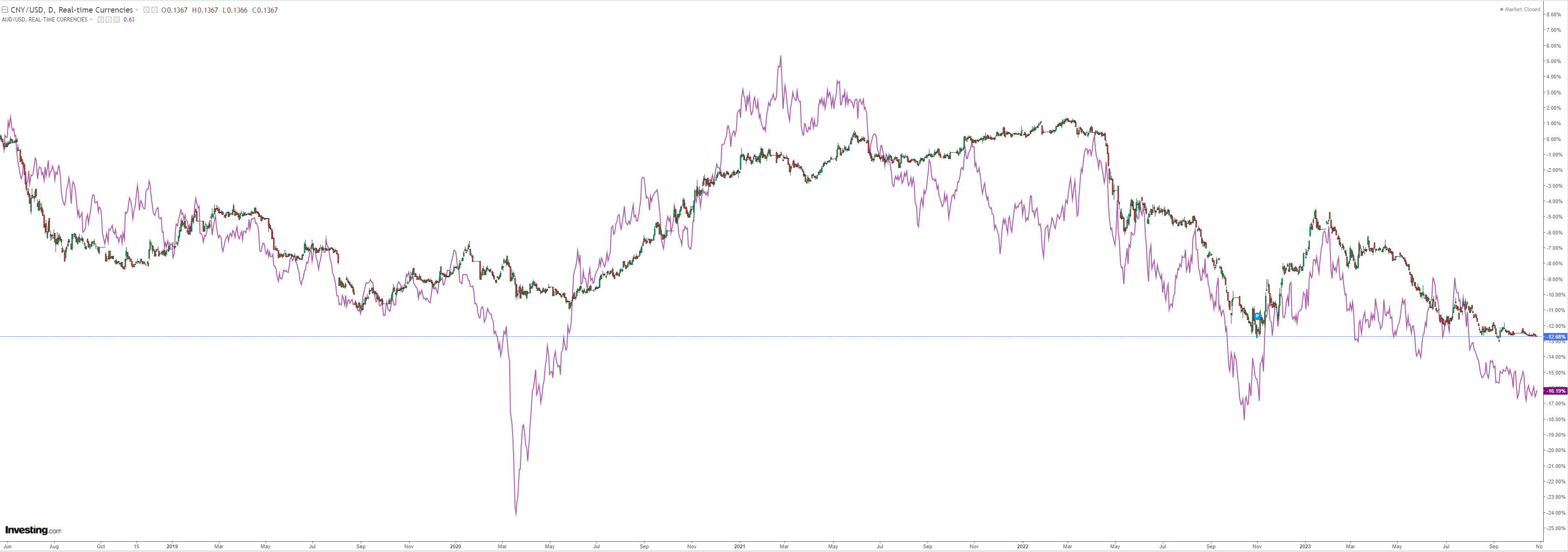
CNY peg lol:
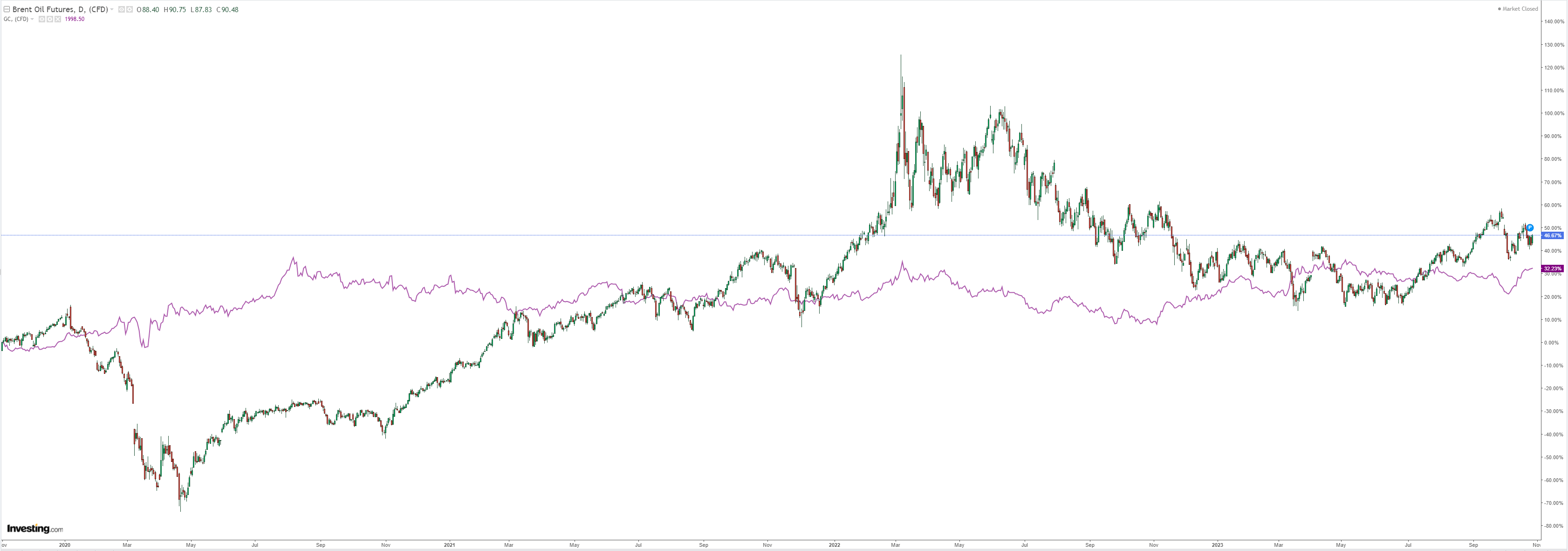
Oil and gold rose:
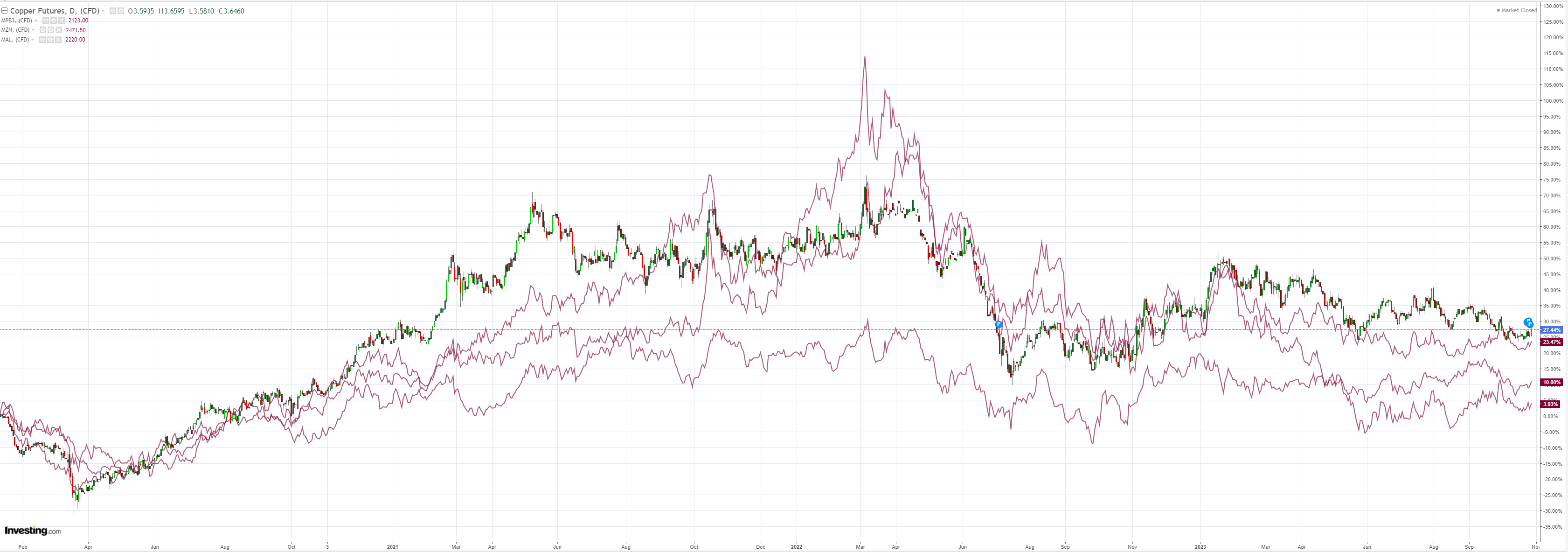
Lifting dirt:
Miners are having a great sell-off:
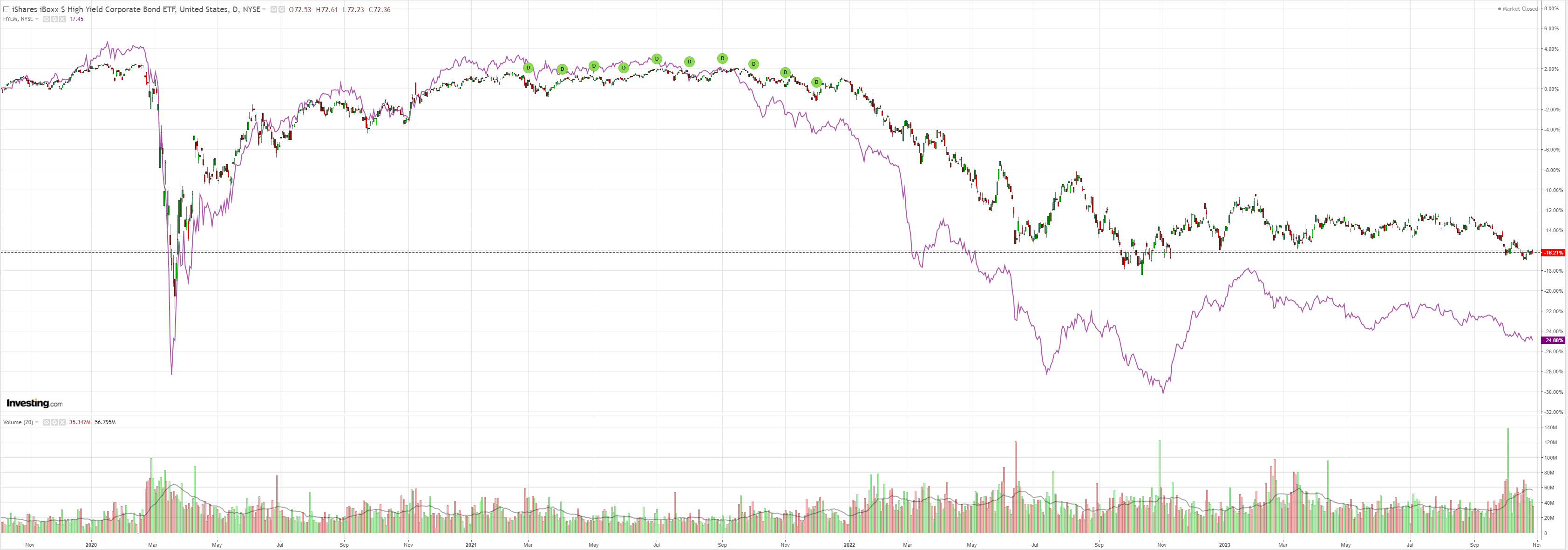
Junk 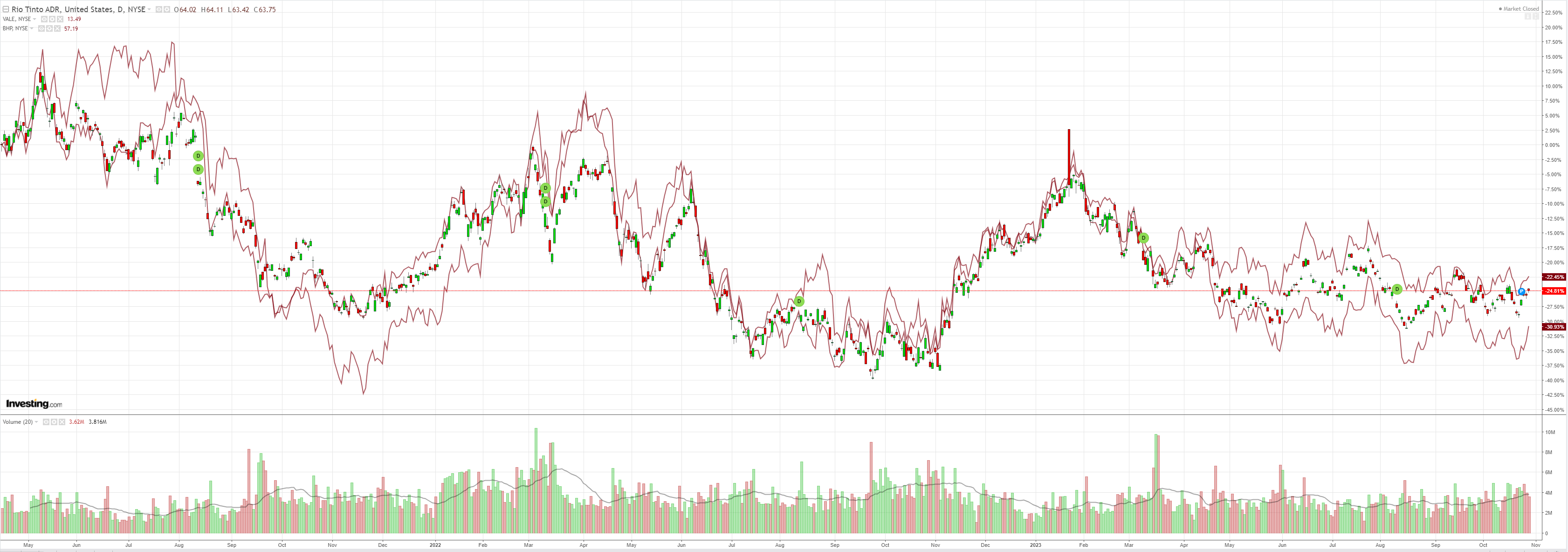
Junk is grinding lower:
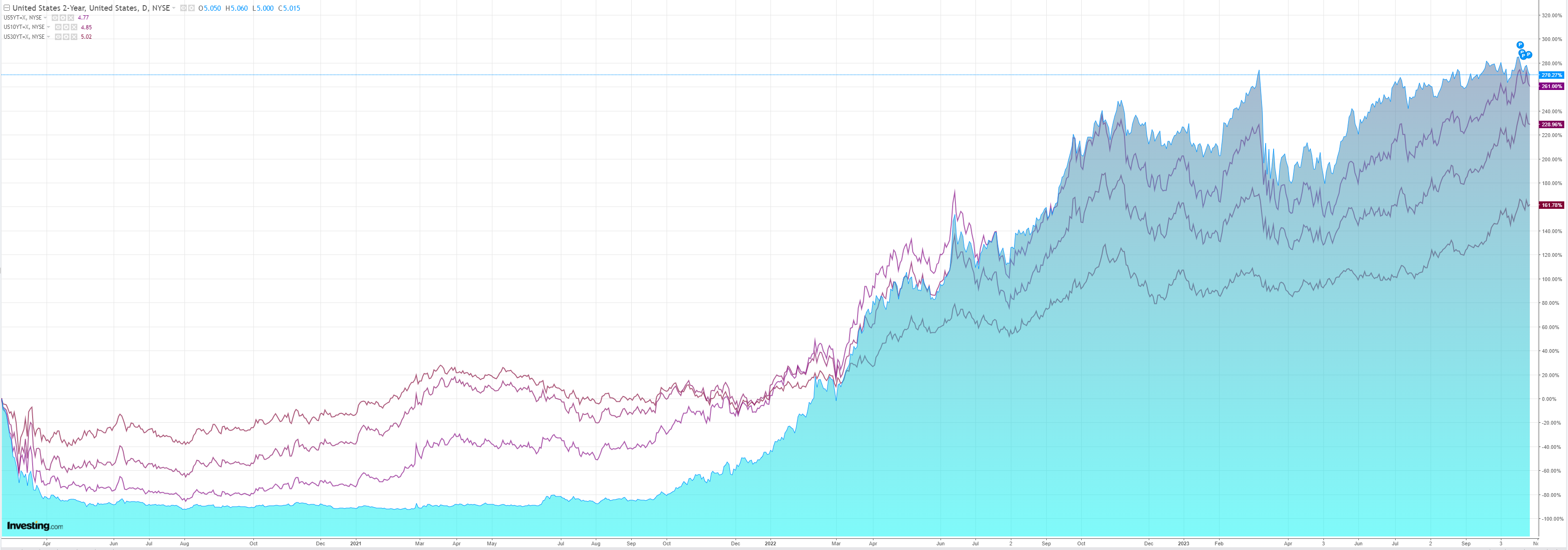
The Treasury curve steepened:
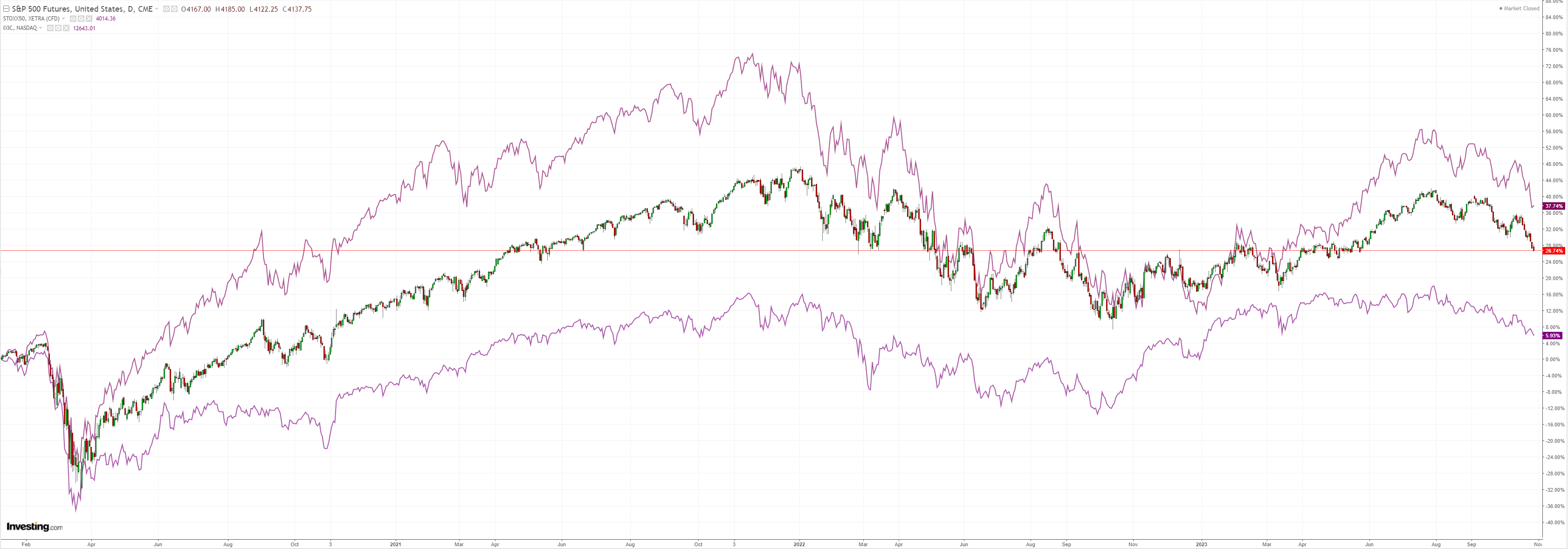
Stocks have reversed most of the AI gains:
Goldman surmises that the RBA cannot save the AUD. I agree though I maintain that combined with the monstrous short it is supportive enough to slow further downside.
AUD & NZD: Not fANZ.
Domestic data suggest that both Australia and Zealand may need to tighten policy further, but we think this is not necessarily sufficient to be more constructive on AUD or NZD against the Dollar.
Australia inflation surprised to the upside this week, with key underlying measures accelerating, and Governor Bullock subsequently voiced some concerns about persistent services inflation. Home prices have also reverted to the highs, which has further threatened progress towards the RBA’s inflation aim (Exhibit 4).
Our economists expect another hike in November, though acknowledge that, like theBoE, the RBA has been something of a “reluctant hiker.”
As a result, gradual—and difficult-to-predict—hikes have been less supportive for the currency than a more proactive stance might generate.
In New Zealand, inflation eased in Q3, but upward price pressures in the housing market—much like in Australia—and looser fiscal policy suggest more monetary policy tightening might be required here as well.
But, while tighter policy could support AUD and NZD on the margin, if Chinese activity remains weak and risk sentiment stays under pressure, these factors will likely outweigh the positive impulse from higher rates—especially if the policy response remains somewhat cautious.
That is consistent with the AUD/USD response to the hot inflation print this week; the initial strength unwound with negative risk sentiment and no clear change in the RBA’s communication.
All in all, strong domestic data is not sufficient for AUD or NZD to outperform without a broader turn in Asian FX market sentiment or a less-reluctant policy outlook.
