
From the Westpac Red Book.
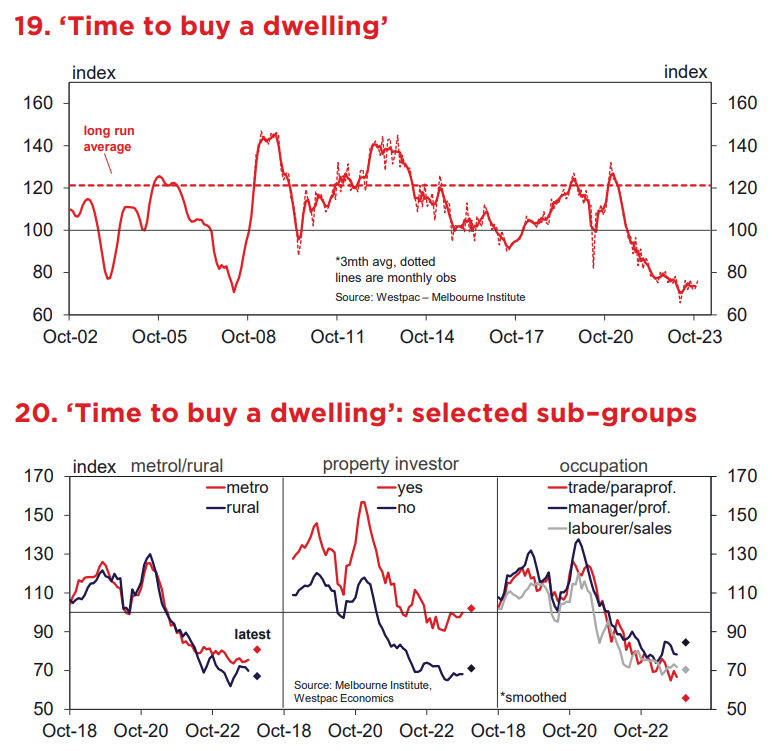
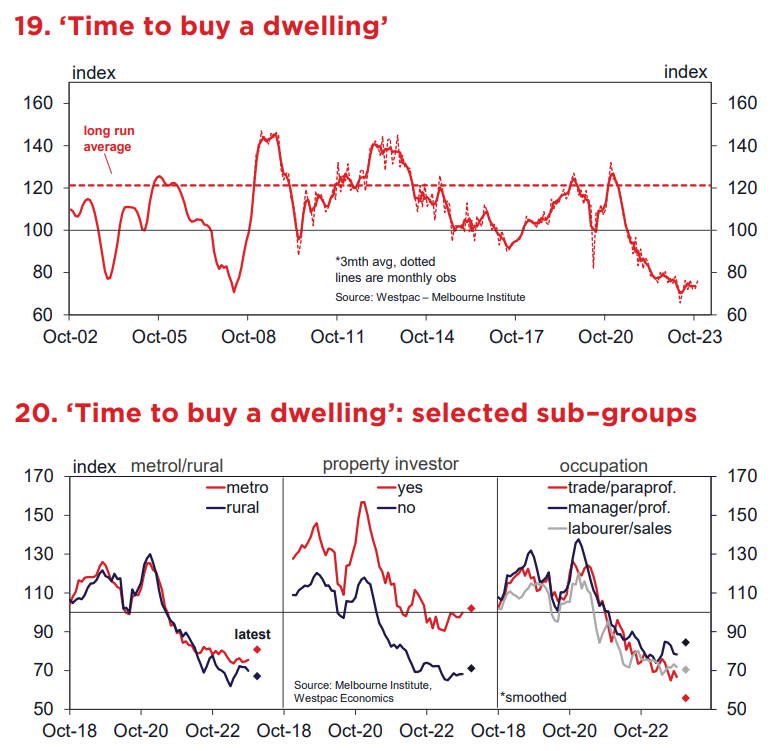
Homebuyer sentiment continues to bump around the bottom of an extended slump. The ‘time to buy a dwelling’ index dipped 0.6% over the three months to October. At 76, it remains at extreme lows, nearly 40% below long run average levels.
This measure of buyer sentiment is closely linked to affordability, which in turn is affected by both price and interest rate moves.
The RBA’s rapid retightening of policy effectively nullified any affordability improvement that may have come from falling prices last year.
With prices now rising again and interest rates still high, potentially rising further, buyer sentiment is understandably bleak.
The negative consensus is also very strong. Across the 55 sub-groups we monitor, only one has recorded an outright positive reading since April last year: consumers with an investment property. The only comparable period of near blanket negativity, during the GFC, still saw more pockets of optimism.
The latest sub-group detail does show some notable shifts. Buyer sentiment is becoming less negative in cities but remains weaker regionally.
Affordability pressures also look to be seeing more ‘stratifiation’ emerge. Across occupations for example, tradies and paraprofessionals are despairing but managers and professionals are becoming less negative.
Consumer house price expectations remain strongly positive, suggesting the price upturn since the start of the year is very well established. The Westpac Melbourne Institute House Price Expectations Index lifted a further 7.4% over the three months to October, reaching 160.4, a new cycle high.
A strong outright majority of consumers (73%) expect prices to continue rising over the next 12mths, just shy of the 2021 peak of 76%. However, the detail shows a notable difference.
In 2021, nearly a quarter expected to see very strong gains of above 10%yr. In 2023, a more subdued 14% expect double-digit growth. This almost certainly reflects the very different interest rate and affordability backdrop.
The latest price data continues to show a robust broad-based upturn. Across the major capital cities, prices have risen 8.6% since the start of the year and have been tracking higher at a 10-13% annualised pace since mid-2023.
The state breakdowns suggest price expectations are currently being based more on developments nationally than in each specific geography. Chart 22 shows fairly uniform expectations despite variations in price growth.
This has not always been the case, 2015-20 a notable period of expectations divergence. The sub-group detail shows the biggest lift in expectations over the last three months has been amongst 55-64 year olds, mortgagors, investors and in Qld and WA.
Nothing will stop this freight train while population growth is at 600k per annum.
I feel very sorry for a younger generation gaslighted into supporting an immigration/housing scam designed to make them homeless.
