
Two reports have been released highlighting the utter disaster unfolding across Australia’s rental market in response to the Albanese Government’s record immigration program:
CoreLogic released its Quarterly Rental Review, which reported that the national vacancy rate fell to a new record low of 1.1% in September, with the capital cities recording a vacancy rate of 1.0% and the combined regions recording a vacancy rate of 1.2%:
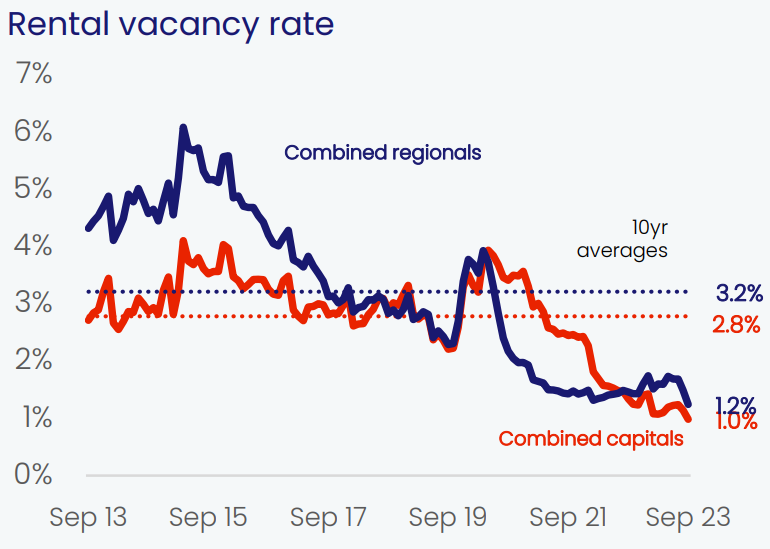
Source: CoreLogic
The only “good” news is that CoreLogic’s Rent Value Index rose 1.6% in the September quarter, down from 2.2% over Q2. Thus, the pace of rental increase is slowing:
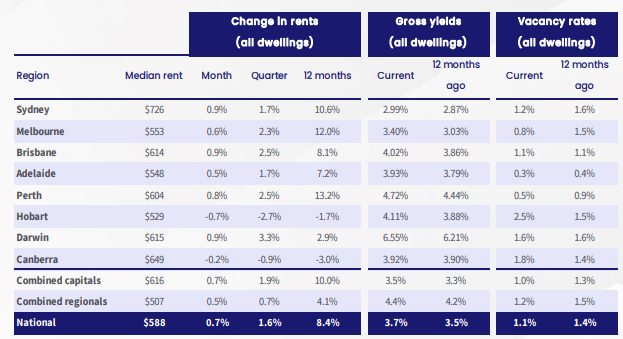
Source: CoreLogic
However, national rents have risen 30.4% since July 2020, adding the equivalent of $137 to the median weekly rent.
The next chart shows how annual rental growth is trending down across most markets, with Melbourne and Perth the exceptions:
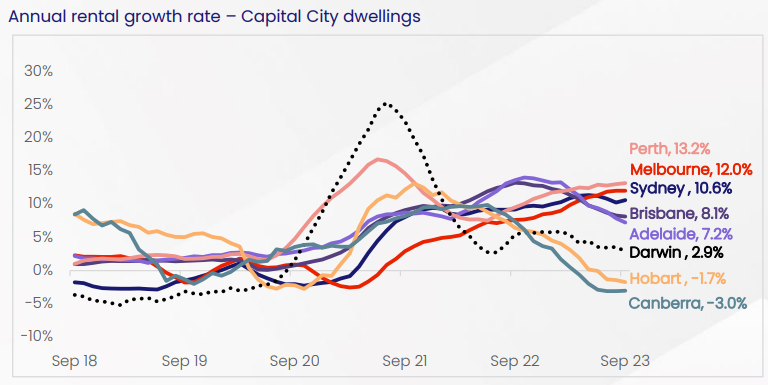
Source: CoreLogic
CoreLogic Economist and report author Kaytlin Ezzy explained:
“Worsening affordability continues to be a significant factor placing downward pressure on the pace of rental growth in recent months”.
“After recording a small dip over the first few months of COVID, national rents have risen for 38 consecutive months, taking rental values 30.4% higher since July 2020 and adding the equivalent of $137 to the median weekly rent”.
“With the rising cost of living adding additional pressure on renter’s balance sheets, it is likely tenants have hit an affordability ceiling, seeking to grow their households to share the growing rental burden”.
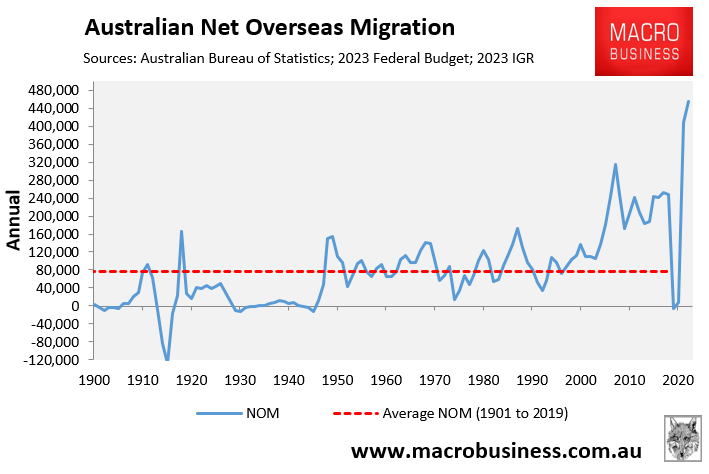
“Record high net overseas migration, fuelled by a combination of an increased flow of new arrivals and weaker departure numbers, coupled with a continued shortfall in rental listings, saw the vacancy rates falling to new record lows across both the combined capitals (1.0%) and combined regional markets (1.2%)”.
PropTrack also released its rental price index for September, which reported that advertised rental prices were 3.8% higher over the September 2023 quarter nationally, a slight deceleration from the 3.9% increase over the June quarter:
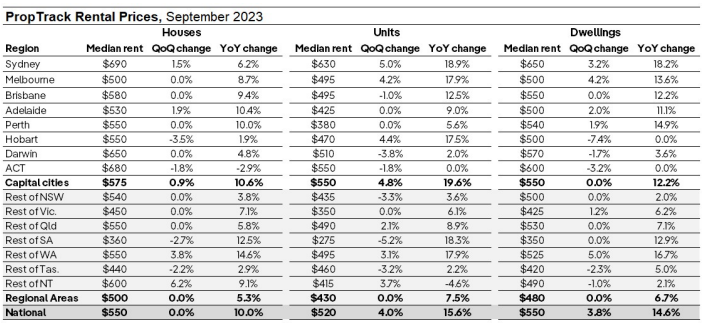
Over the year to September 2023, median advertised rental prices rose by 14.6%, compared to annual growth of 14% the previous quarter and 10.3% in September 2022.
Commenting on the result, PropTrack noted that the Albanese Government’s Big Australia mass immigration policy is driving the rent rises:
“Rents are climbing at a rapid pace. The ongoing rapid rate of population growth, coupled with a persistent reduction in the supply of properties available for rent, have maintained the pressure on the cost of renting, particularly in major capital cities”.
“Rental growth is likely to continue in the major capital cities. The flatlining of regional rents over the past six months may point to softer rents for the regions in the coming months”.
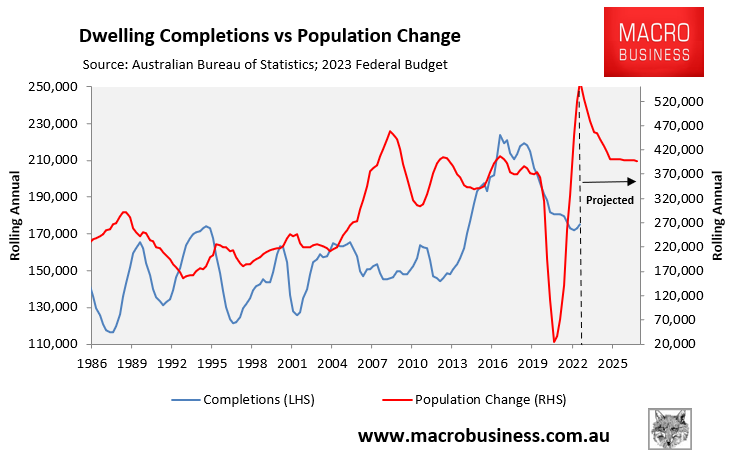
The situation for Australian renters remains dismal, given housing construction rates are falling at the same time as the population is expanding at a rapid pace, which is expected to continue:
SQM Research managing director, Louis Christopher, warned last month that Australia faces a “very large increase in homelessness” as immigration demand continues to outstrip housing supply.
He is right. Rents in Australia will continue to rise faster than wages for the foreseeable future.
In turn, more Australian renters will be plunged into financial hardship, into group housing, or into homelessness.
