
Australian mortgage holders drown in sea of debt
The Reserve Bank of Australia’s (RBA) latest Financial Stability Review (FSR) was released on Friday, showing that a significant share of households with mortgages are struggling under the weight of the RBA’s 4.0% official interest rate hikes.
The below summary from CBA economist, Stephen Wu:
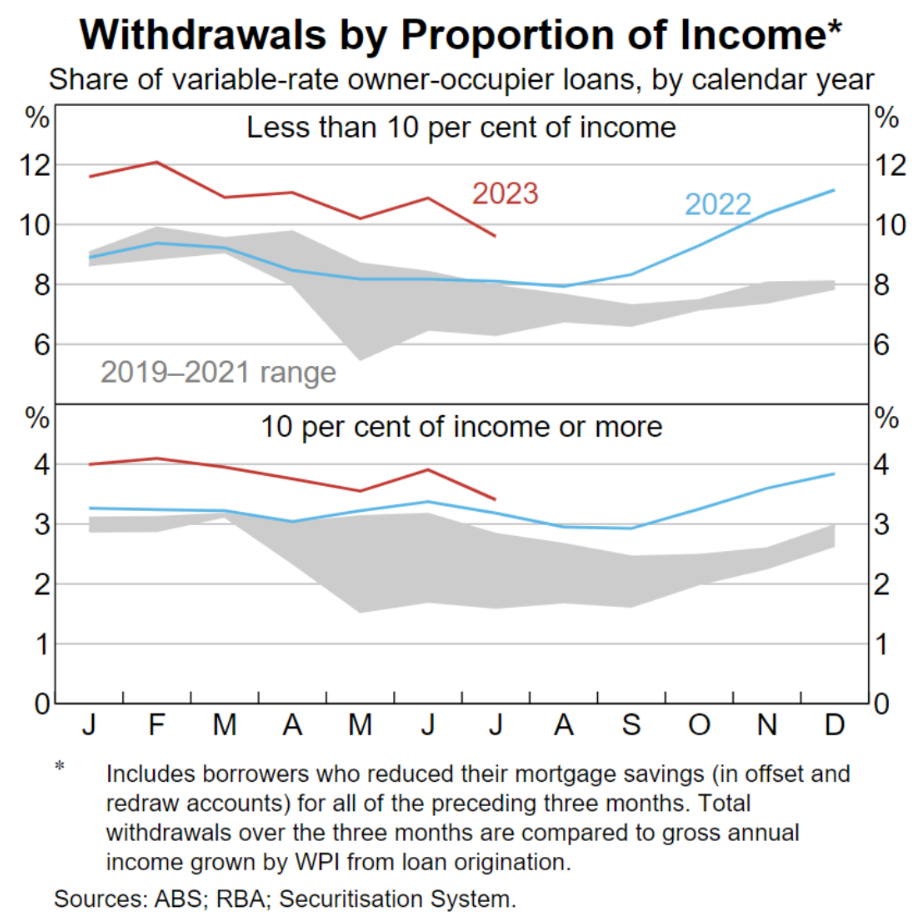
“A growing share of variable-rate owner-occupier borrowers are persistently drawing down on their savings buffers accumulated over the pandemic. In addition, the share of ‘small withdrawals’, such as those likely to fund regular spending, has increased”.
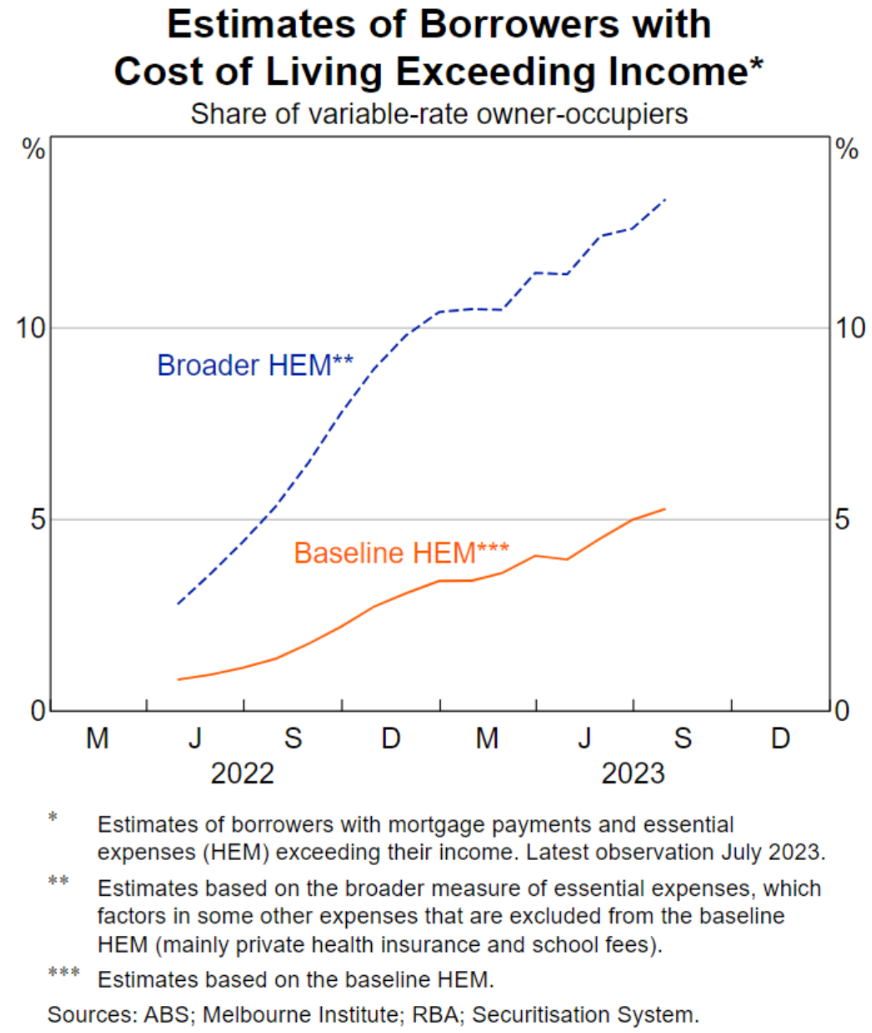
“The share of variable-rate owner-occupier borrowers whose essential spending and mortgage costs exceed their income has risen from 1% prior to the RBA’s rate hike cycle, to 5% in July 2023”.
“Using a looser definition of essential expenses (e.g. including private health insurance costs), the share is now at 13% (just over one in every 8 households), up from 3%”.
“Many households are well-placed to continue to service their debt”.
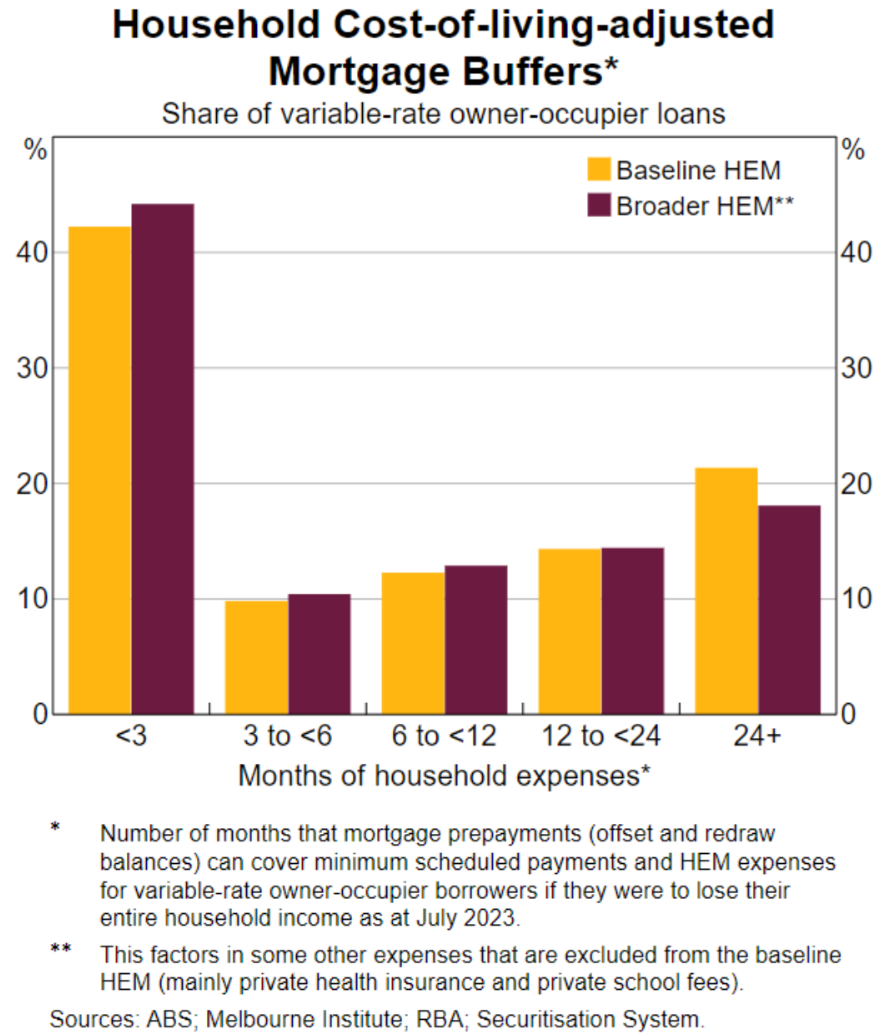
“One-third of variable-rate owner-occupier borrowers have enough savings buffer in their offset and redraw accounts to cover essential spending and their mortgage costs for at least one year”.
“But more than 40% of households have less than three months of such buffers”.
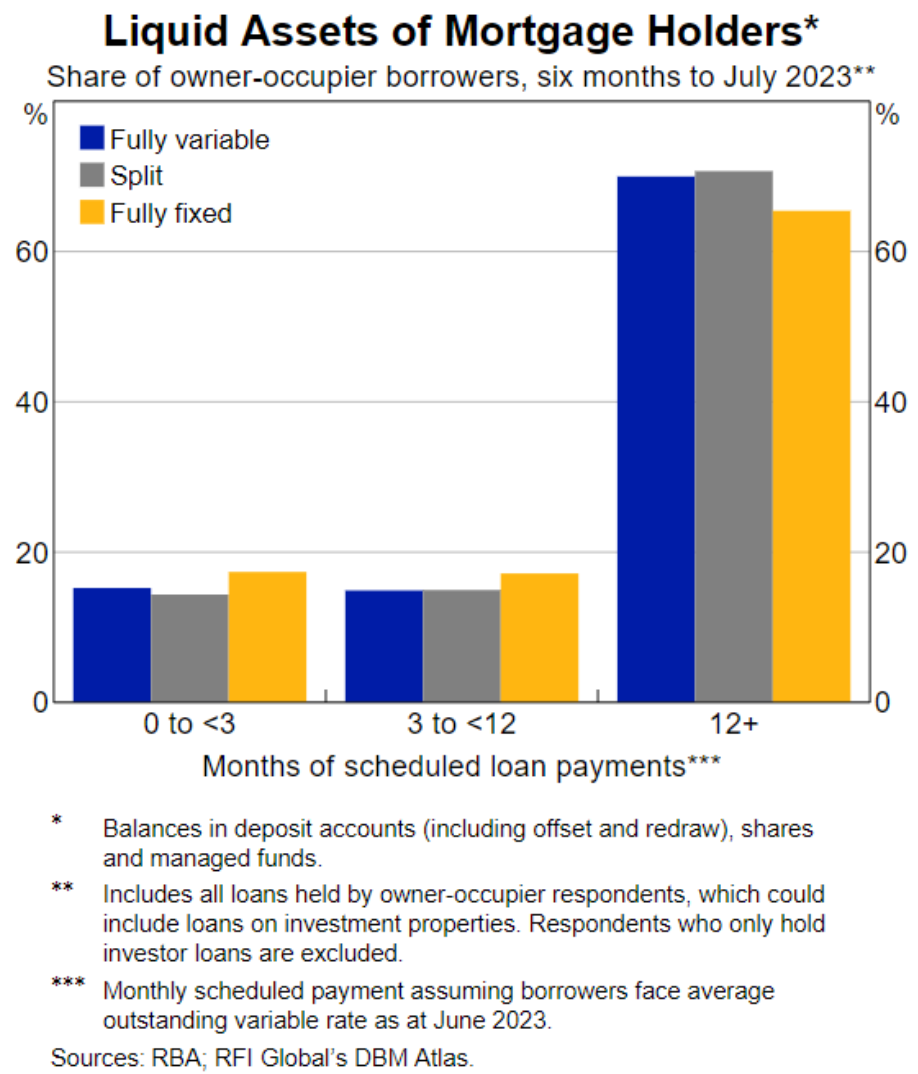
“The distribution of savings buffers of fixed-rate and variable-rate borrowers do not differ by much”.
“A majority of fixed-rate borrowers have savings enough to cover at least a year of mortgage repayments”.
“But under 20% have fewer than three months of buffers”.
The next chart from Justin Fabo from Macquarie Group shows that Australian mortgage holders have been hit harder than residents of other nations:
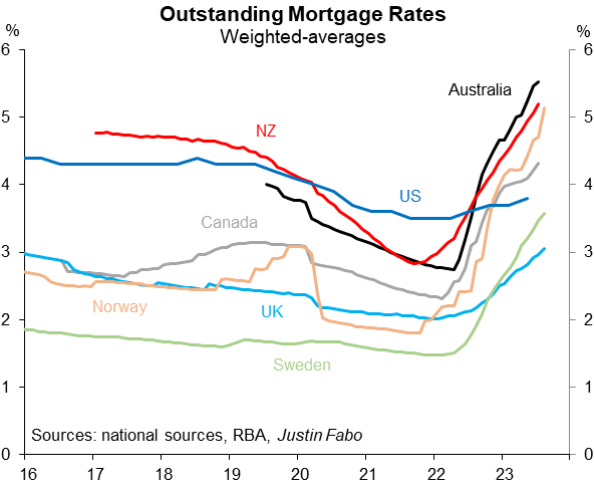
This relates to the fact that Australia has one of the highest shares of variable rate mortgages in the world, with the overwhelming majority of its fixed rate mortgages having terms of less than five years.
In turn, changes in official interest rates are passed onto mortgage holders far more quickly in Australia than elsewhere.
Australian households also carry one of the world’s highest debt loads, which means that debt repayments as a share of income are far higher in Australia and have also grown more quickly:
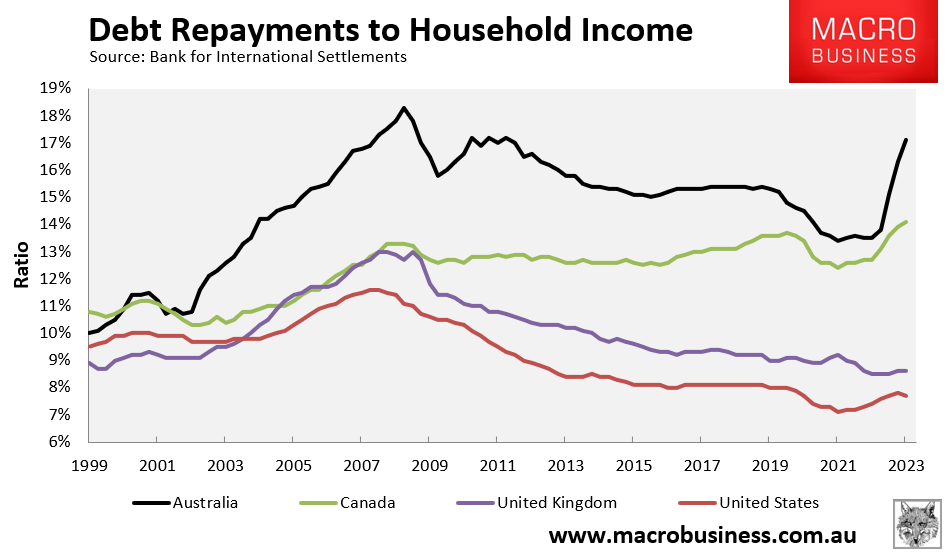
Scheduled mortgage repayments will reach an all-time high share of household income mid next year after the pipeline of cheap pandemic fixed-rate mortgages expires.
Even if the RBA does not raise interest rates further, there is still some tightening ‘built-in’ to Australian monetary policy due to the expiration of low-interest fixed-rate mortgages.
Regardless, Australia is clearly the worst place in the world to hold a mortgage.
