Stephen Wu, economist at CBA, has dissected Wednesday’s monthly inflation release from the ABS and believes it won’t prompt the Reserve Bank of Australia (RBA) to lift the official cash rate at next week’s monetary policy meeting:
Key Points:
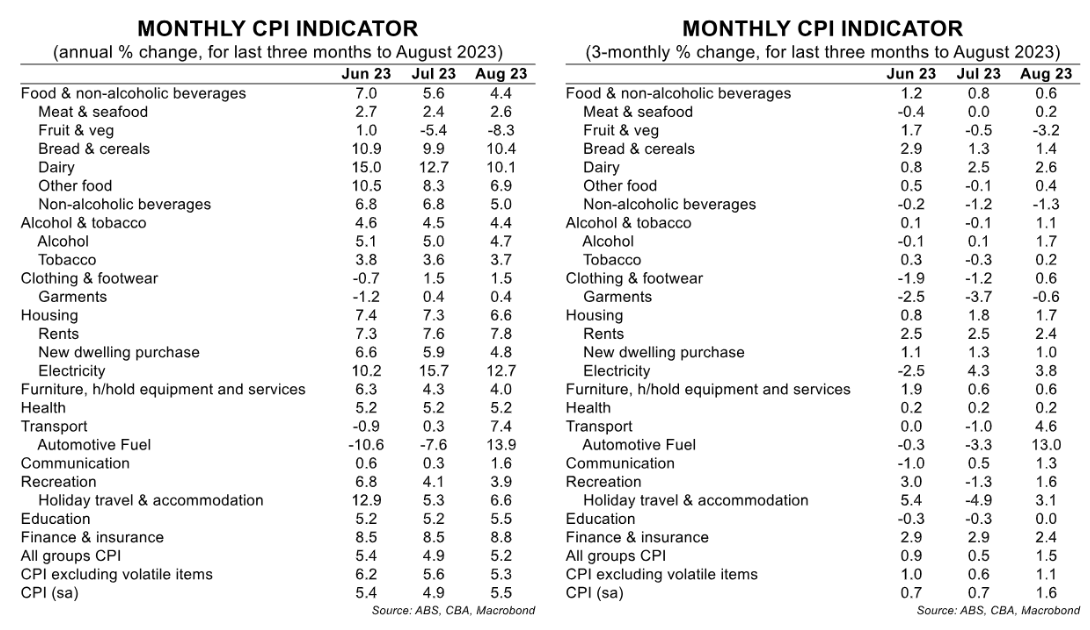
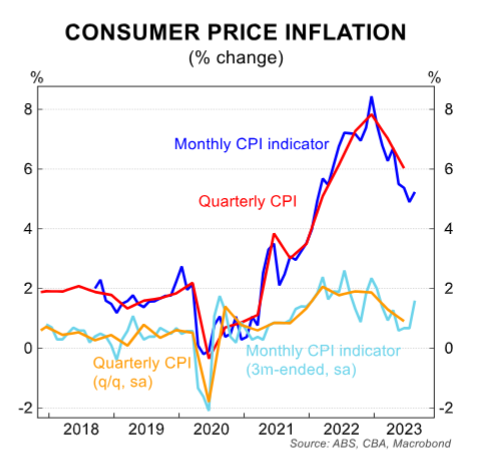
- Consumer prices rose by 0.8%/mth in August, with the annual rate rising to 5.2%/yr.
- Exclusion-based measures of core inflation continued to fall, highlighting the impact from volatile items.
- The uptick this month is a temporary hump in the downward inflation trend since December last year in our view.
Overview
Consumer prices rose by 0.8%/mth in August, in seasonally adjusted terms. The annual rate ticked up to 5.2%, up from 4.9%/yr in July. That was in line with the consensus of economists. CBA expected a slightly lower 5.1%/yr.
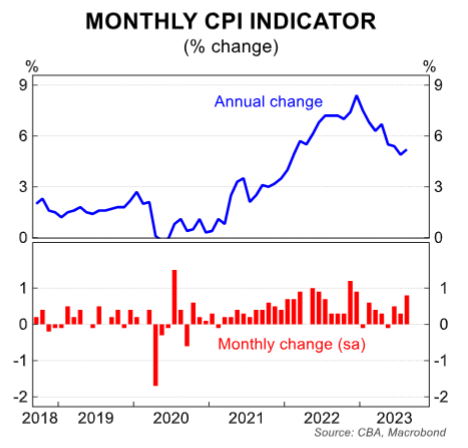
The rebound in annual inflation in August was entirely expected. As we wrote when the July CPI indicator was released, we expect August inflation with a 5 handle again given the sharp increase in petrol and diesel prices.
Higher automotive fuel prices across August and September compared to our earlier forecasts will mechanically add about 0.2 percentage points to Q3 23 headline CPI inflation, all else equal.
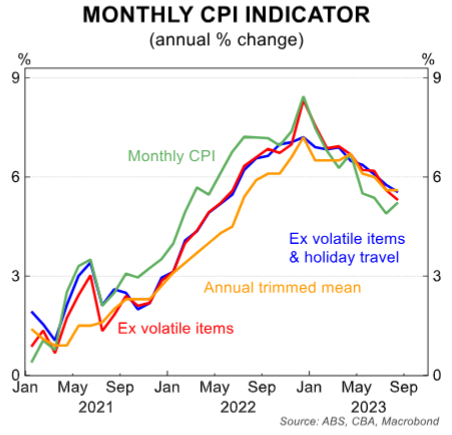
The exclusion-based measures of core inflation continued to ease in annual terms. CPI excluding holiday travel and volatile items (fruit & veg and fuel) eased to 5.5%/yr from 5.8%/yr. The annual trimmed mean series was unchanged at 5.6%/yr.
The August figures gave us an updated read on the quarterly pulse of market services inflation (typically measured only once a quarter).
Market services inflation is typically most sensitive to increases in labour costs. The RBA is concerned about a wage-price spiral occurring in Australia.
Restaurant meals & takeaway inflation rose in the quarter but the annual pace declined. Similarly, annual inflation for hairdressing & other household services and maintenance & repair of vehicles declined.
The inflation pulse for these spending categories remain too high, but the downward trend in annual terms is reassuring. The impact of rising labour costs are likely being offset by easing non-labour costs and also softening consumer demand.
We view the uptick in inflation in August as a temporary hump in the downward trend in train since December last year. We think the RBA will be inclined to see it that way too when it meets next Tuesday for the October rate decision.
We don’t anticipate the August CPI will alter their view the current cash rate of 4.1% is restrictive enough to pull inflation back inside the target band.
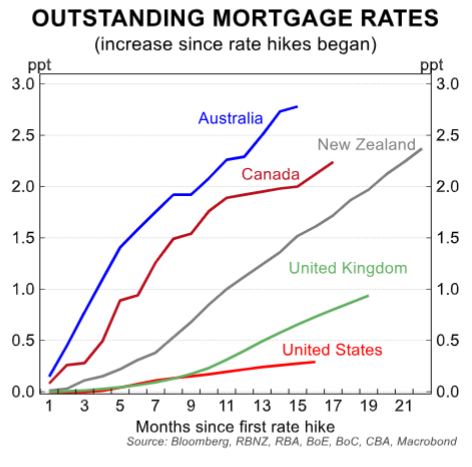
Spare capacity in the labour market is rising amid the strength in labour supply and will weigh on further wages growth. Further tightening in financial conditions will continue even as the RBA remains on hold for the rest of the year.
Lags in the cash flow transmission channel mean that borrowers have only felt about two-thirds of the 400 basis points of cash rate increases so far.
We will publish a full preview of the Q3 23 CPI ahead of the release after we make the relevant tweaks following today’s August data.
We estimate the RBA’s implied inflation forecasts from August (which had a technical assumption of Brent oil at US$80bbl) for Q3 23 is for headline CPI inflation of 5.2%/yr and trimmed mean inflation of 4.8%/yr.
The detail
By far the largest contributor to inflation in August was fuel prices. As expected, the rise in automotive fuel prices contributed around 0.3 percentage points (or half the total monthly increase) to inflation.
Automotive fuel prices rose by 9.1%/mth in August. The rise in oil prices and elevated diesel refining margins have increased the price of petrol and diesel.
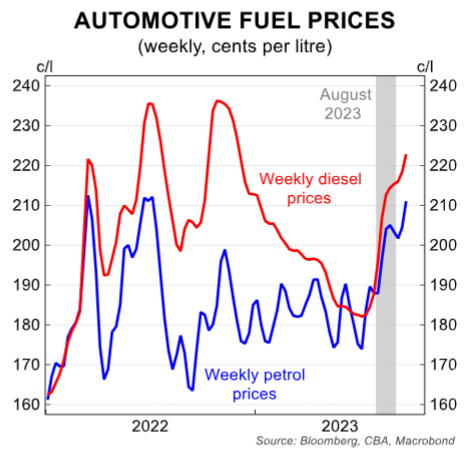
Prices at the bowser have increased further over September. As our Mining & Energy Commodities strategist Vivek Dhar notes here, Saudi Arabia and Russia’s decision to extend cuts to oil production and exports add to upside risks for oil prices, and by extension petrol and diesel prices at the bowser.
The other drivers of price increases in August were in the food, alcohol, and housing group of the CPI basket.
Restaurant meals rose by 2.0%/qtr (this is measured once a quarter) and takeaway & fast foods rose by 2.1%/qtr. The FWC’s decision to increase minimum and award wages by 5.75% would likely have played a role in increasing costs.
Lower food prices and other non-labour costs would be partially offsetting. Offsetting meals out & takeaway price increases were price declines for fruit (-2.9%/mth) and vegetables (-0.1%/mth).
Improved growing conditions has increased supply and led to lower prices. Prices of lamb continued to decline, while other meat and seafood prices rose further in the month.
There was a 2.4% increase in beer prices, with smaller increases for wine and spirits. An increase in the alcohol excise from indexation contributed to the rise.
The housing group of the CPI basket – just over one-fifth of the basket – was driven by continued elevated rents inflation.
Rents rose by 0.7% in August, an unchanged pace from July but below the 0.8-0.9% pace over the June quarter. Rents are now 7.8% higher over the year.
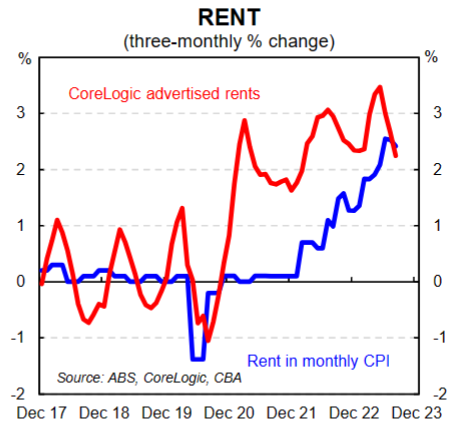
Advertised rents (on newly available rental properties) are more than 10% higher from a year ago, but the recent inflation impulse has begun to fade.
The three monthly change in rent prices in the monthly CPI is now outpacing the increase in advertised rents (see facing chart).
New dwelling construction inflation eased after spiking in July. Price changes in annual terms continue to ease, with the 4.8%/yr pace the lowest since August 2021.
Electricity inflation was again weighed down by government energy rebates. As we had anticipated electricity prices fell by 1.3%/mth in August, as concession card holder households in Melbourne started to receive the rebates. This more than offset price rises that occurred as some energy retailers delayed their price rises until August.
We expect further declines to year-end, as more (newly eligible) households begin to receive their rebates. We don’t expect large increases in electricity prices until Q1 24 when WA’s rebates roll-off.
And there will be a further large step change up in Q3 24 when rebates across the other states end and the next financial year’s higher Default Market Offer prices kick in.
Government rebates are only delaying the increase in ~20% electricity prices, and the inflation payback will be felt next financial year.
Travel prices fell by 3.9%/mth. Travel prices are generally fairly volatile. Pre-pandemic, price increases in July are typically followed by declines in August.
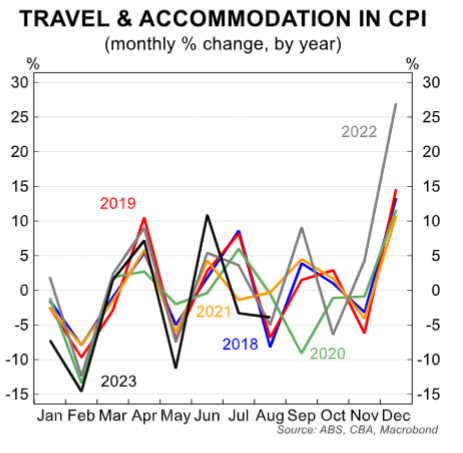
Prices for international travel have eased over the past two months following the massive 17.7%/mth increase in June driven by flights to Europe.
The ABS noted that domestic airfares fell in August owing to the lack of school holidays, which fell in September. Travel price declines in the month subtracted around 0.2 percentage points from inflation.
Insurance prices rose by 2.8%/qtr in Q3 (this is measured once a quarter). It is a large increase but not as large as last quarter’s 5.3%/qtr figure.
Over the year, insurance prices are now 14.7% higher. More frequent and severe incidences of natural disasters are driving up reinsurance costs. Home insurance premiums have surged.
Motor vehicle insurance has also increased as costs have risen. Fees associated with vehicles also increased in the quarter.
‘Other services in respect of motor vehicles’ rose by 3.2%/qtr, which includes vehicle registration costs, licence and parking fees, and toll charges.
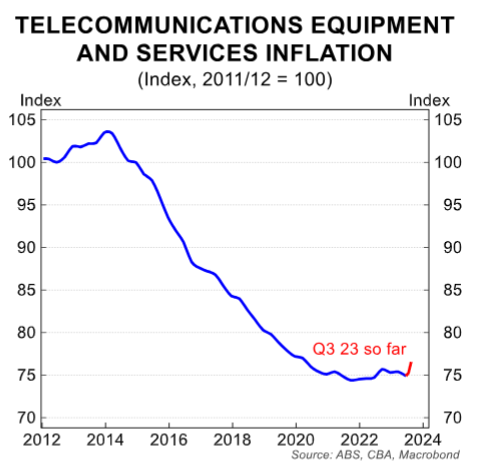
The deflationary pulse in telecommunication equipment & services enjoyed over the years leading up to the pandemic has halted.
Telecommunications prices had fallen by nearly 30% since 2013, but now looks to have increased by around 3% since the pandemic lows, with a 0.5%/mth increase in July and 1.7%/mth increase in August.
The measures of underlying inflation continued to show inflation abating. Both the exclusion-based measures declined in annual terms.
CPI excluding volatile items eased to 5.3%/yr from 5.6%/yr. And CPI excluding holiday travel and volatile items eased to 5.5%/yr from 5.8%/yr.
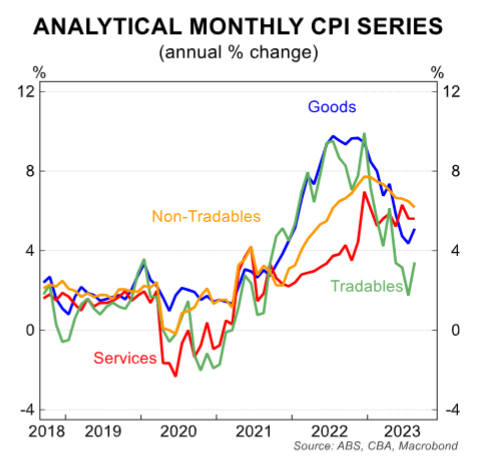
The annual trimmed mean series was unchanged at 5.6%/yr. The analytical series in the monthly CPI release showed a tick up in goods and tradables inflation, driven by the sharp increase in fuel. Services inflation remained little changed while non-tradables inflation eased a touch.