
No wonder Australian households are hurting
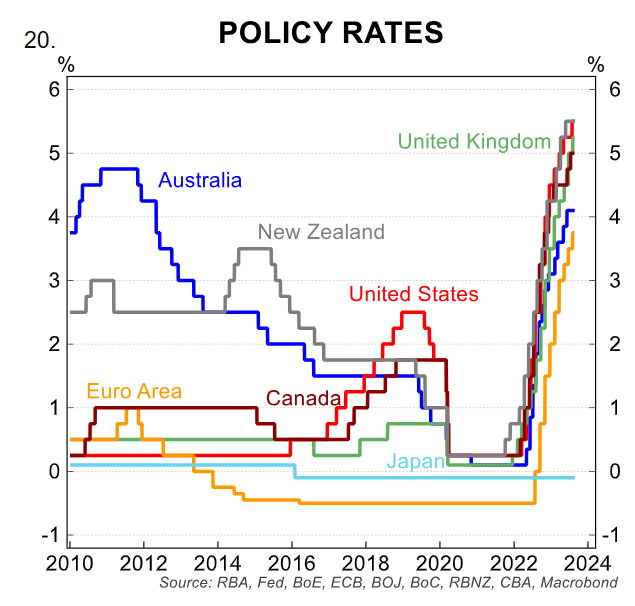
The Reserve Bank of Australia (RBA) has increased official interest rates by less than the central banks in other English-speaking countries:
Despite this, Australia’s average mortgage rates have risen by far more than these nations, as illustrated below:
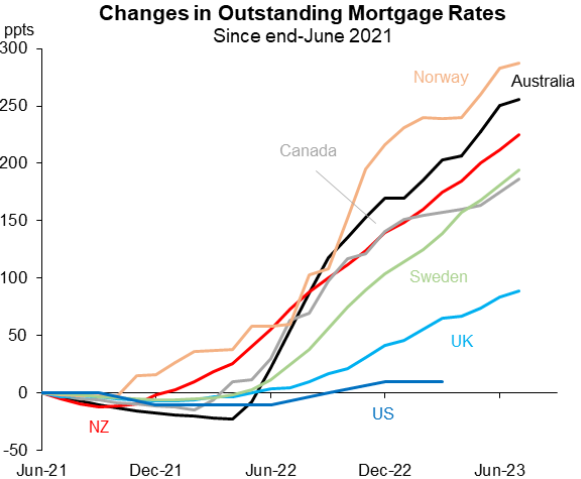
Source: Justin Fabo (Macquarie)
This is because most Australians are on variable rate mortgages, while in other countries, most borrowers are on fixed rates.
In turn, the rate of monetary transmission is far higher in Australia than most other countries.
According to recent CBA estimates, Australian borrowers had only felt around two-thirds of the 4% official cash rate increases from the RBA.
However, that figure is expected to grow to roughly 85% by the end of the year as more borrowers switch from fixed-rate mortgages to variable-rates:
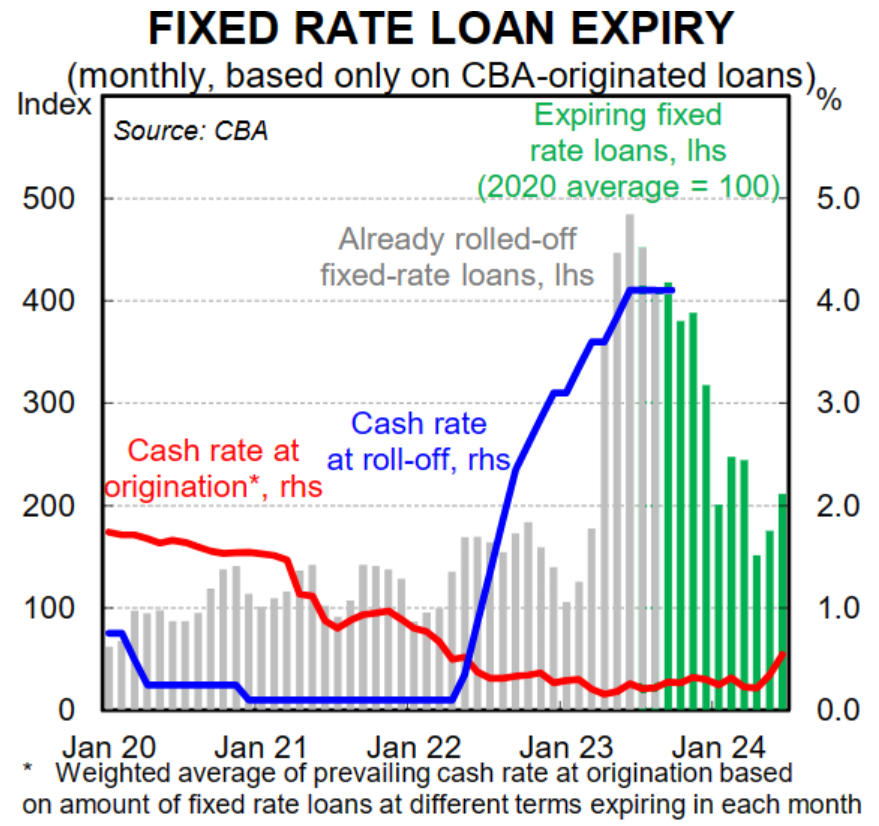
By mid-2024, when almost all of the pandemic fixed-rate mortgages have expired, CBA estimates that Australian households will spend about 10% of their aggregate disposable income on debt servicing costs, easily the largest share on record.
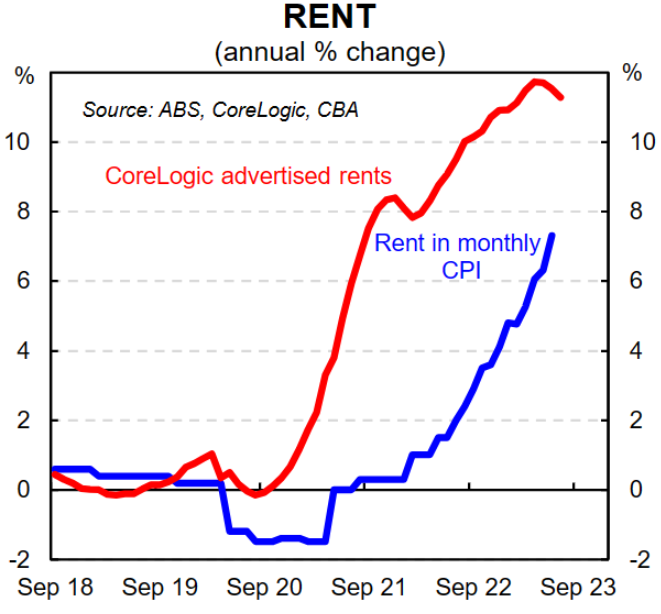
Renting households are not doing much better given the hyperinflation of rents over recent years:
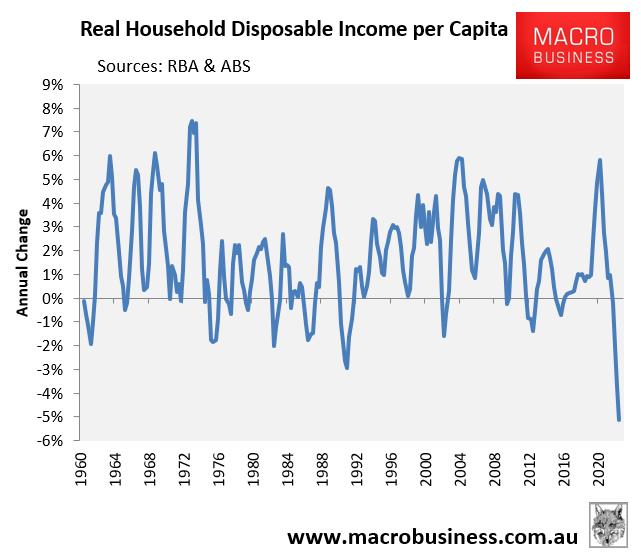
At the same time as their debt repayments and rents are rising, Australian households have also suffered the sharpest decline in their disposable incomes on record.
According to the June quarter national accounts release from the Australian Bureau of Statistics (ABS), real per capita household disposable income plunged by a record 5.1% in the year to June:
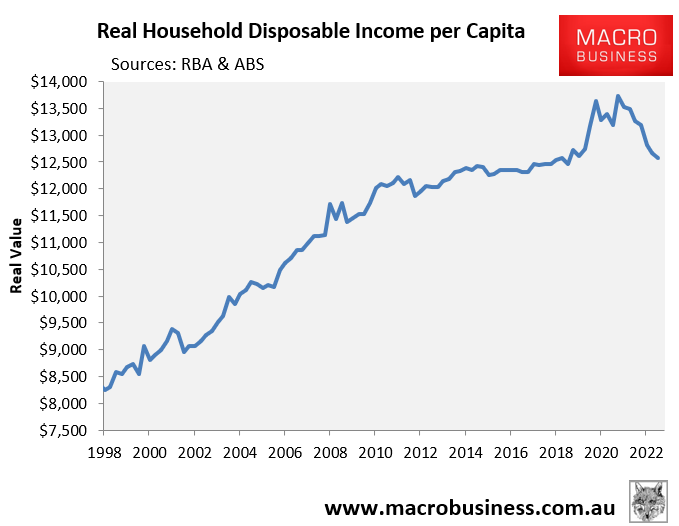
Incomes are now back at early 2019 levels, with little increase since 2010:
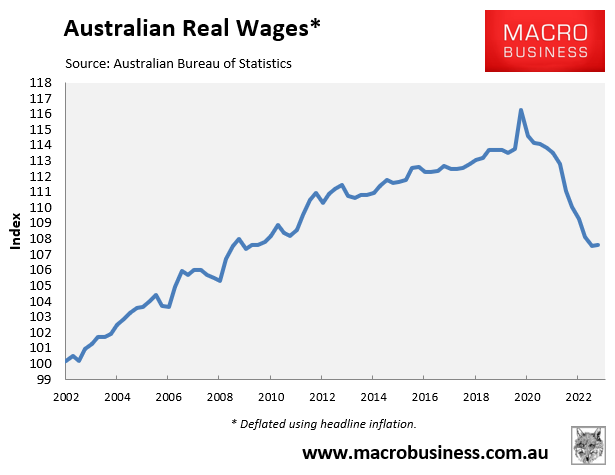
In a similar vein, real wages have plummeted to 2009 levels – the sharpest fall on record:
No wonder Australian households are doing it tough. They have been caught between falling incomes on the one hand, and soaring mortgage costs, rents and energy costs on the other.
Next comes higher unemployment.
