
Australia’s days of ultra-low unemployment are coming to an end.
Because of the Albanese Government’s unprecedented immigration program, Australia’s labour force is now growing at a record rate.
As shown in the following chart, Australia’s civilian population over the age of 15 increased by 598,000, or 2.8%, in the year to July:
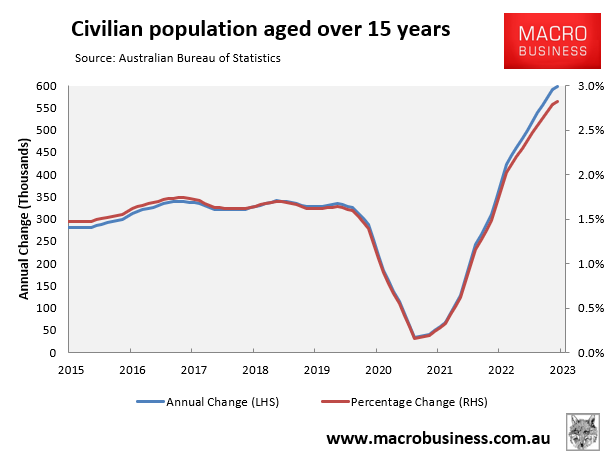
That pace of labour supply growth is roughly twice as rapid as it was in the years preceding the pandemic, when the 15-plus civilian population rose by around 300,000 per year.
At the same time, labour demand is slowing, as illustrated in the following chart by AMP chief economist Shane Oliver:
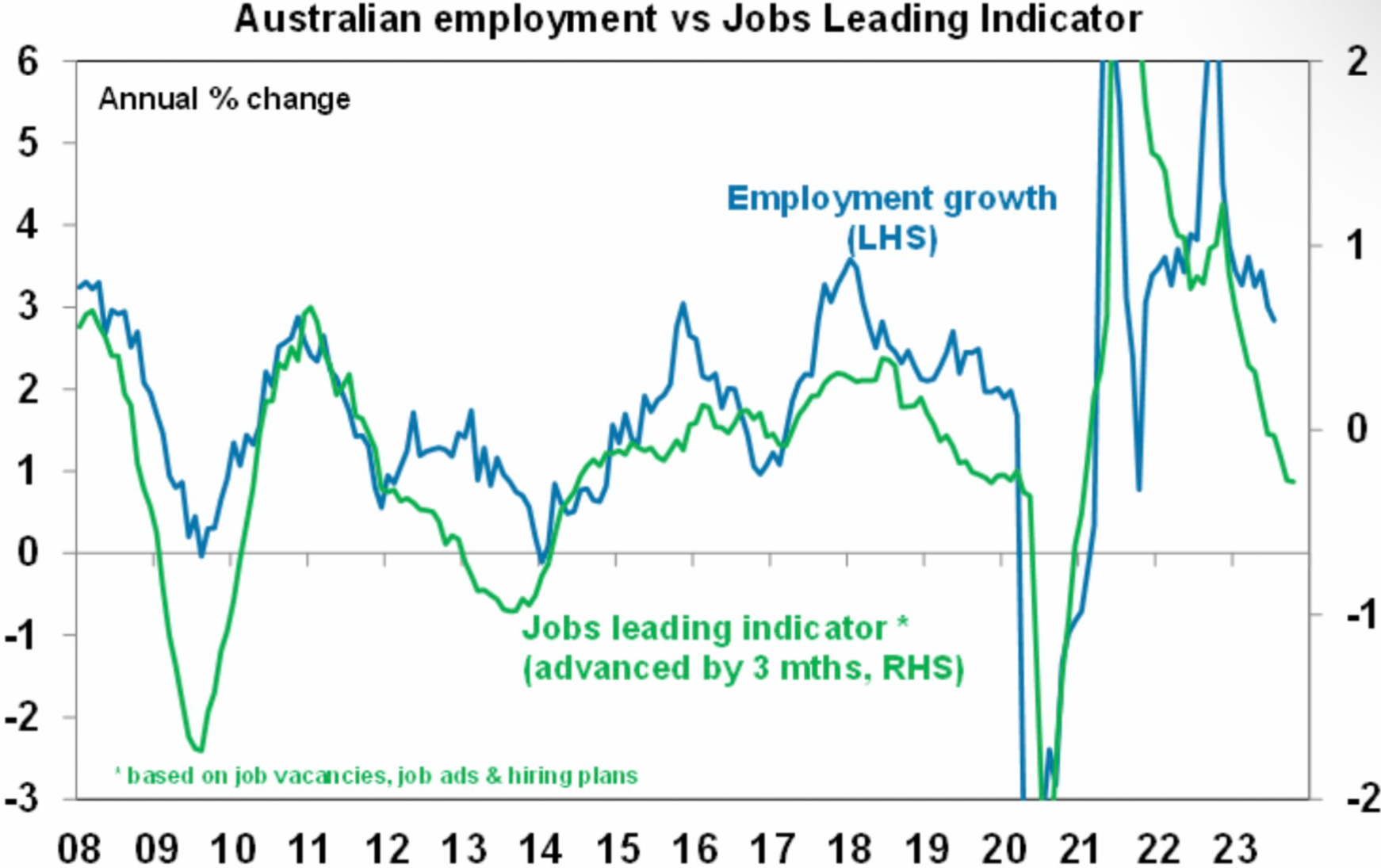
Aggressive interest rate hikes by the Reserve Bank of Australia (RBA) are dampening demand across the economy, slowing job creation.
The AMP Jobs Leading Indicator (green line above) also indicates a further deceleration.
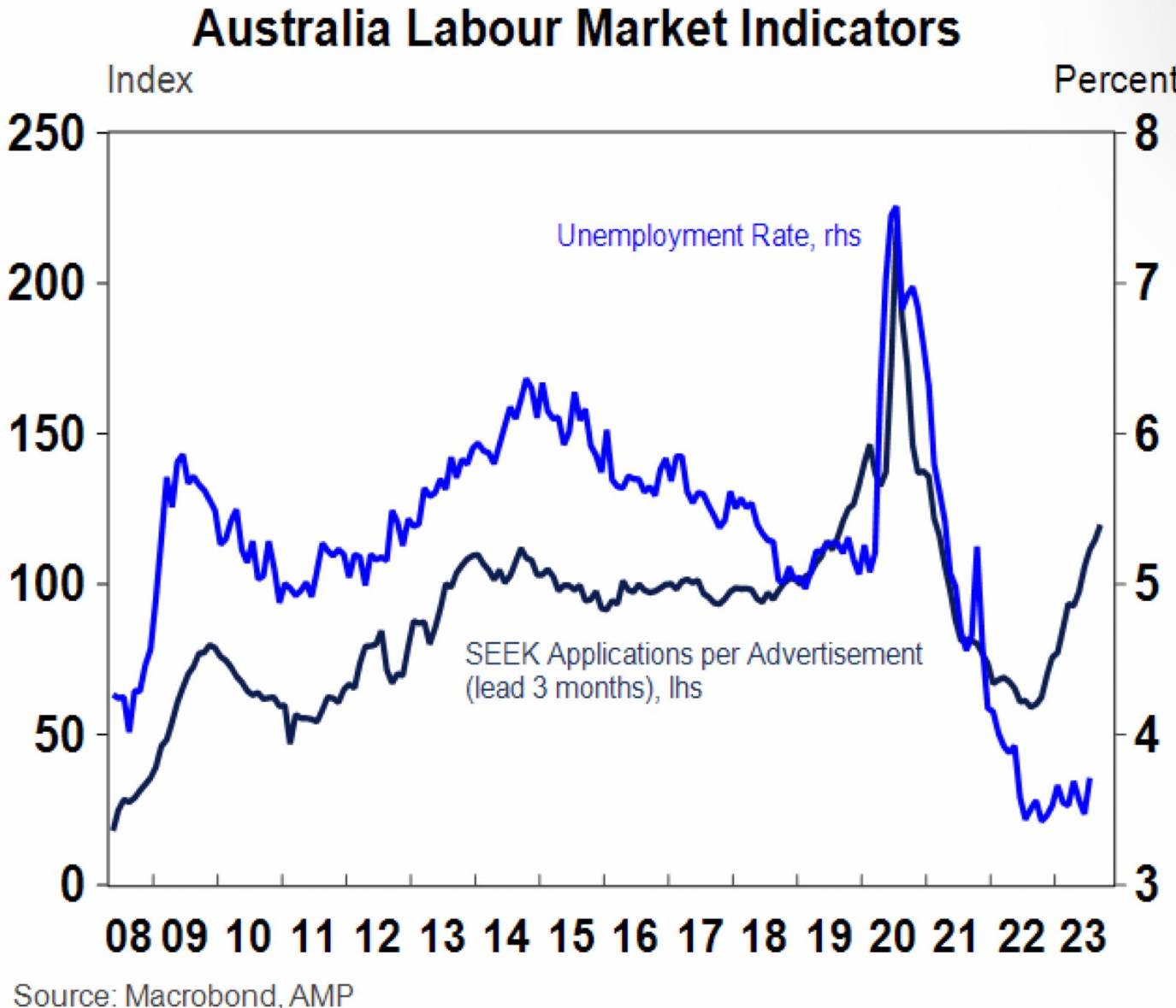
The combination of increased labour supply (through immigration) and slowed demand has increased the number of candidates per job, indicating rising unemployment:
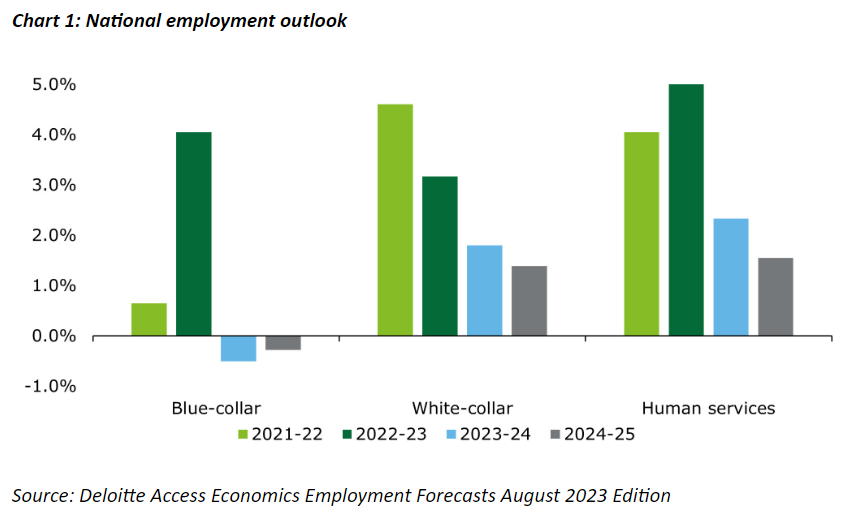
This week, Deloitte Access Economics released its employment forecasts, which tipped that the nation’s unemployment rate would increase from 3.7% to 4.5% by mid next year.
Deloitte said “the outlook for the Australian economy has softened” with “recent indicators suggest[ing] that broader economic weakness is finally creeping into the labour market”.
The high share of blue collar workers in the construction industry means the blue collar workforce will likely bear the brunt of the labour market slowdown, with a decline of 0.5% (18,800 workers) in 2023-24.
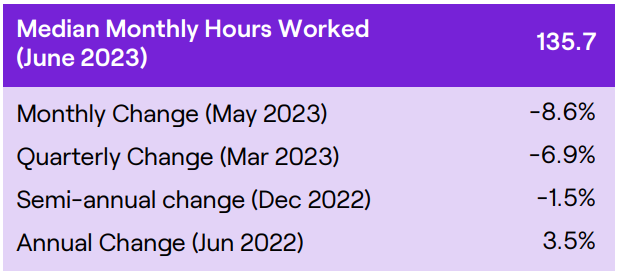
Meanwhile, the latest Employment Hero SME Index, which analyses a dataset of over 140,000 SMEs and 1.4 million employees, shows that the monthly median hours worked by employees declined by 8.6% in the month of June to be down 6.9% over the quarter:
Median monthly hours worked by employees dropped MoM across all states and territories, business sizes, age groups:
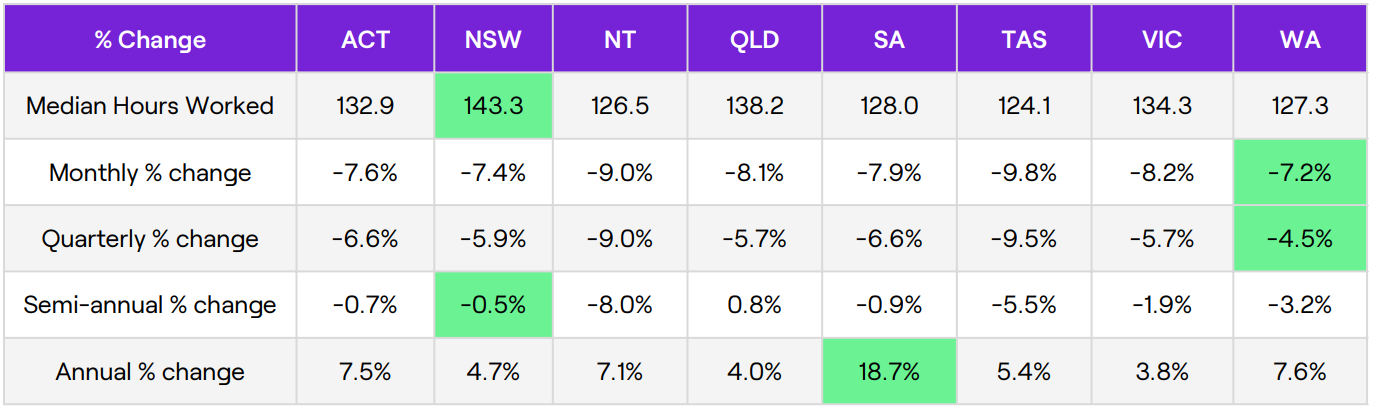
This drop is consistent with the RBA’s Statement on Monetary Policy Report, which forecasts a continued decline in average hours worked due to the expected labour market downturn.
Commenting on the results, Ben Thompson, Co-founder and CEO of Employment Hero, said:
“I expressed concern months ago that the challenges Australian workers would face in the second half of the year would be securing ample work hours and, worst case scenario, holding onto their jobs”.
“New insolvency numbers released by ASIC recently showed 995 business collapses had been recorded since July”.
According to CBA analysis, Australia needs to create around 35,000 jobs per month just to keep the unemployment rate steady amid record labour supply growth (read immigration):
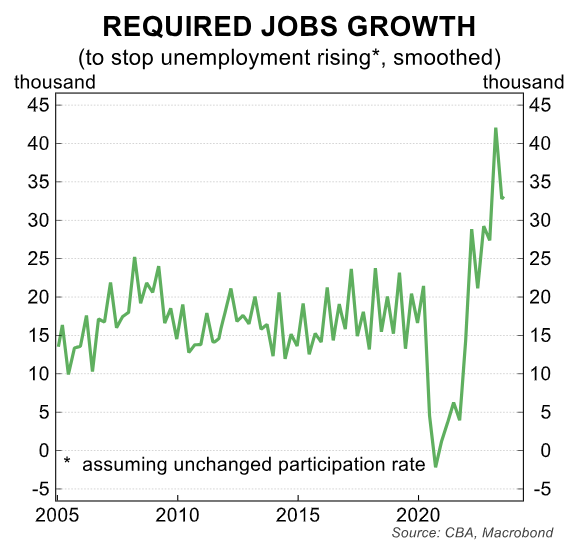
That will be an impossible task given the slowing economy.
Prepare for rising unemployment and lower wage growth.
