
Recent data from the Australian Bureau of Statistics (ABS) shows that the rate of business failure has reached a 15-year high:
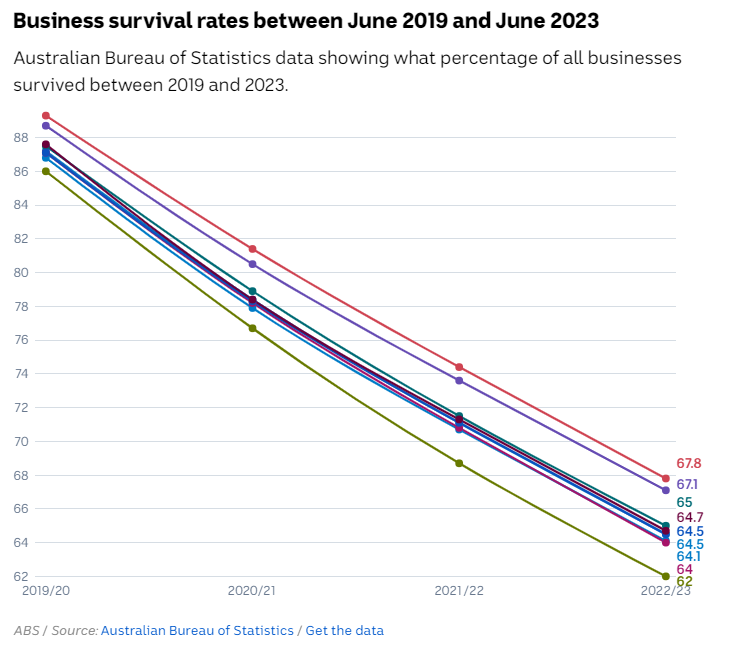
More than 15% of Australian businesses failed in the 2022-23 financial year, which was the worst rate of failure since the Global Financial Crisis (GFC) struck in 2008.
By June of this year, half of the firms that began in 2019 had been permanently closed.
Between June 2019 and June 2023, 35% of all Australian firms closed their doors permanently.
Small enterprises were substantially more likely to fail than large businesses, with a “survival rate” of 41.5% for new sole proprietors.
According to Gary Mortimer, a management lecturer at Queensland University of Technology, many “zombie businesses” supported by JobKeeper during the COVID pandemic are now fighting to stay viable.
They are “falling by the wayside” in the post-Covid world.
“It clearly shows as we progress out of COVID the cost of living has increased and people have pulled those purse strings closed”, Mortimer said.
“While much of the narrative over the last 12-18 months has related to the cost of living and the impact on families, I think what’s been missing is the impact on small businesses”.
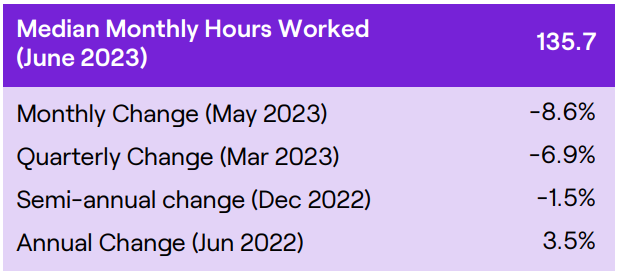
The latest Employment Hero SME Index, which analyses a dataset of over 140,000 SMEs and 1.4 million employees, showed that the number of monthly median hours worked by employees fell by 8.6% in the month of June to be down 6.9% over the quarter:
Median monthly hours worked by employees dropped MoM across all states and territories, business sizes, and age groups:
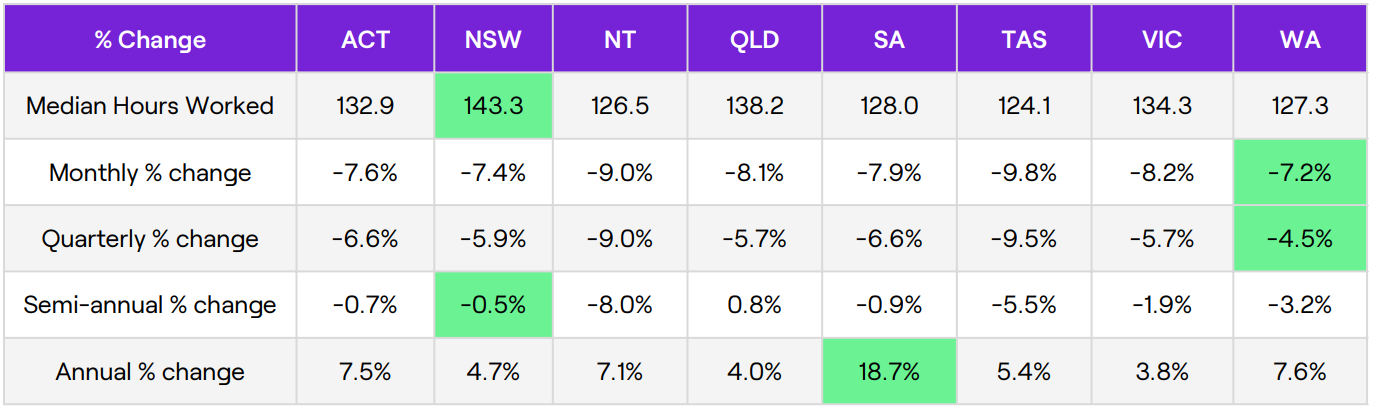
This fall is consistent with the RBA’s Statement on Monetary Policy, which forecast a continued decline in average hours worked due to the expected labour market downturn.
Commenting on the results, Ben Thompson, Co-founder and CEO of Employment Hero, said:
“I expressed concern months ago that the challenges Australian workers would face in the second half of the year would be securing ample work hours and, worst case scenario, holding onto their jobs”.
“New insolvency numbers released by ASIC recently showed 995 business collapses had been recorded since July”.
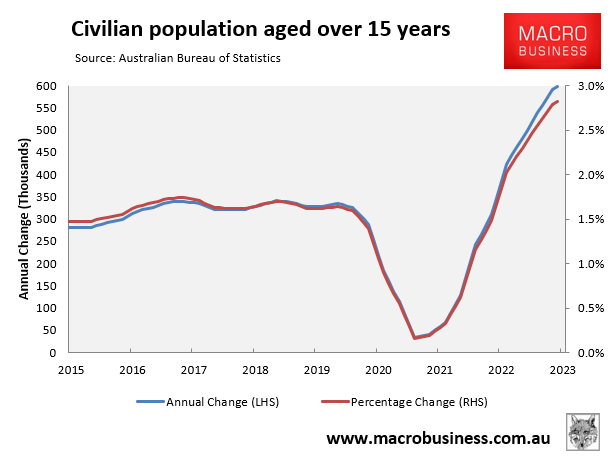
The above data is more proof of the weakening Australian economy and points to a material rise in unemployment in the quarters ahead, which comes at the same time as the labour supply is growing at a record pace via extreme levels of immigration:
Prepare for rising unemployment and lower wage growth.
