
Markets and the RBA will be laser focused on Wednesday’s CPI indicator for August.
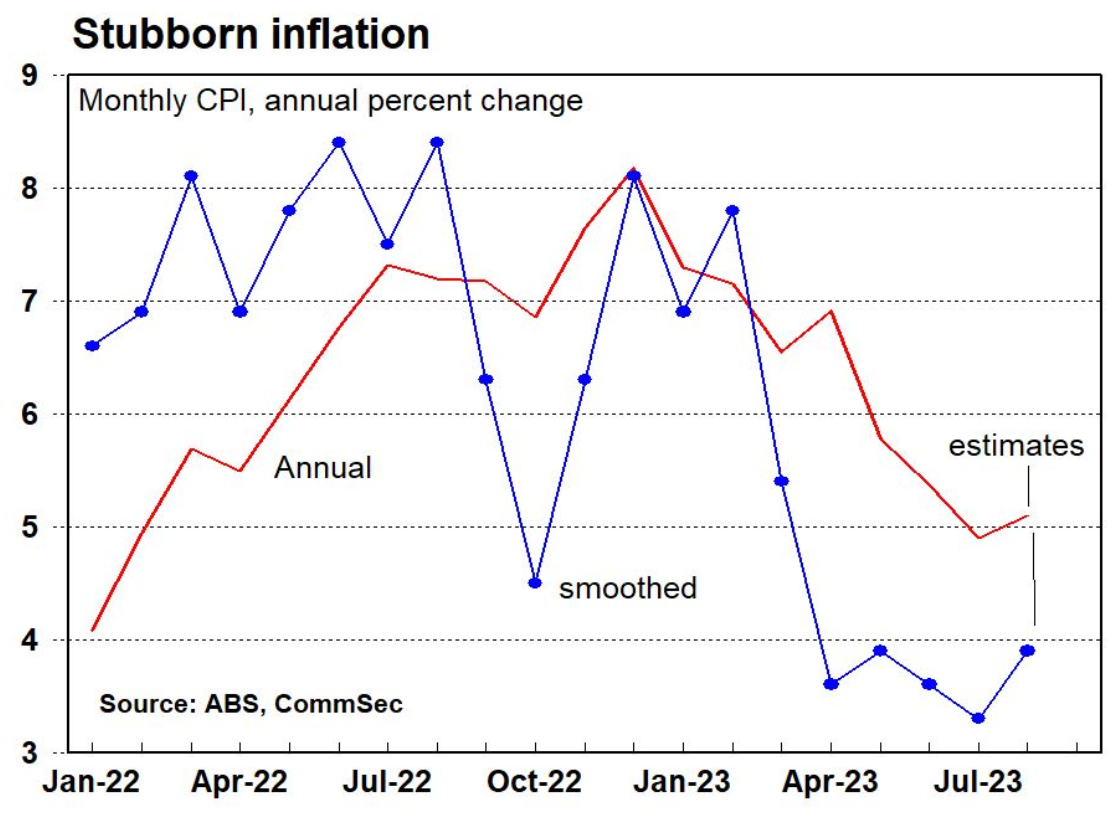
CBA expects that a large increase in petrol and diesel prices of between 8% to 12% in August drove up inflation to 5.1% year-on-year, up from 4.9% year-on-year in July.
Financial markets are even more hawkish, tipping annual inflation to rise to 5.2%.
The rise in petrol prices is related to a months-long campaign by Saudi Arabia and Russia to slash global oil supply and force energy prices higher.
The next chart from CommSec shows the surge in petrol prices:
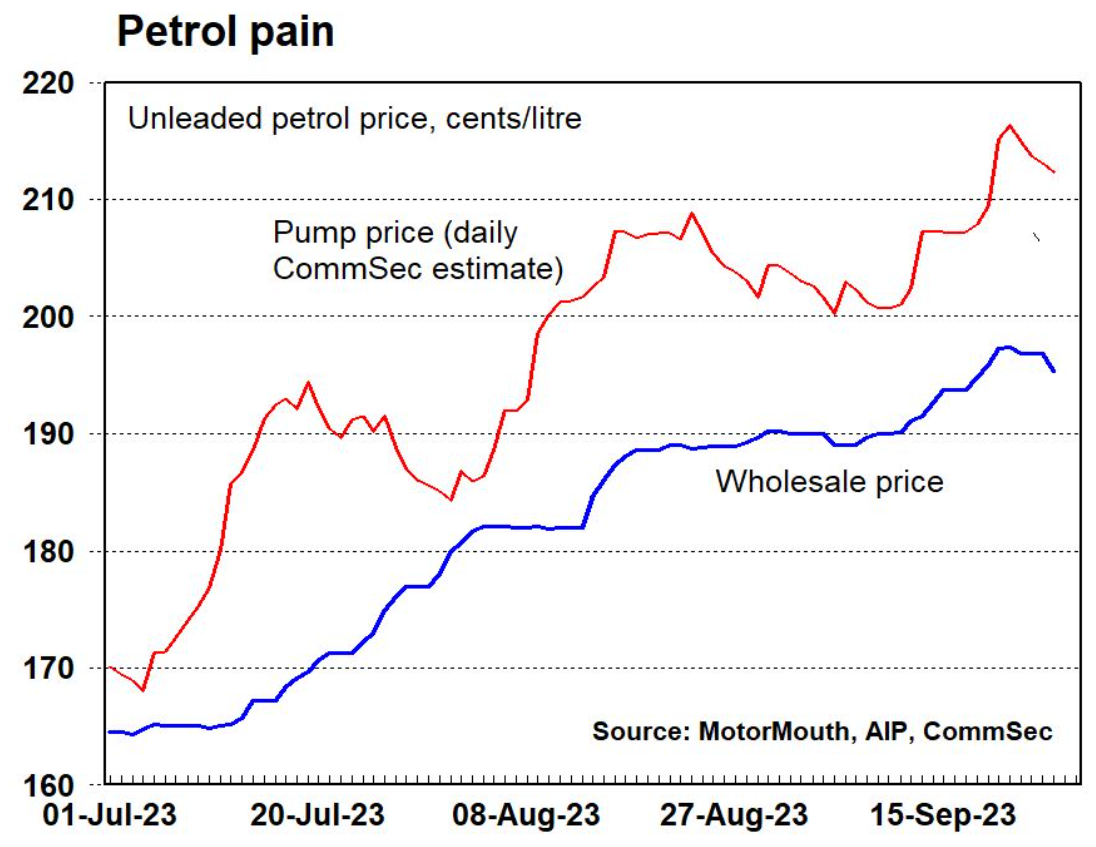
“The national average petrol price rose 6.6 cents a litre last week to a 14-month high of 211c”, wrote CommSec.
“The higher cost of fuel has made it harder for central banks to control inflation. But the wholesale price is 2c down from recent highs”.
“Petrol lifted 9.1% in August, adding to inflation in the month (petrol has 3.5% weight in the index)”.
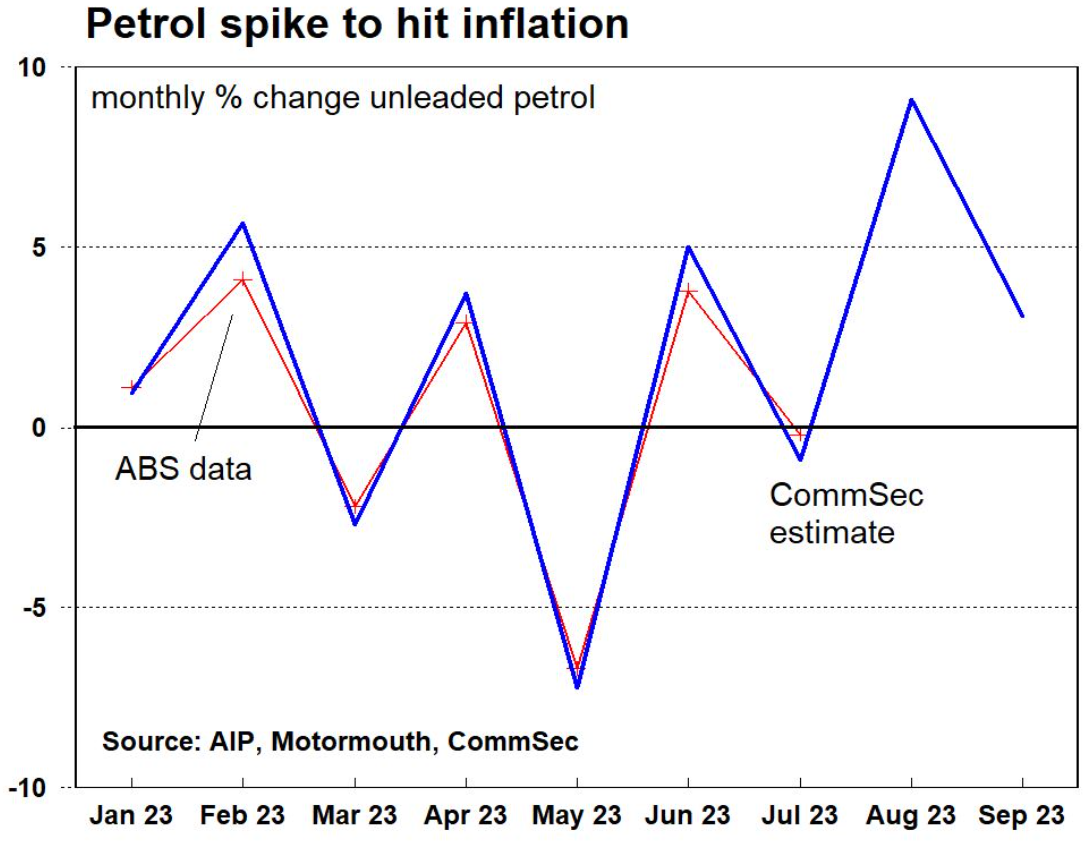
“So far in September petrol is up 3.1%. Using 4-month averages, inflation is stubbornly holding 3-4% annual, above 2-3% target”, CommSec added.
AMP chief economist, Shane Oliver, argued that although spike in petrol prices will be a significant driver of the inflation print this week, the RBA is likely to look through it.
“Monetary policy has gone from ultra-easy to tight, households and businesses are under much more pressure now than 18 months ago”, Oliver told The AFR.
“So, central banks will be inclined to think petrol prices can act like a tax on spending. My inclination is the RBA will look through August’s inflation, but obviously that depends on inflationary pressures elsewhere continuing to decline and in Australia’s case as long as the broader inflation trend is down they won’t read too much into it”.
While Oliver’s assessment will likely prove to be right, there is the risk of second round inflation impacts as rising fuel costs are passed on to consumers via higher goods and services prices.
Regardless, the rise in petrol prices will make it more difficult for the RBA to bring inflation back to the target range of 2% to 3% and could result in interest rates remaining higher for longer.
