
CoreLogic has released rental data for August, which shows that the nation’s rental market has tightened further.
The vacancy rate across the combined capital cities fell to 1.1%, which is around historic lows. Regional vacancies also trended lower, hitting the lowest since November 2022 at 1.4%:
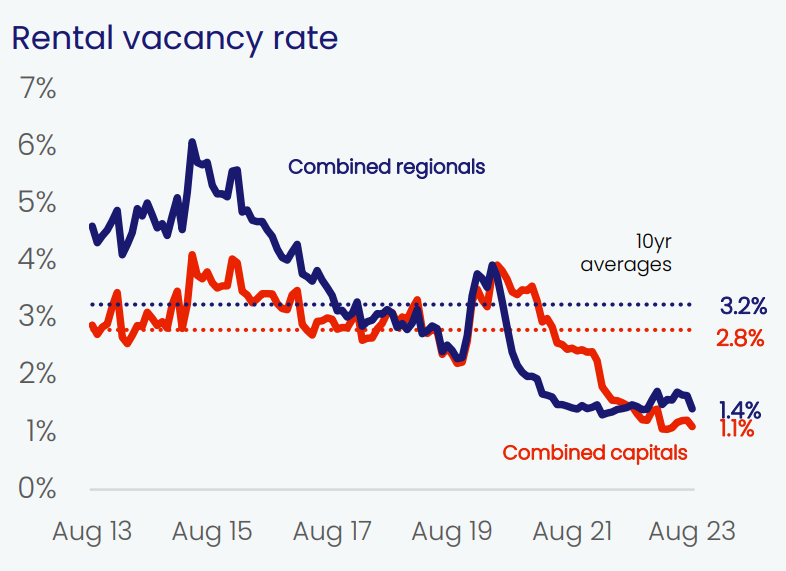
Source: CoreLogic
Every capital city saw a decrease in total rental listings in August, reinforcing longstanding concerns about a lack of rental supply.
Despite the tightening in the rental vacancy rate, the national rental index increased by 0.5% in August, the 36th consecutive month of increases, but the smallest month-on-month rise since November 2020:

Source: CoreLogic
National rentals rose 9.0% year on year in August, the slowest annual rate of growth since April 2022, but still nearly three times higher than the decade average of 3.2%.
Most areas of the country are losing momentum in terms of rental growth, but certain locations are defying the trend.
Annual rental increase in Melbourne reached a new high of 11.9% over the year, while the rolling quarterly trend has been declining since May.
Similarly, the annual rent increase for Perth units has reached a new cyclical high at 16.4%. The quarterly rate of growth in Perth’s unit sector has also slowed since May.
Clearly, the slowdown in rental growth amid tightening vacancies reflects affordability constraints following 36 consecutive months of rises.
Renters are hitting the upper limit of what they can afford to pay, which is also reflected in the strong rise in tenants living in group housing.
Moreover, CoreLogic warns that with “dwelling approvals continuing to trend lower, especially across the medium to high density sector, the outlook for additional rental supply remains dim”.
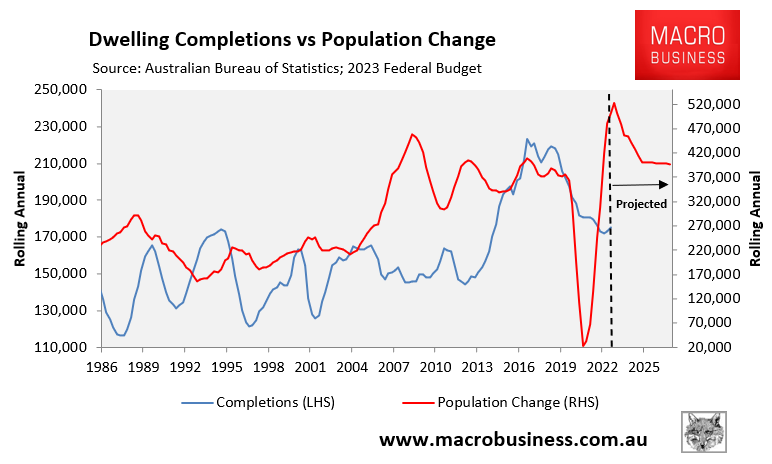
This means that rents will continue to grow faster than incomes for the foreseeable future as record immigration-driven population growth runs well ahead of housing construction.
