
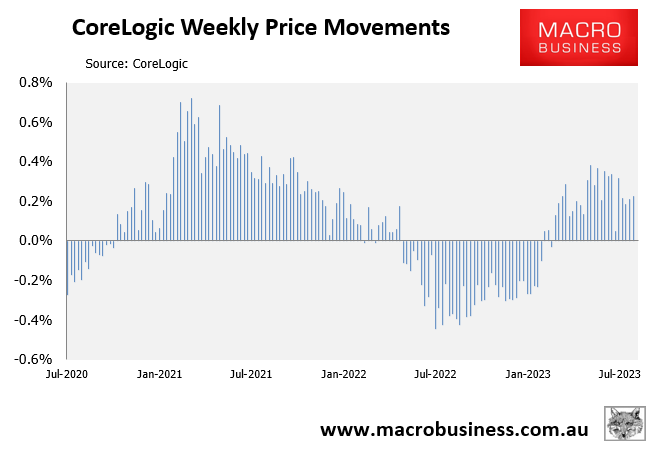
CoreLogic’s daily dwelling values index, which tracks price growth across the five main capital city markets, rose another 0.23% in the week ended 10 August, the 23rd consecutive weekly rise:
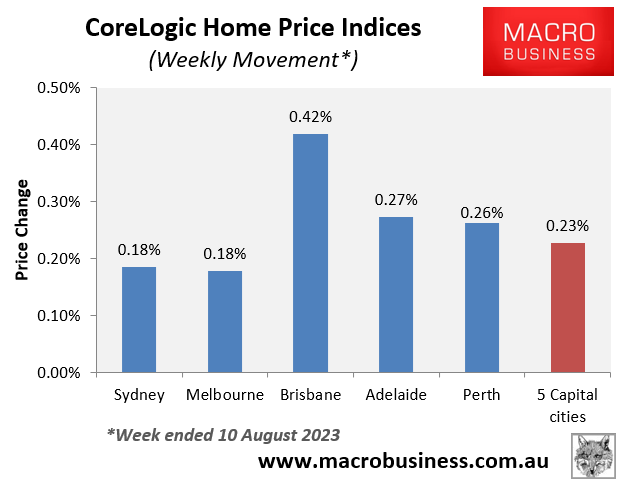
The rise in values was broad-based, with all five major markets rising:
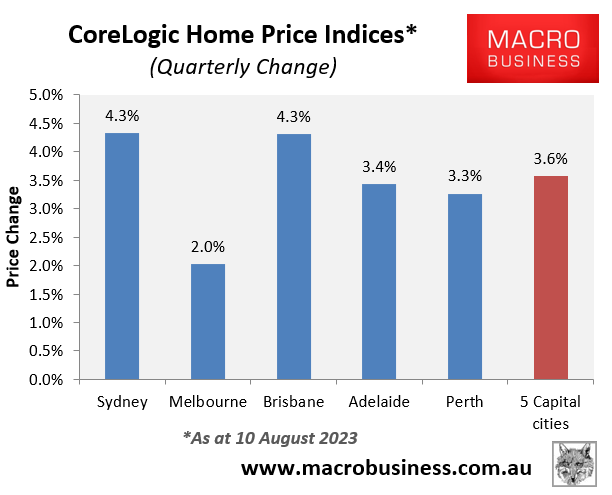
Quarterly values continue to rise at a swift pace, up 3.6% at the 5-city aggregate level, led by Brisbane and Sydney (both up 4.3%):
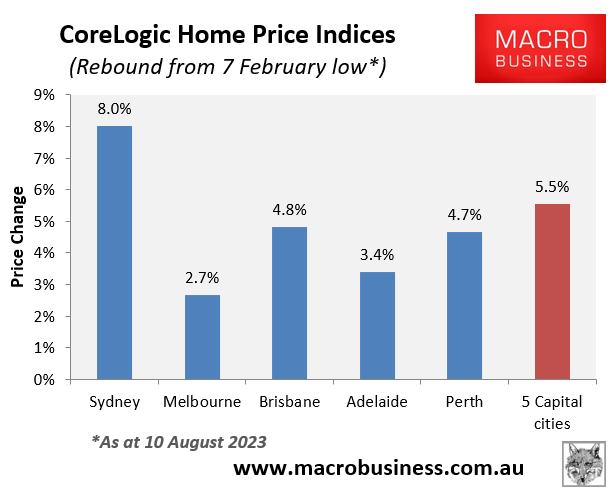
Since the housing market bottomed on 7 February, CoreLogic’s daily dwelling values index has rebounded by 5.5% at the 5-city aggregate level, led by turbo-charged growth across Sydney (up 8.0%):
CoreLogic’s head of research, Eliza Owen, published interesting research on Thursday noting how leading housing market indicators are fading as “increased housing costs alongside high cost of living expenses continue to hit borrowers”:
“The pace of increase in the CoreLogic Home Value Index has slowed from 1.1% in June to 0.6% in July, and the clearance rate to the end of July had also trended slightly lower, averaging 66.5% compared to 71.3% at the end of May”.
“Interestingly, CoreLogic new listing counts increased 2.8%, or by around 912 listings, through July. This was an unusual trend, because new listings have historically trended lower through July, amid a seasonal winter slowdown. For the past five years, new listings have moved -3.6% lower from June to July (Figure 3)”.
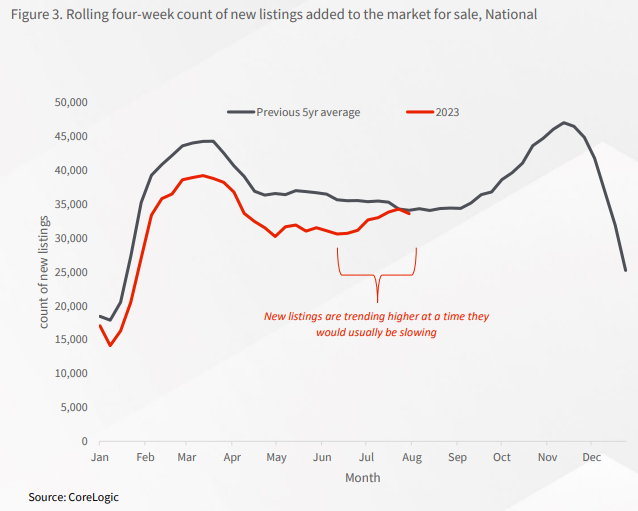
“The trend has been especially notable in Sydney where new listings have moved 7.6% higher through the month, and in Melbourne where new listings moved 8.6% higher”.
“The addition of new listings to the market are not necessarily a sign that higher mortgage costs are creating forced selling conditions”.
“However, as more mortgage holders are exposed to higher interest costs, it will be a telling metric to follow”.
“There may be a mild deterioration in housing market conditions if new listings decisions continue to rise”.
CoreLogic’s final auction results for last weekend recorded the lowest clearance rate (64.5%) since Easter 2023 (61.5%):
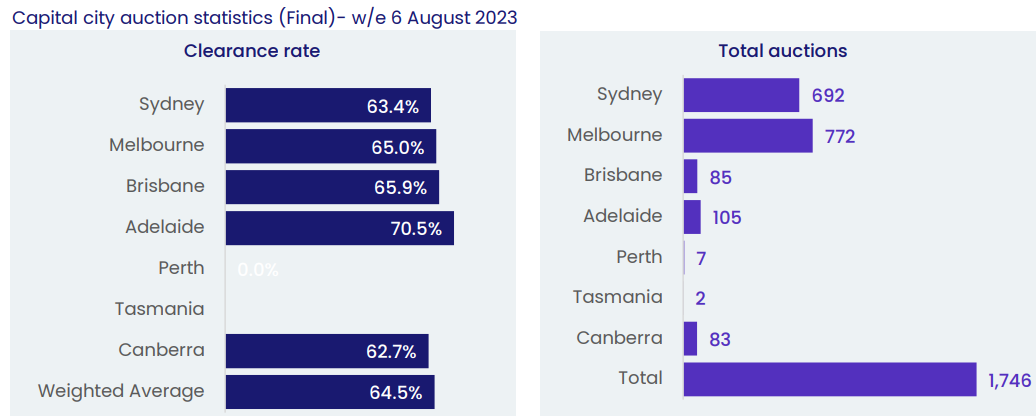
This weak result was driven by Sydney, which recorded its lowest clearance rate (63.4%) since the week ending 29 January 2023 (62.3%).
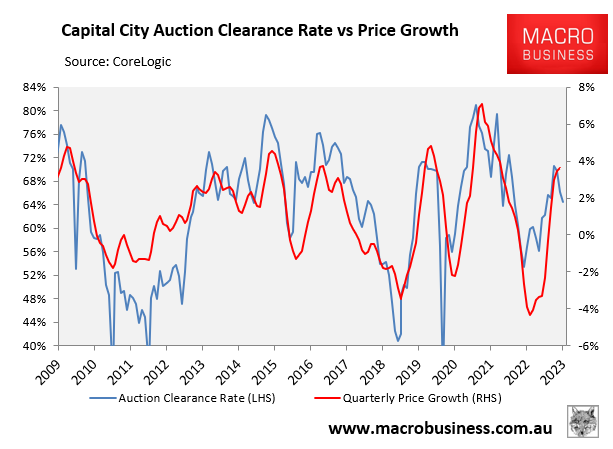
The downturn in auction clearances is pointing to a corresponding downturn in price growth:
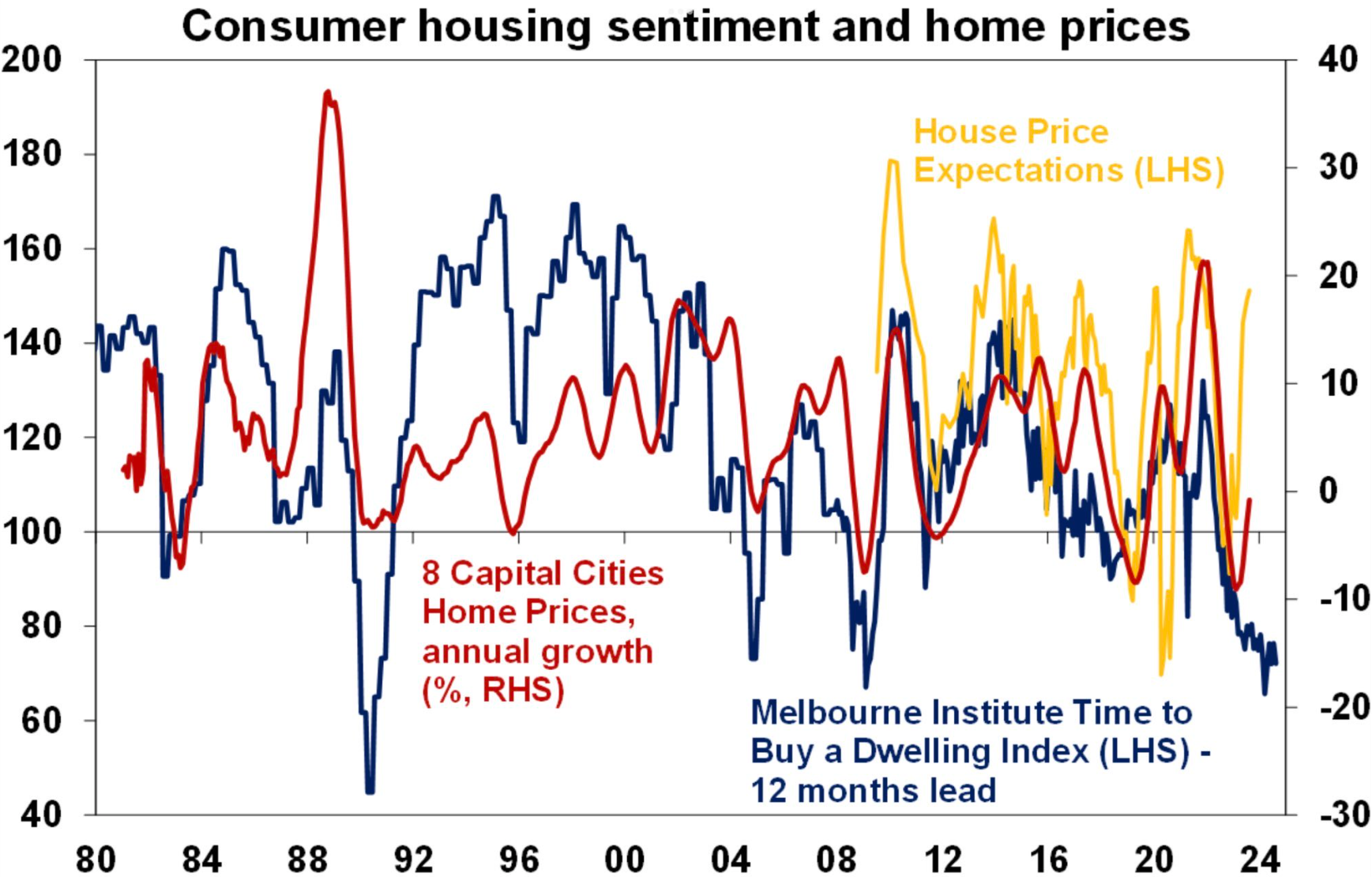
AMP Capital chief economist, Shane Oliver, also noted on Twitter that “while the rebound in home prices has seen a rise in consumers’ home price expectations according to the Westpac/MI survey, perceptions of whether now is a good time to buy a dwelling remains very depressed which questions the durability of the property price upswing”:
House price growth, in my opinion, will continue to decline (but not turn negative) before rising next year when the RBA begins to cut interest rates.
Record immigration, ongoing rental shortages and significant rent growth, and restricted supply will all contribute to rising prices.
When the RBA begins its easing cycle, a fire will be lit beneath the market.
