
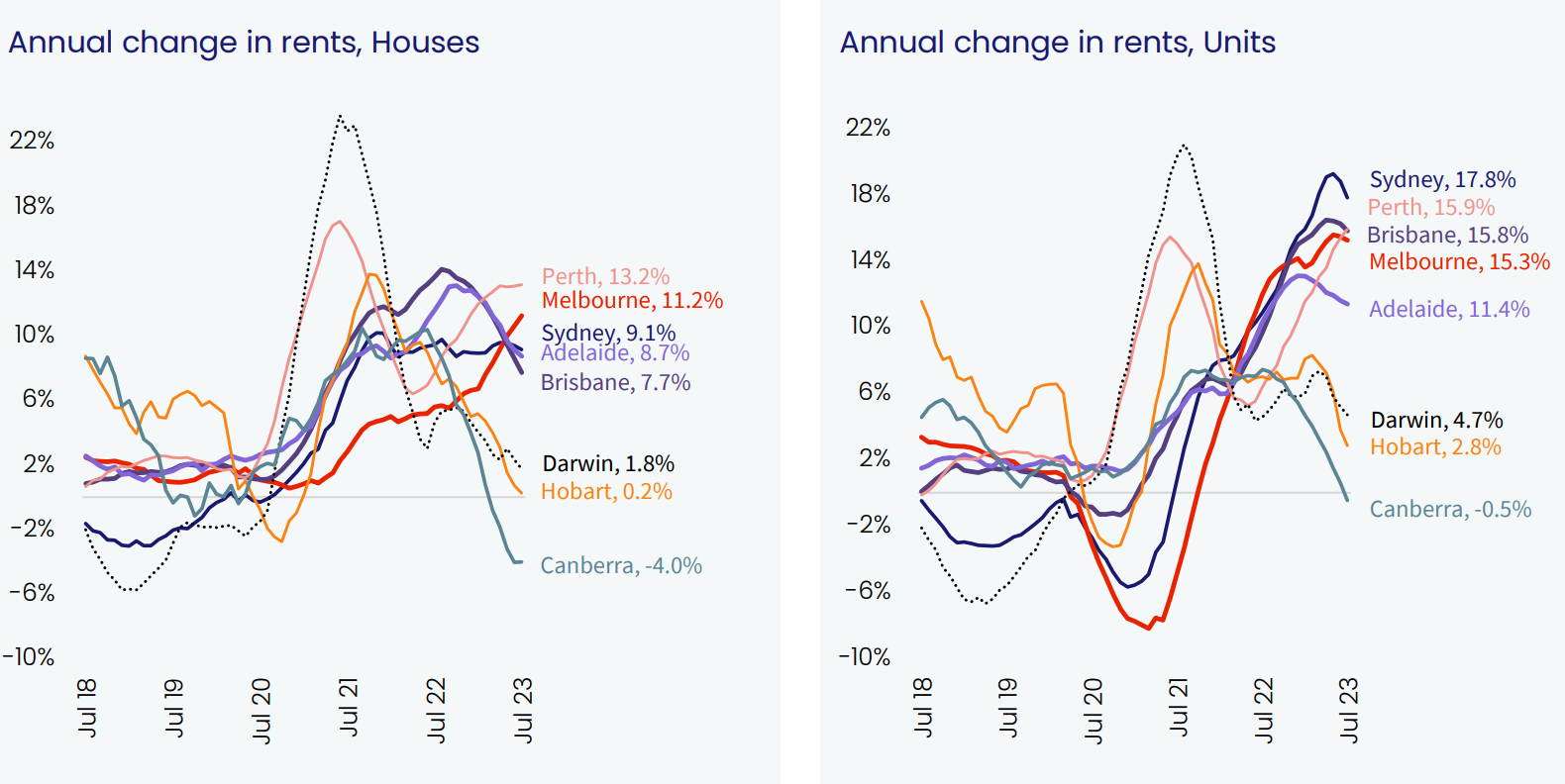
CoreLogic has released rental data for July, with capital city rental growth slowing to 0.8% over the month, which was the lowest monthly rise since December last year:
Source: CoreLogic
As shown above, rental growth remains turbo-charged across the major capital cities, led by the apartment markets in our four largest capitals.
These four markets each recorded annual apartment rental growth above 15% in the year to July.
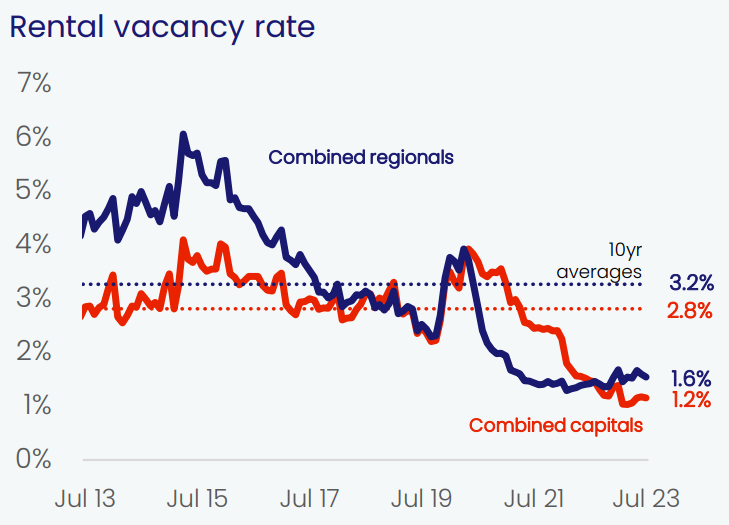
This strong rental growth is being driven by record tight vacancy rates.
The rental vacancy rate across the combined capital cities was just 1.2% in July, less than half the decade average of 2.8%:
Source: CoreLogic
CoreLogic notes that “since January 2022, the unit sector across the capital cities has consistently shown a higher rate of appreciation compared to houses”.
“This is likely due to several factors such as more affordable unit rents, increased demand for medium to high density accommodation, and supply constraints with approvals below the decade average since 2018”.
The situation is likely to continue given the number of apartments approved for construction is tracking around 2012 levels, according to the Australian Bureau of Statistics:
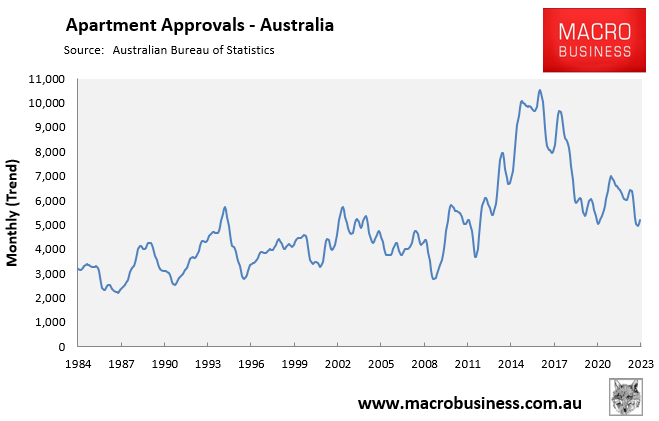
The drop in apartment approvals has happened at the same time as Australia is experiencing record net overseas migration (population growth):

Source: 2023 federal budget
Following a record 500,400 increase in Australia’s population in the 2022 calendar year, the federal budget forecast a record 1.5 million net overseas migration in the five years to 2026-27, resulting in a 2.18 million increase in Australia’s population – equivalent to five Canberras or one Perth.
The majority of this population growth will be concentrated in Victoria (Melbourne) and New South Wales (Sydney), where apartment approvals have plummeted the most:
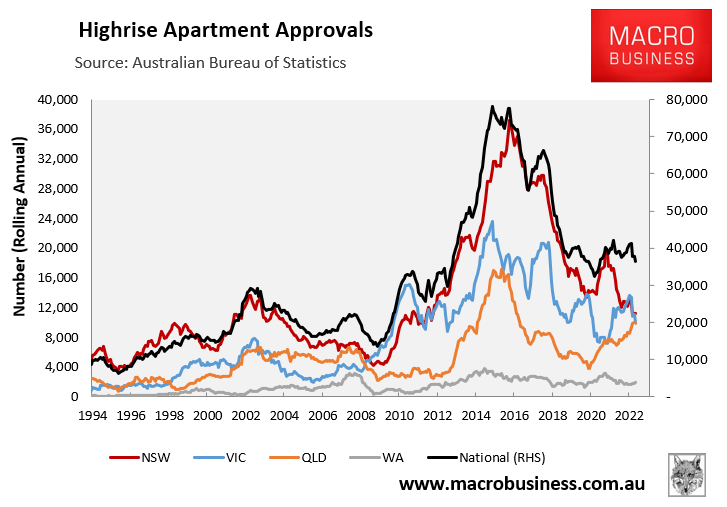
This rising rental demand will be met with shrinking supply, forcing the rental market to tighten even further and rents to soar even higher.
Simply put, the Albanese Government’s record immigration policy is a tenant’s worst nightmare.
Rents will skyrocket, causing financial hardship for lower-income households and forcing thousands more people to be homeless.
Where will the hundreds of thousands of migrants and students who arrive each year live when housing is already in chronic undersupply?
Renters and lower-income Australians suffer as a result of Labor’s reckless ‘Big Australia’ immigration policy.
