
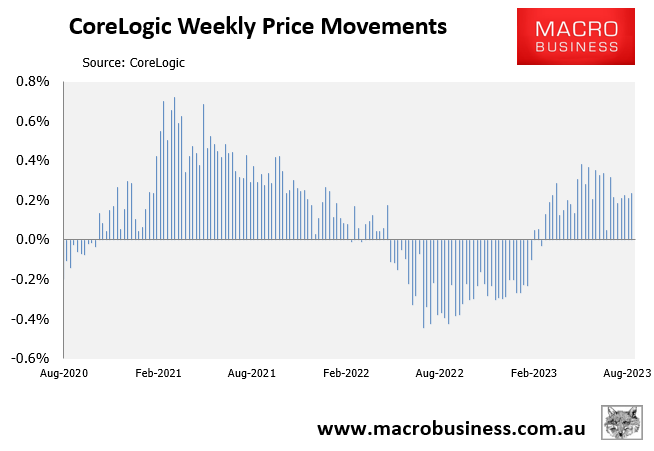
CoreLogic’s daily dwelling values index, which monitors value movements in the five major capital city markets, grew by 0.24% in the week ending 24 August, marking the 25th consecutive weekly increase.
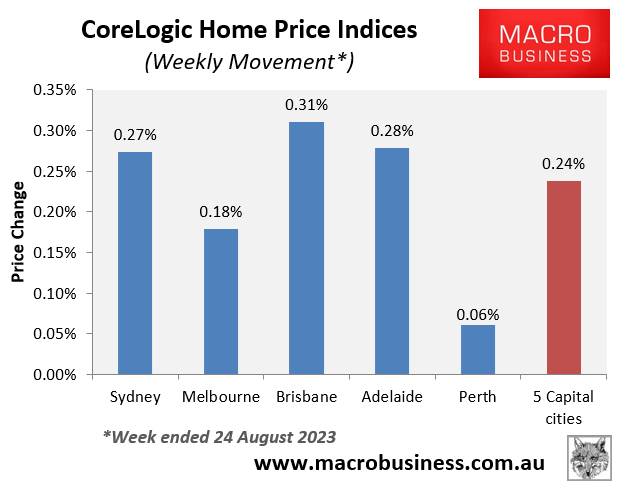
All major capital city markets increased in value this week, with Brisbane (0.31%) leading the way:
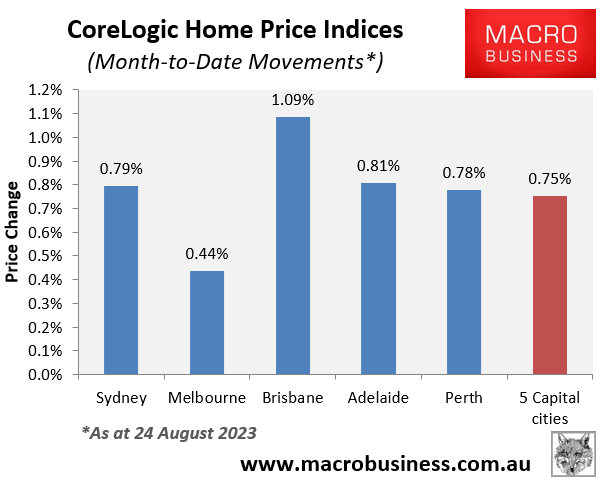
At the 5-city aggregate level, property values have climbed by 0.75% so far in August, with Brisbane (1.09%) again leading the way:
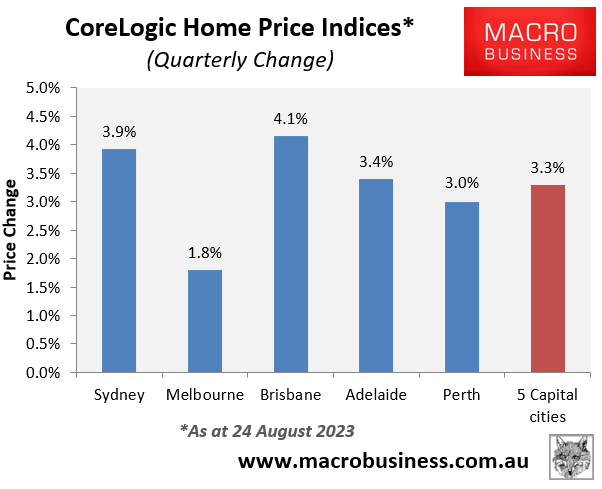
The 5-city aggregate quarterly increase rate in home values has moderated to 3.3%, with Brisbane (4.1%) yet again leading the way:
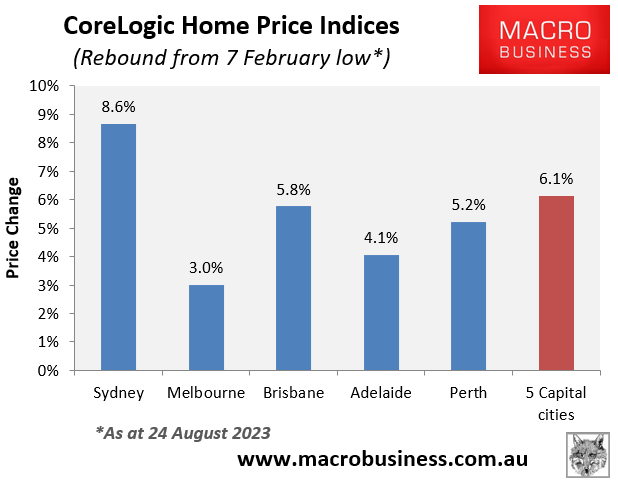
Since the daily dwelling values index peaked on 7 February, values have risen by 6.1% at the 5-city aggregate level, led by Sydney (8.6%) and Brisbane (5.8%):
There are compelling reasons to believe that Brisbane housing will outperform its capital-city rivals in the medium to long term.
Queensland’s new draft regional plan, which was released this month, projected an additional 2.2 million people to live in South-East Queensland by 2046, bringing the region’s population to 6 million from 3.8 million currently.
Around 500,000 people are expected to relocate to the Brisbane City Council area alone by 2046, bringing the population to 1,721,000.
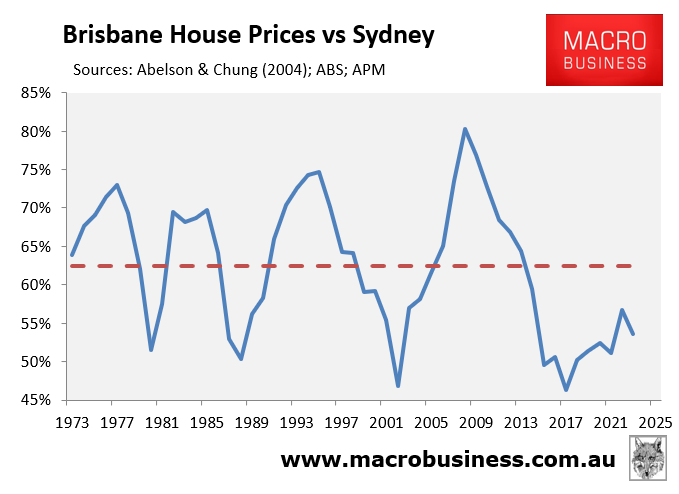
According to domain data, the median property price in Brisbane is only 54% of the median house price in Sydney:
Brisbane’s median house price is also 78% lower than Melbourne’s:
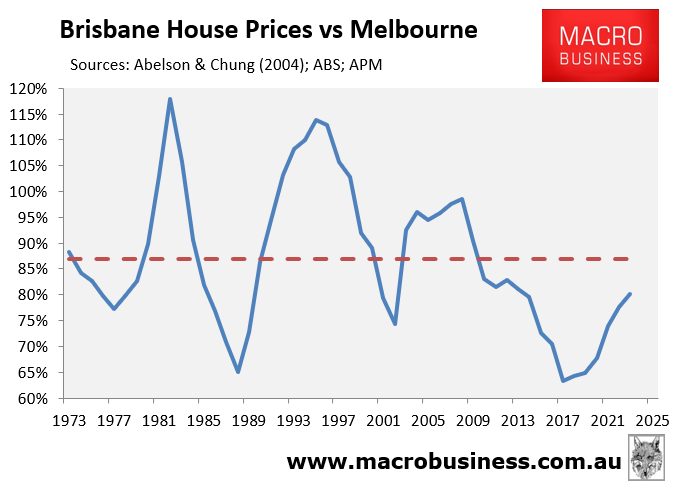
As a result, Brisbane housing is comparatively affordable compared to its larger east coast siblings, implying that Brisbane house prices should grow faster over the long run.
The 2032 Olympics will also stimulate infrastructure investment and boost Brisbane’s image as a global city, enhancing international buyer interest.
In short, the long-term conditions for Brisbane house prices to outperform are in place.
