
Alan Kohler ABC Finance Report on Wednesday night explained how the rebound in Australian dwelling values in the face of ongoing interest rate hikes is “unheard of”:
“Here’s a chart comparing this house price cycle with the other two big ones that started in 2008 and 2017”:
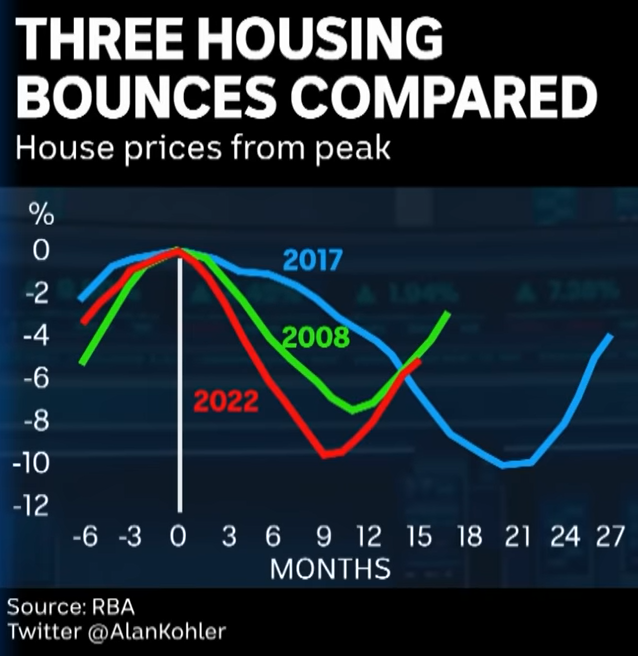
“Now this bounce over the past five months is about the same as the other two bounces”.
“But when in 2019 prices started recovering from the 2017-18 bust, they were helped by the Tailwind of three rate cuts”.
“And when prices started rising again in January 2009 after the GFC, there had been four rate cuts with two to come”.
“This time house prices started rising in February after eight rate hikes and kept rising against the wind of four more”.
“That’s absolutely unheard of”.
Alan Kohler is not wrong. Home prices at the 5-city aggregate level have rebounded by 5.2% from their February 2023 trough at the same time as the RBA has hiked the official cash rate another 1.0%.
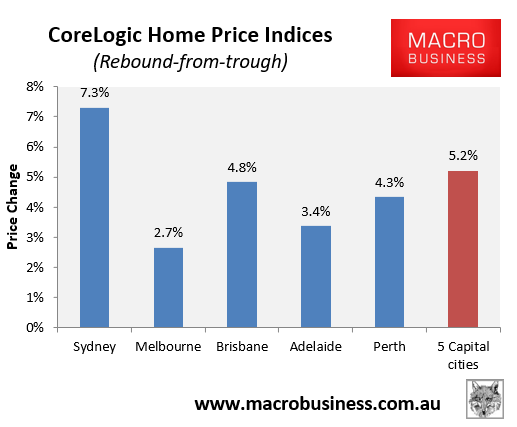
These additional rate rises have further shrunk borrowing capacity, which is now around 30% lower than its level in April 2022 before the RBA’s first hike.
As shown in the next chart from Shane Oliver, borrowing capacity and home values generally track each other over time:
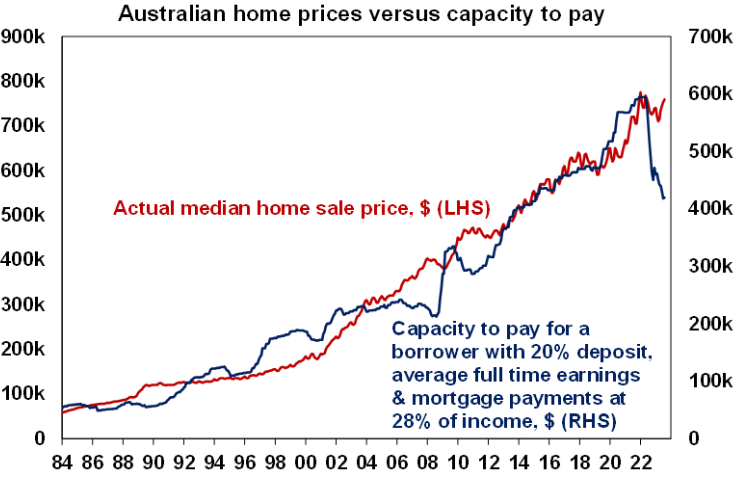
Therefore, the sharp reduction in borrowing capacity should have pulled values lower, not seen values rebound. As such, we are witnessing a most unusual turn of events.
In my opinion, house price growth will decelerate (but not fall) before picking up next year when the RBA begins to decrease interest rates.
Record immigration, continued rental shortages, strong rent growth, and limited supply will all help to lift prices.
And when the RBA does start cutting and borrowing capacity rebounds, a fire will be lit beneath the market.
