
The Reserve Bank of Australia’s (RBA) aggressive interest rate increases have finally caught up with Australian households.
CommBank’s latest Household Spending Index (HSI) shows that “consumers continued to tighten belts in July” as the effects of the RBA’s 4.0% of monetary tightening are felt:
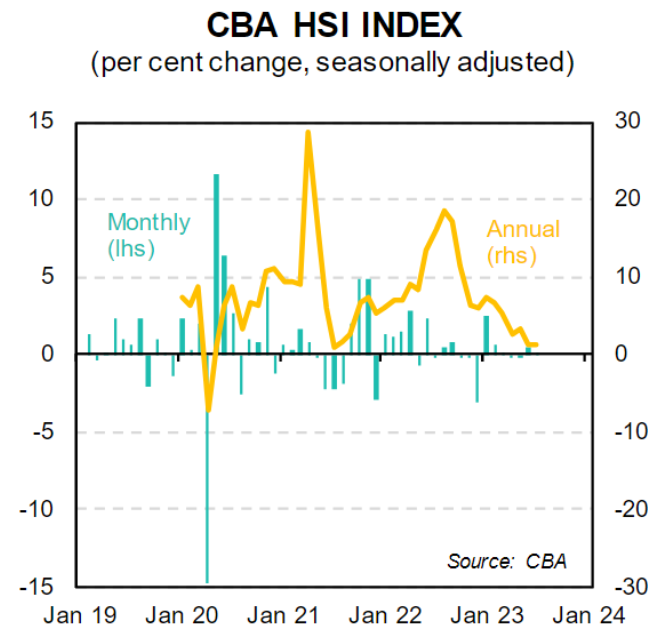
The CommBank HSI Index remained unchanged in July at 135.2, but the annual rate of spending growth fell to 1.3% from a peak of 18.2% in August 2022.
“The effects of 400bp of RBA interest rate increases is clearly reflected in a significant overall slowdown in household spending as measured by the CommBank HSI Index”, noted CBA Chief Economist Stephen Halmarick.
“Monetary policy is now restrictive and financial conditions will continue to tighten in the months ahead on the lagged effect of RBA interest rate increases and the fixed rate mortgage refinancing task”.
“We continue to expect household spending to weaken further over the remainder of 2023 and 2024”.
A swathe of other data also shows that Australian households are hunkering down.
The ABS’ household spending index, released last week, revealed that household spending was only 1.8% higher in June compared to the previous year:
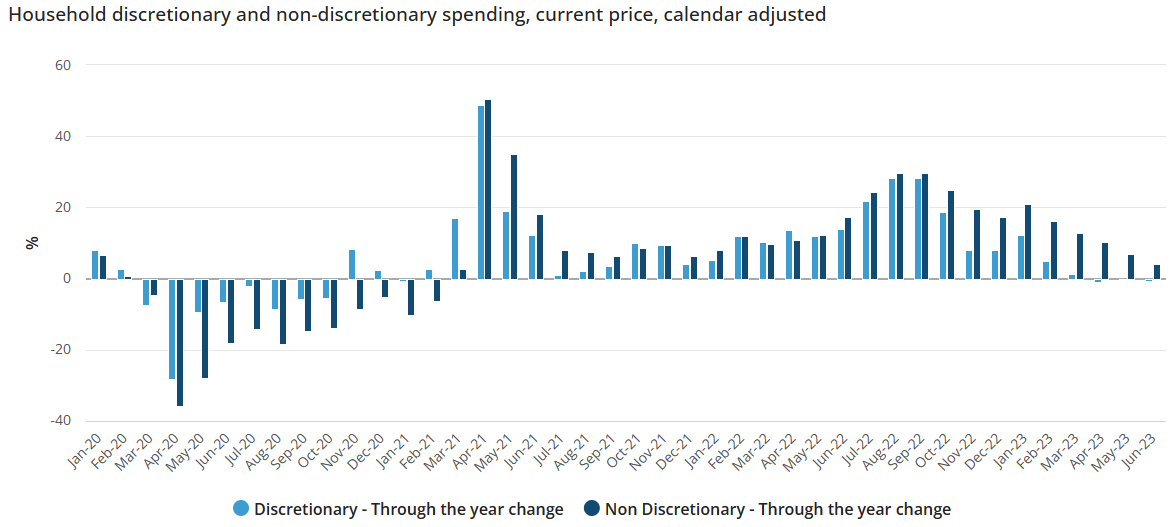
With CPI inflation in Australia running at 6.0% in the year to June and population growth of roughly 2.0%, real per capita household spending declined sharply over the year.
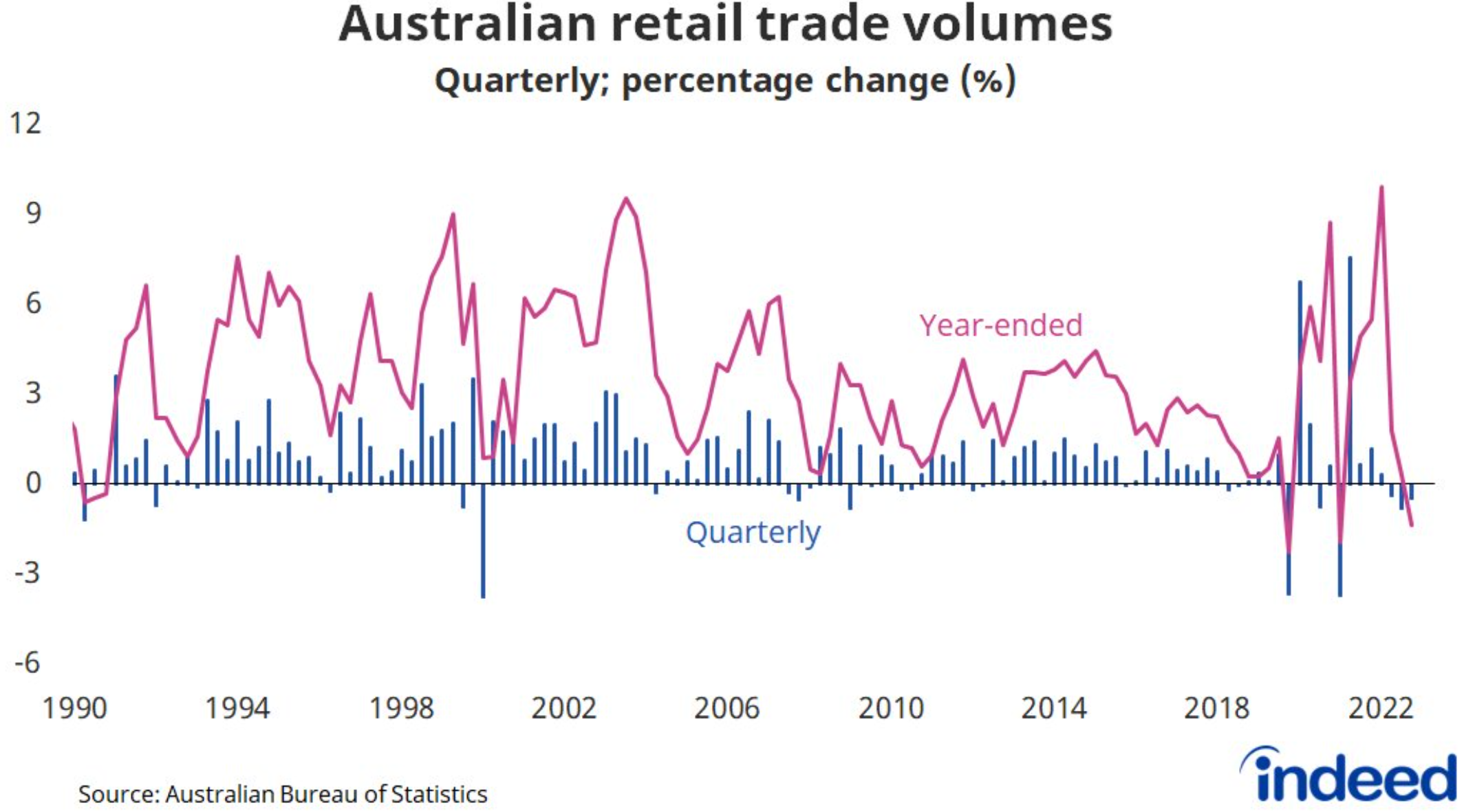
According to Indeed senior economist Callam Pickering, “retail volumes fell for the third consecutive quarter – the first time that’s happened since 2008”.
“Retail volumes are down 1.4% over the past year – the first time annual retail volumes have declined since 1990 (ex. pandemic)”:
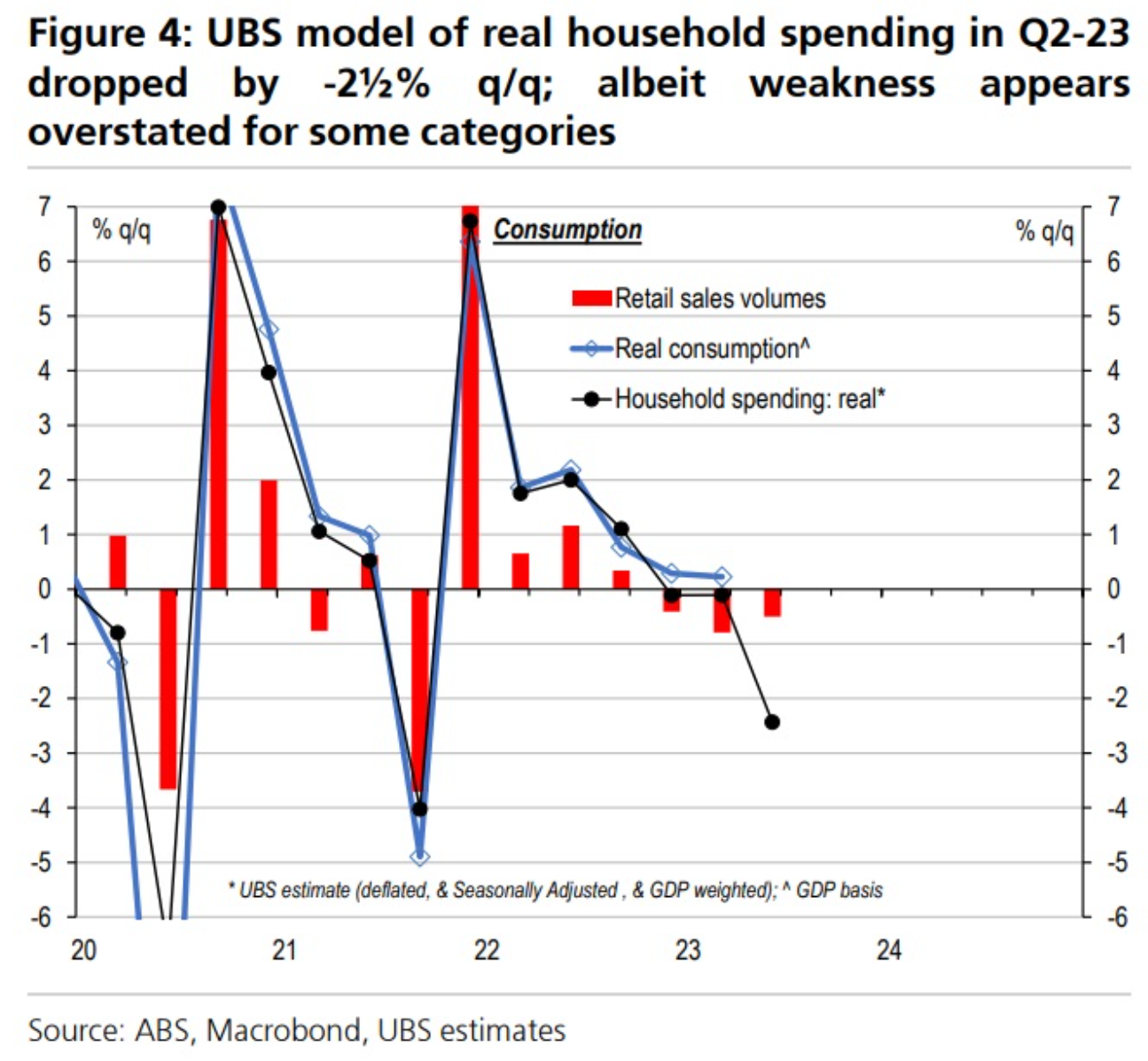
UBS also revealed their model of real household spending, which suggests that real spending fell by 2.5% in the June quarter:
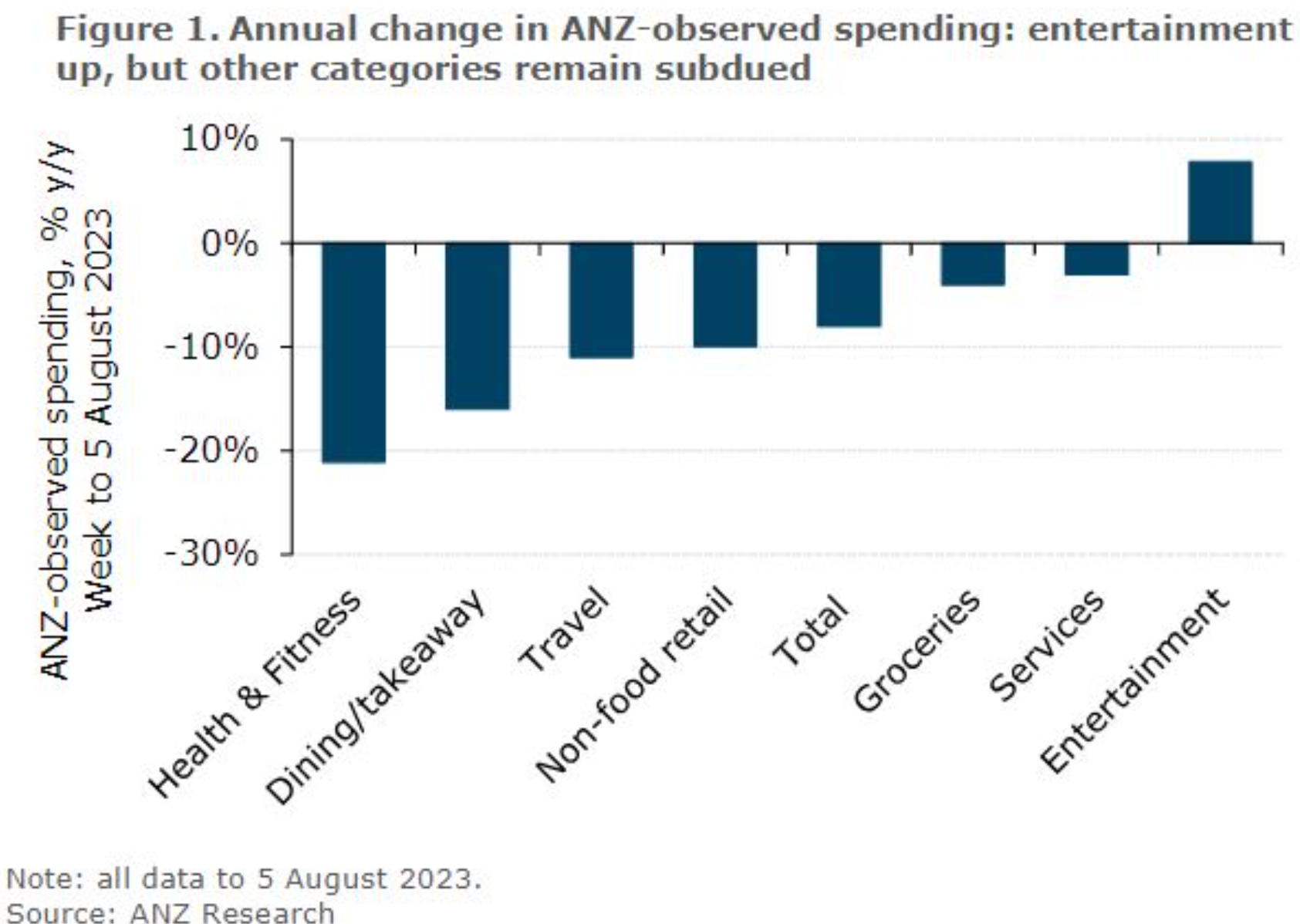
Meanwhile, ANZ’s observed spending survey declined by 8.0% year-on-year to 5 August 2023, with only entertainment spending increasing (driven by the Barbie movie):
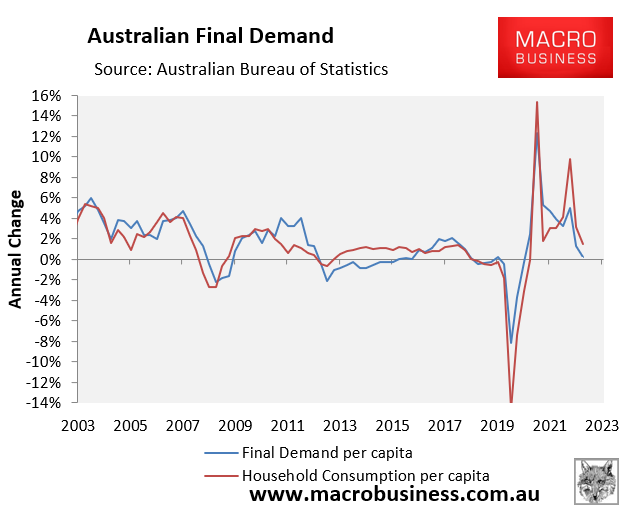
Household consumption accounts for approximately 55% of final demand in Australia on average.
As a result, where household consumption goes, the economy tends to follow.
The following chart from the March quarter national accounts (the June quarter national accounts will be released early next month) illustrates the link between real household consumption and final demand:
Based on the above data, Australian households are bracing for a severe per capita recession, with a “technical recession” of two consecutive quarters of negative aggregate GDP growth also a distinct possibility.
The only thing keeping Australia from entering a “technical recession” is the Albanese Government’s record immigration program, which is expected to increase the country’s population by approximately 2% this year.
Even if a “technical recession” is averted and Australia’s economy expands modestly, everyone’s share of the economic pie will fall.
Moreover, as extreme levels of immigration crush-load everything in sight, including the rental market, Australians’ broader living standards will suffer.
