
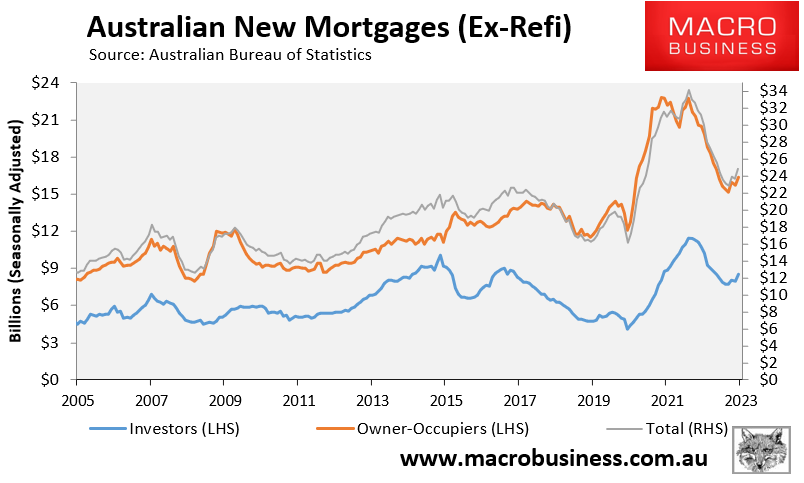
The Australian Bureau of Statistics (ABS) on Monday released data on new mortgage commitments, which showed that the total value of new mortgages originated rose a strong 4.8%.
Owner-occupier mortgage commitments rose by 4.0% over the month, whereas investor mortgage commitments rose by 6.2%:
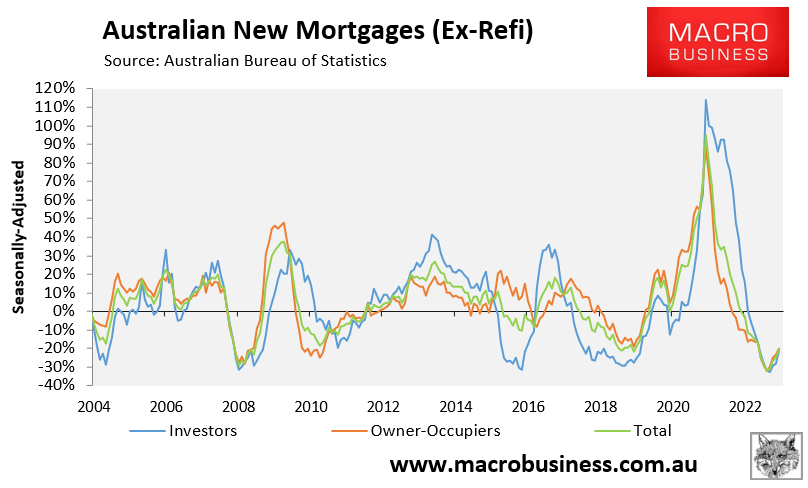
Annual growth in new mortgage commitments also edged higher (or was less negative), rising to -20.5% in May from the low of -32.3% in January 2023:
Because nearly all home buyers utilise a mortgage, the increase in new mortgage commitments has traditionally been a crucial leading indicator for property prices.
As the value of new mortgage commitments rises, so will property prices.
As a result, the increase in mortgage commitments in May, alongside the rebound in annual growth, are good omens from house prices.
Indeed, the next chart plots the quarterly growth rate in new mortgage commitments against the growth in dwelling values, as measured by CoreLogic:
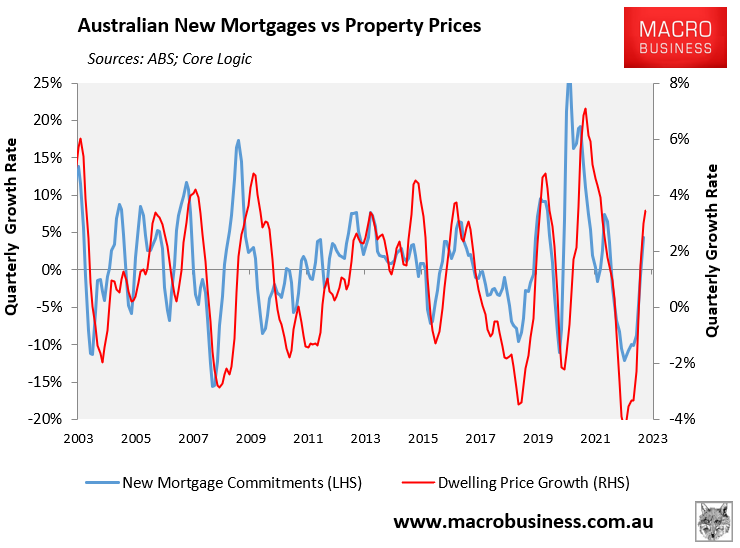
Both indicators have rebounded sharply from their trough.
Dwelling values rose by 3.5% over the June quarter at the 5-city aggregate level, whereas as new mortgage finance commitments rose by 4.3% over the May quarter.
In addition, auction clearance rates remained strong in June (albeit weakened marginally), suggesting housing market momentum remains robust:
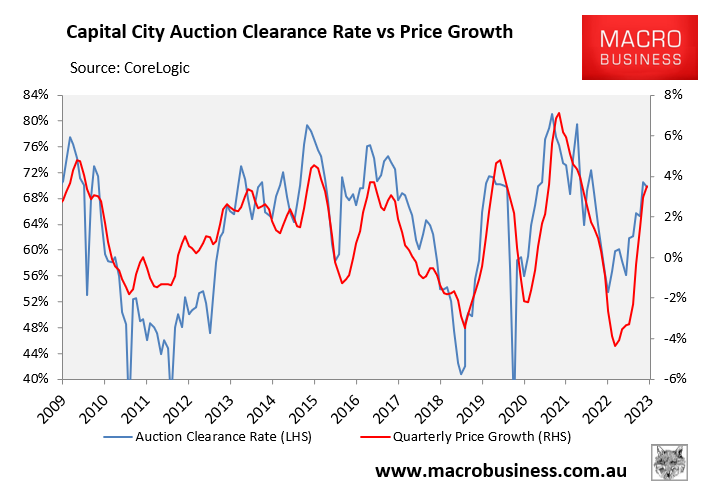
In short, Australia’s housing market continues to defy the RBA’s aggressive monetary tightening.
Mortgage demand, auction clearance rates and home prices have rebounded the face of 100 basis points of rate hikes so far in 2023.
This is a highly unusual situation as housing rebounds typically only occur after interest rates are cut and sales volumes are rising.
How long this situation can persist in the face of tightening monetary policy, falling borrowing capacity, and falling real wages is the bigger question.
For now at least, record immigration, soaring rents, and an acute lack of stock advertised for sale is pushing the market higher.
