
The latest CoreLogic data shows that investors are selling their homes in near record numbers:
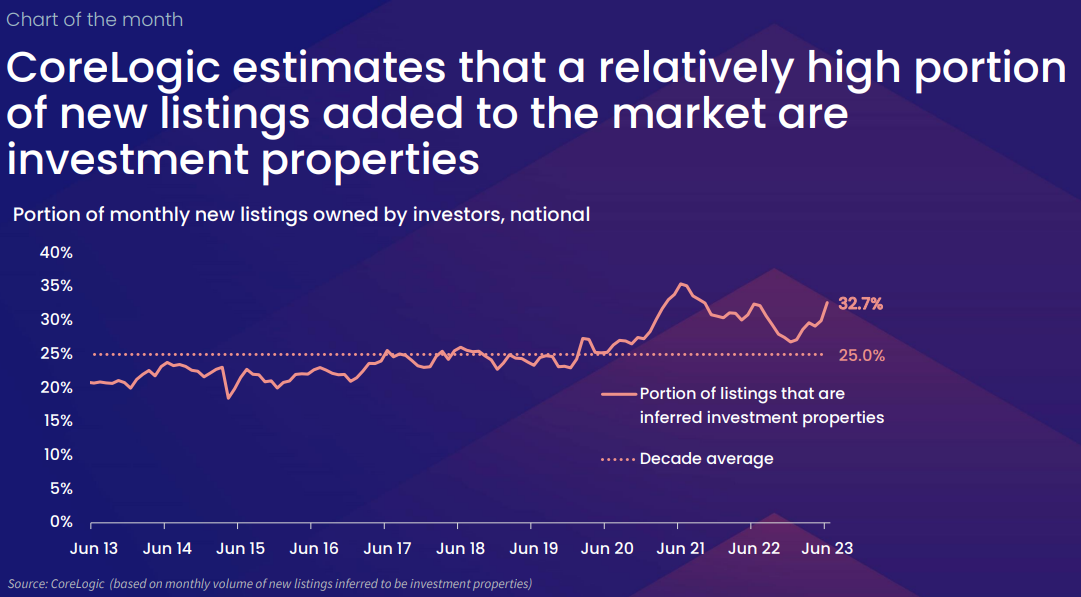
Investors accounted for 32.7% of new for sale listings in June, well up on the decade average of 25%.
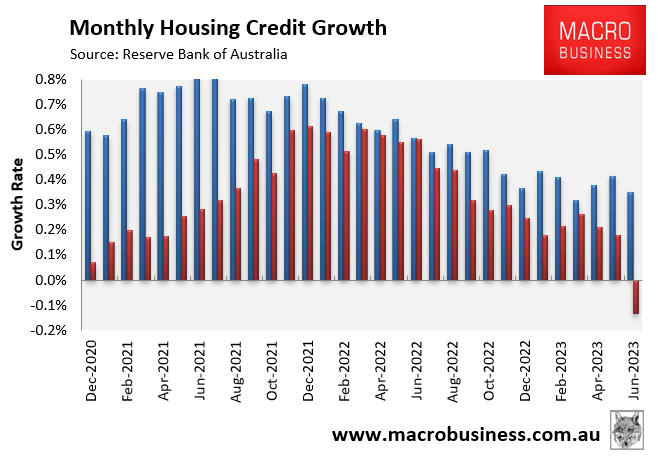
Today, the Reserve Bank of Australia (ABS) released mortgage data, which showed that the stock of outstanding mortgage debt rose by only 0.24% in June.
Owner-occupier mortgage credit outstanding rose by 0.35%, whereas investor mortgage credit outstanding actually declined by 0.13%:
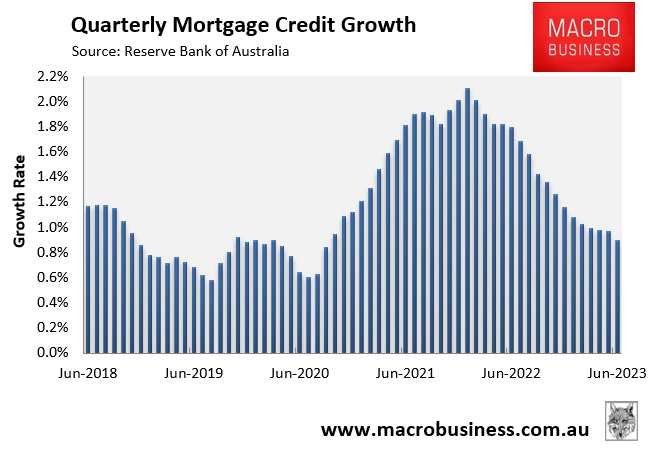
The next chart shows that the value of outstanding mortgage credit rose by only 0.9% over the June quarter, which is the slowest growth rate since October 2020:
Quarterly investor mortgage growth collapsed to only 0.25%, whereas owner-occupier mortgage growth rose by 1.1% over the quarter:
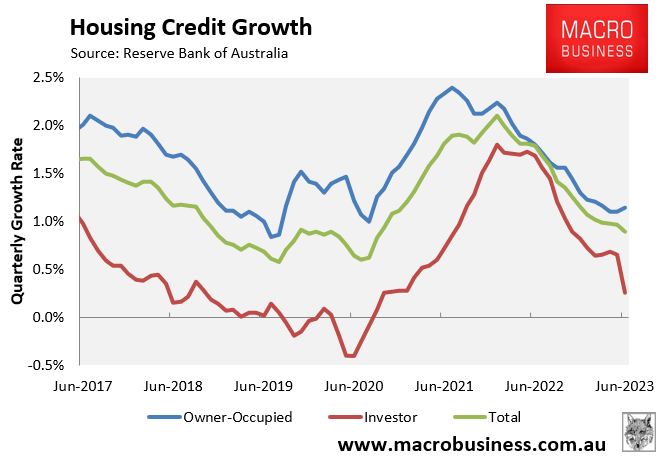
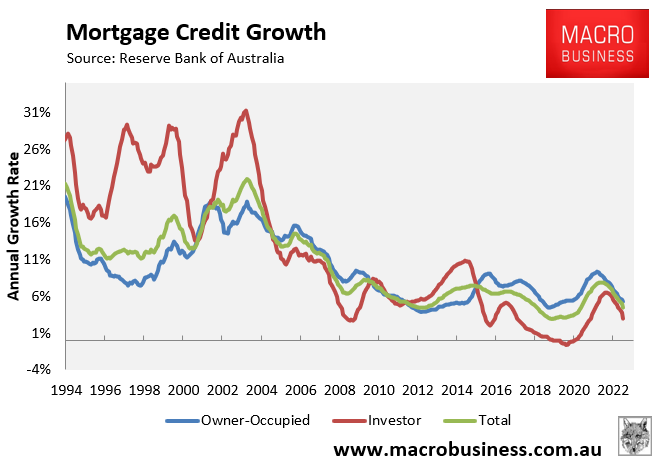
Finally, annual mortgage credit growth has fallen to 4.5%, with owner-occupier growth falling to 5.3% and investor mortgage growth falling to just 3.0%:
This data suggests that Australia’s house price recovery has come from a relatively narrow foundation.
Although actual sales volumes are low, the residences that do sell have attracted higher prices.
The slow expansion in mortgage credit could also be attributable to Australians making additional mortgage repayments over their planned amount, which offsets newly issued mortgages.
It will be interesting to see how the market reacts if the RBA raises interest rates again on Tuesday.
For the time being, record immigration, a dearth of listings, soaring rents, and growing construction costs are outweighing rising mortgage costs and declining borrowing capacity.
