
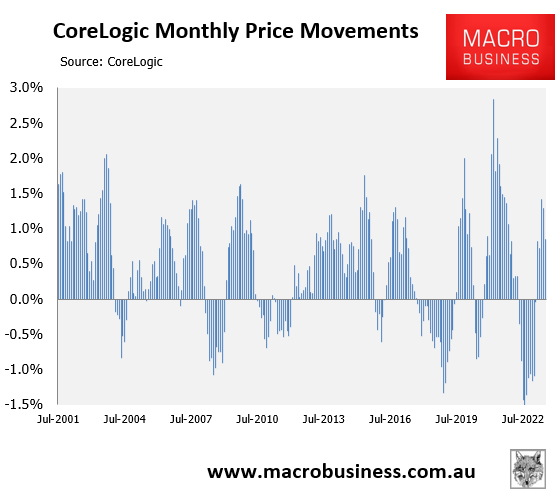
CoreLogic’s daily dwelling values index, which captures value changes across the five major capital city markets, recorded a 0.9% rise in July at the 5-city aggregate level.
This represented the fifth consecutive monthly increase in home values, but was a marked deceleration from the 1.4% rise recorded in May and the 1.3% increase recorded in June:
The next chart shows values changes across the five main capital city markets:
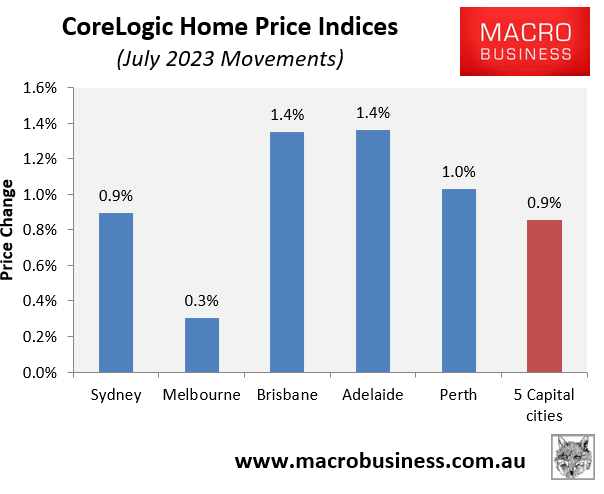
As you can see, Brisbane (+1.4%), Adelaide (+1.4%) and Perth (1.0%) led price growth in July, whereas Sydney (+0.9%) and Melbourne (+0.3%) recorded smaller rises.
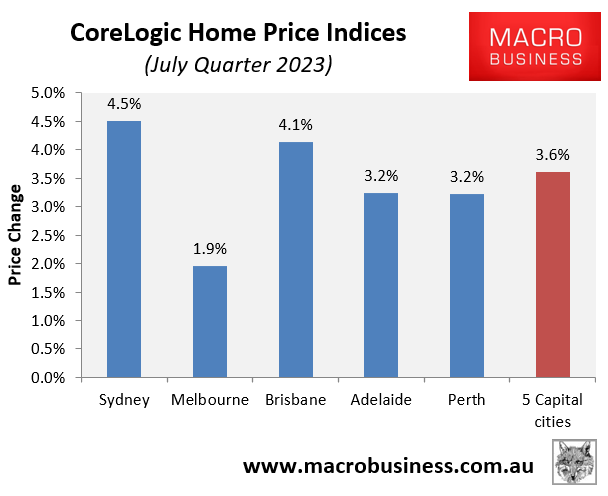
Over the July quarter, values rose by 3.6% at the 5-city aggregate level, with all major markets except Melbourne recording strong growth:
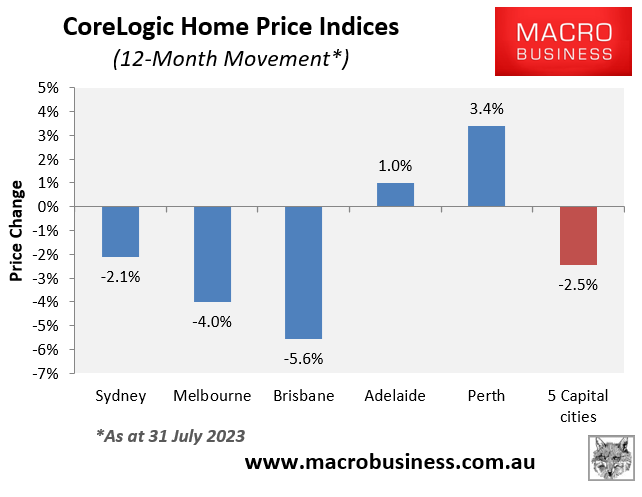
Over the year to July, home values fell by 2.5% at the 5-city aggregate level, led by the three largest east coast markets of Sydney (-2.1%), Melbourne (-4.0%) and Brisbane (-5.6%).
By contrast Adelaide (+1.0%) and Perth (+3.4%) recorded value growth over the year:
Finally, dwelling values are now 5.0% below their April 2022 peak at the 5-city aggregate level:
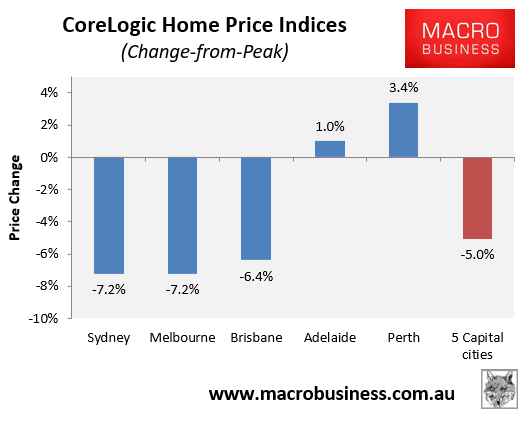
The three main east coast capitals have each fallen by similar amounts, whereas Adelaide and Perth values have actually risen since the Reserve Bank of Australia (RBA) began hiking interest rates in May last year.
This house price rebound has been highly unusual since it has occurred against ongoing monetary tightening from the RBA, shrinking borrowing capacity, and falling sales volumes.
The positive influences of the Albanese Government’s record net overseas migration, soaring rents and a dearth of stock available for sale continues to outweigh the RBA’s unprecedented monetary tightening and the one-third reduction in borrowing capacity.
Once the RBA begins to cut rates, house price growth should therefore accelerate.
