
I reported on Wednesday how mortgage stress has surged across Australia in response to the Reserve Bank of Australia’s (RBA) ultra-aggressive monetary tightening, which has seen the official cash rate (OCR) rise by 4.00% since May last year.
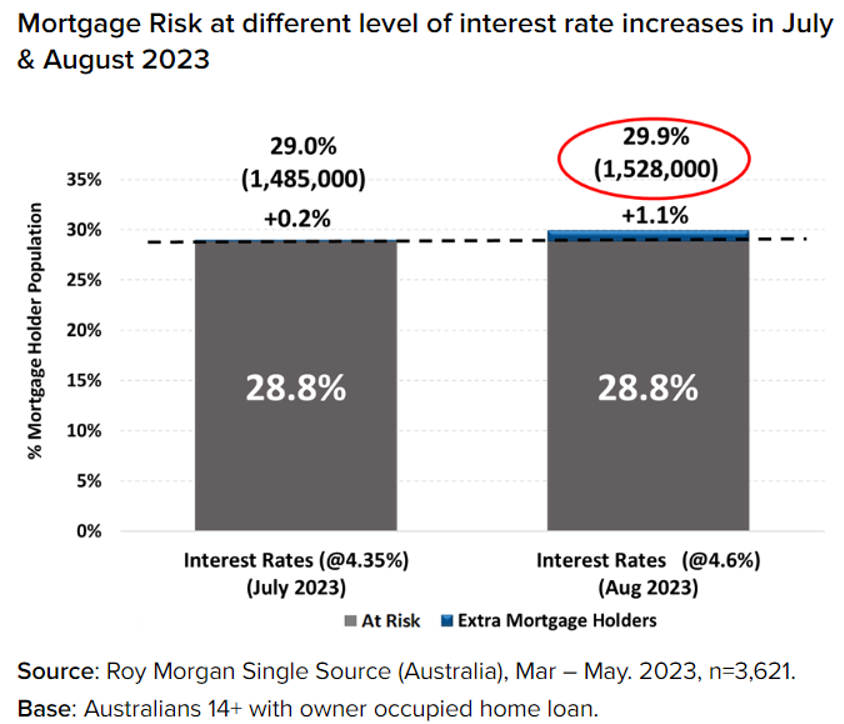
Should the RBA follow economists’ forecasts and lift the OCR to a peak of 4.60% over coming months, then nearly 30% of Australian households will be deemed ‘at risk’ according to Roy Morgan.
And this analysis assumes there is no material worsening of the labour market, which seems unlikely.
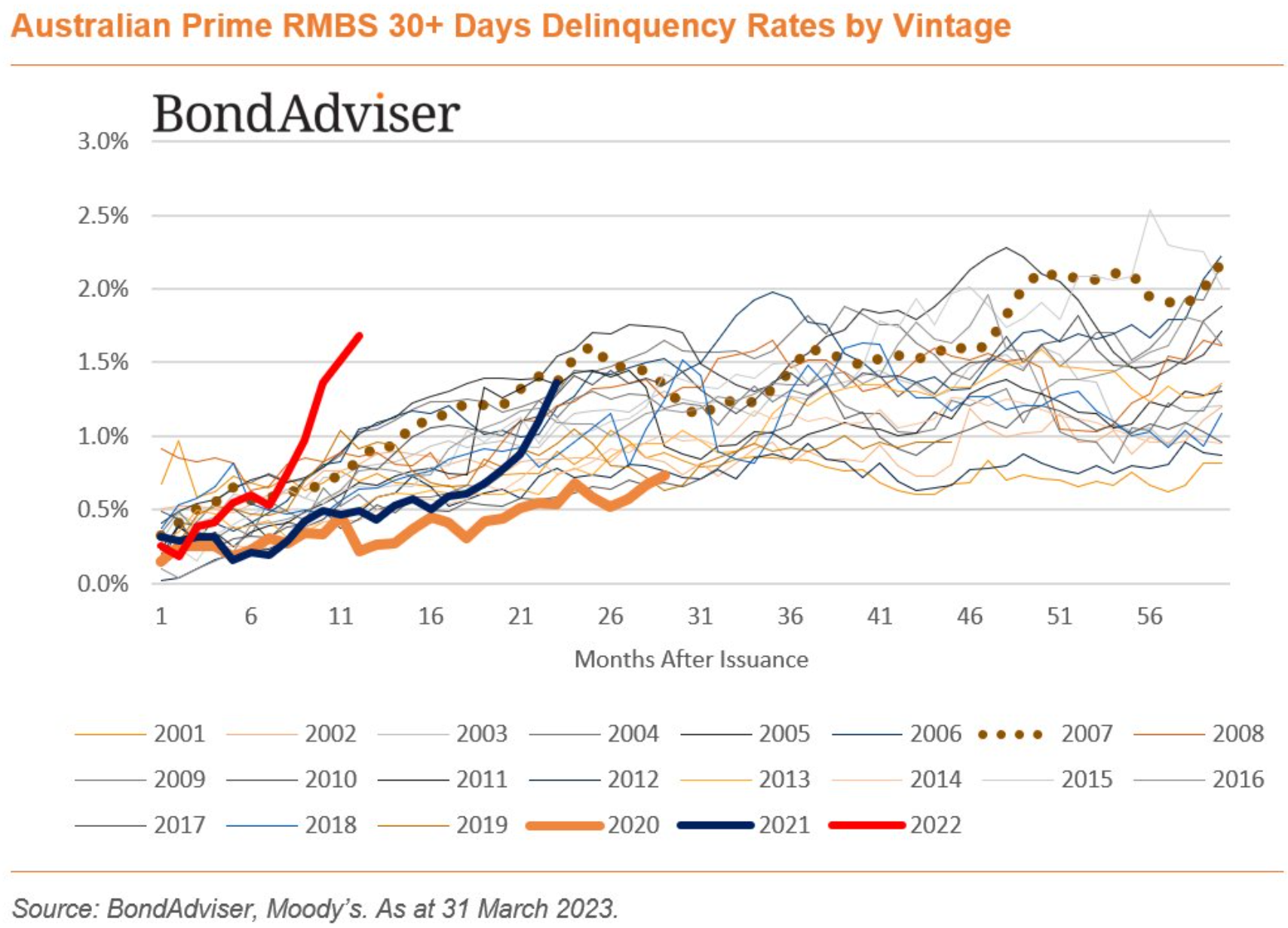
Moody’s recently reported that 30-plus day arrears on 2022 vintage prime residential mortgage-backed securities (RMBS) have soared (red line below), with 2021 vintage mortgages also rising sharply (blue line below):
Coolabah Capital’s Chris Joye reported similar trends, with “non-bank home loan delinquencies (blue line) hav[ing] increased sharply from their lows in 2022”, whereas “bank delinquencies (green line) have risen only quite modestly”:
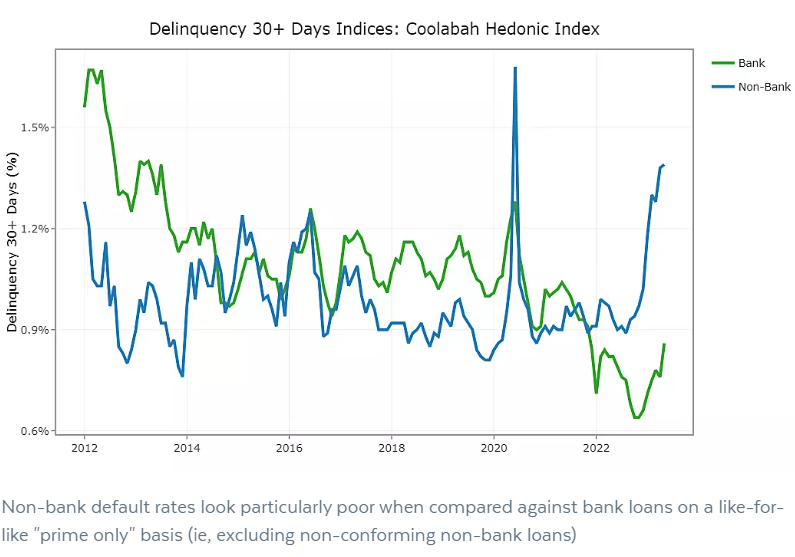
Joye warned that “this default cycle is only just beginning and likely to get a lot worse as the RBA continues to lift its cash rate”.
New data from non-bank lenders Victorian Mortgage Group, Pepper Money and Bluestone also show a significant rise in mortgage arrears:
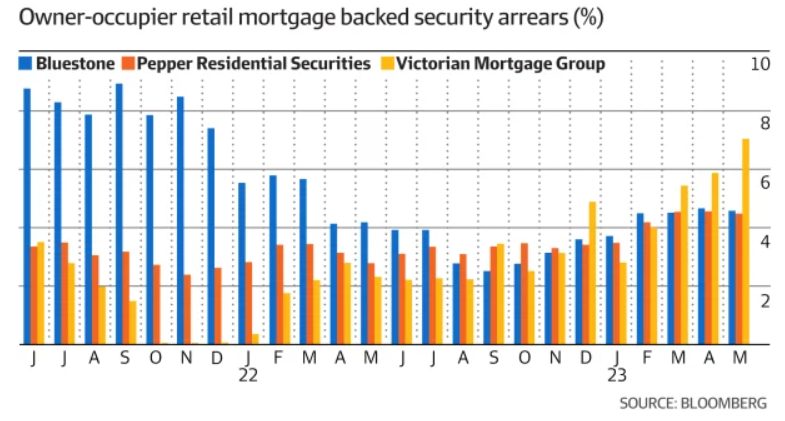
Arrears in VMG’s owner-occupier residential mortgage-backed securities (RMBS) have risen from 4% in January to 7% in May, while Bluestone’s RMBS arrears for owner-occupiers have been around 4.5% since the start of 2023. Arrears at Pepper Money rose from 3.4% in January to 4.5% in May.
Commenting before Tuesday’s rate decision by the RBA, VMG boss Bernie McIntosh warned that the situation would get worse as recent interest rate hikes bite and the RBA potentially lifts rates further.
“It is going to take time for people to work through those issues, or absorb the rate rises with the lag process”, he said. “We are expecting another two rate rises, and borrowers haven’t felt the impact of the last two rises yet”.
Lendi, a leading mortgage broker, also believes that two in five borrowers will be pulled underwater on their monthly budgets if lenders pass on the cost of two more rate rises.
“We could see alarming numbers of households in considerable financial stress”, noted Lendi Group chief operating officer, Sebastian Watkins, last week.
With hundreds of thousands of fixed rate borrowers still to shift from ultra cheap rates of around 2% to variable rates approaching 7% (or higher if the RBA keeps hiking), it seems inevitable that mortgage delinquencies will rise sharply and there will be forced sales.
Whether that poses a systemic risk to the housing market and economy remains to be seen.
