
Market veteran Ed Yardeni believes that the baby boomer generation will save the US economy by spending down their $75 trillion nest egg.
“What these seniors don’t pass on to their heirs, they’ll be spending in their golden years”, Yardeni said.
The vast wealth of the baby boomers, together with the $40 trillion and $8 trillion of wealth held by Generation X and Millennials, respectively, should help boost consumer purchasing in the future, even with student-loan obligations and decreased savings since the pandemic.
“Consumers may run out of their excess pandemic savings by the end of this year, but they have lots of other sources of purchasing power”, Yardeni said.
“These include not only fast-rising wages and salaries but also a record $7.6 trillion in unearned income including interest income, dividend income, proprietors income, rental income, and Social Security“.
Similar forces are in play in Australia.
The Reserve Bank of Australia’s (RBA) rapid interest rate hikes directly impact around one-third of mortgage-holding households, especially Generation X and Millennials with young kids.
Their disposable income has been smashed at the same time as their real earnings are being eroded at the fastest rate on record.
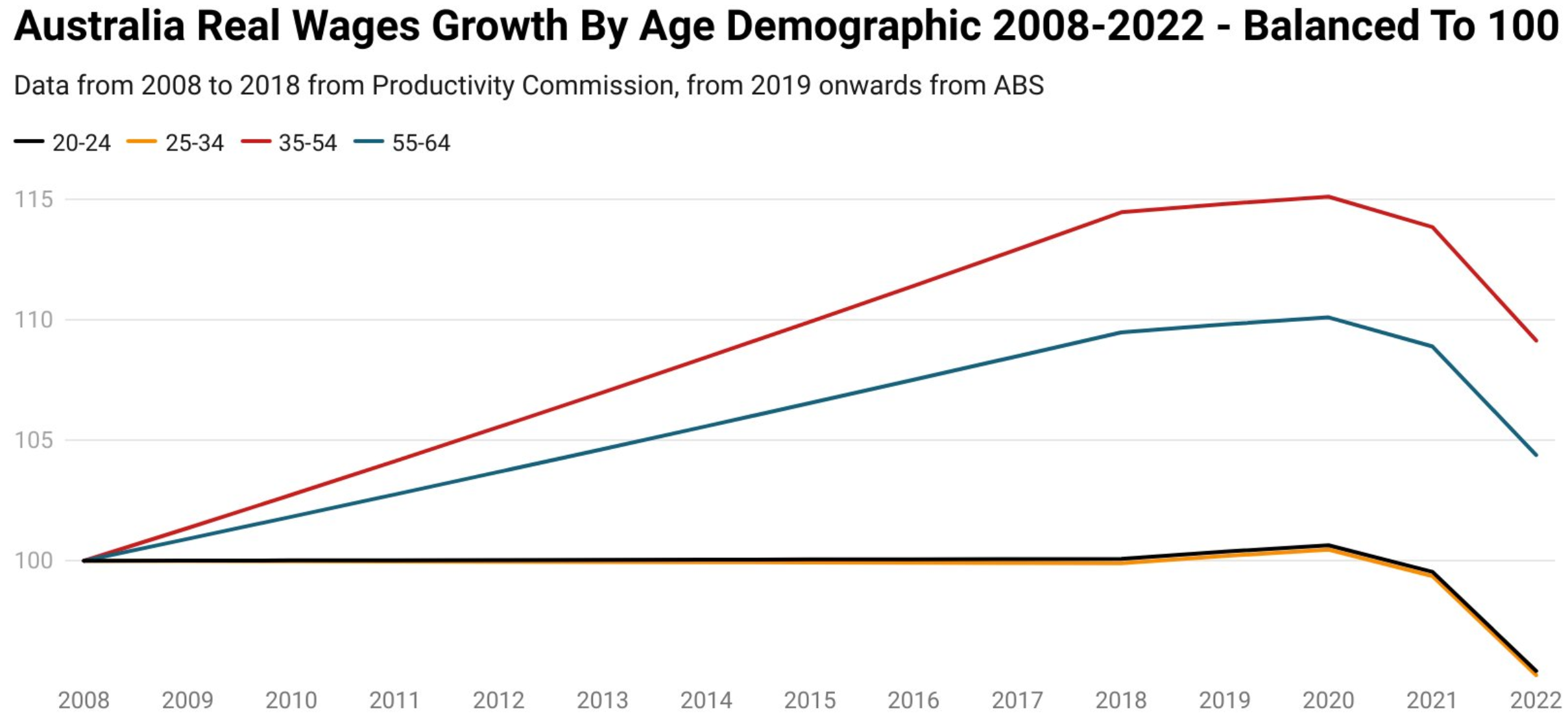
Source: Tarric Brooker
Another one-third of (mainly young) renting households are being hit by the fastest rent rises on record, as well as declining real wages, which is reducing their discretionary income.
The older generations (led by baby boomers) are on the other end of the spectrum.
They mostly own their homes outright and are largely unaffected by rising mortgage rates or rent increases.
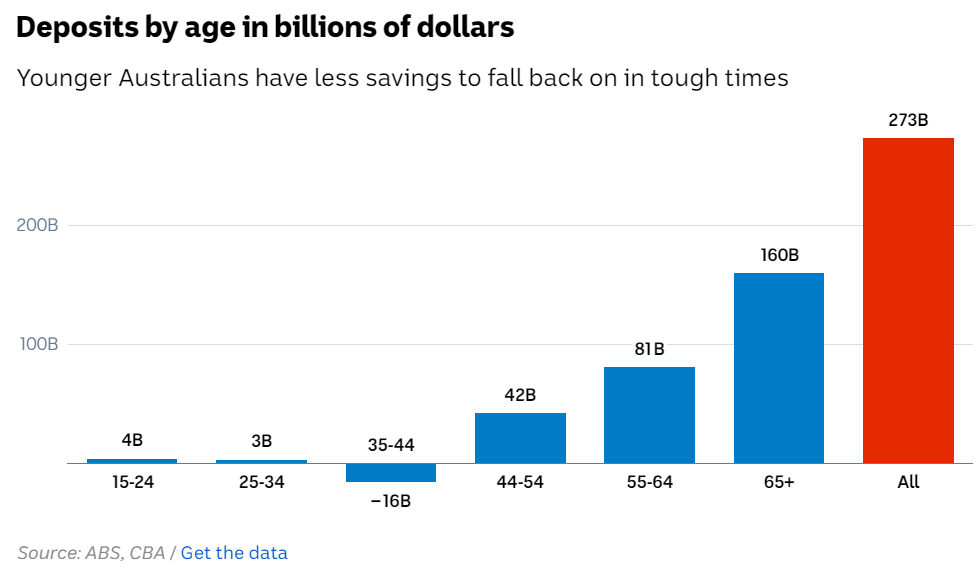
Australians over 65 years of age have also amassed an extraordinary $160 billion of savings over the pandemic, while younger Australians have tread water:
Some baby boomers are even benefiting from soaring rents, as they control the majority of investment properties (many of which have no leverage).
Meanwhile, those Australians on the aged pension have their payments linked to inflation (unlike workers’ wages), meaning their purchasing power is being maintained.
Not surprisingly, then, older Australians spent large in the year to March, while younger Australians cut back hard:
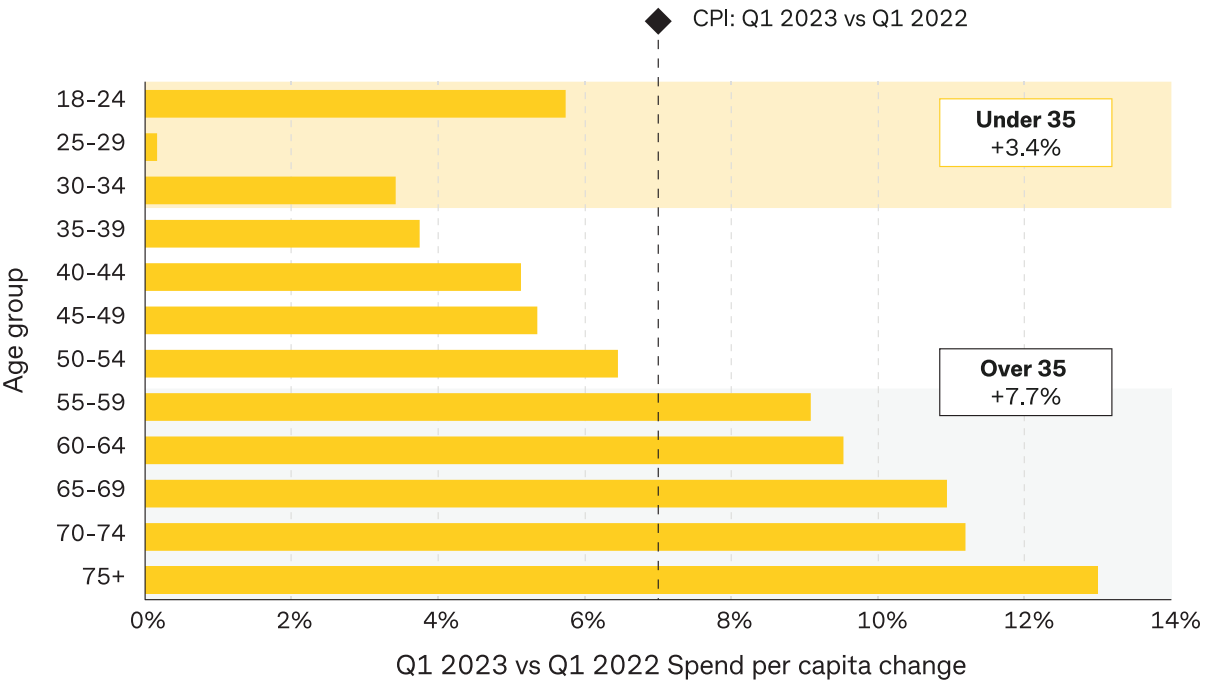
Source: CBA
Baby boomers, therefore, are bolstering the Australian economy via their consumption.
The downside is that their spending has also forced the RBA to respond with higher interest rates, which is disproportionately hurting younger Australians, especially those carrying mortgages.
To the baby boomers go the spoils!
