
At his recent Senate Estimates hearing, RBA Governor Phil Lowe said that he wants to see Australians group together to solve the rental shortage.
“We need more people on average to live in each dwelling”, Lowe said.
“As rents go up, people decide not to move out of home, or you don’t have that home office, you get a flatmate”.
“Higher prices, they do lead people to economise on housing, don’t they?”
“Kids don’t move out of home because the rent is too expensive, or you decide to get a flatmate or a housemate because that’s the price mechanism at work”.
Lowe seemed to get his wish, with home sharing website Flatmate.com posting record patronage:
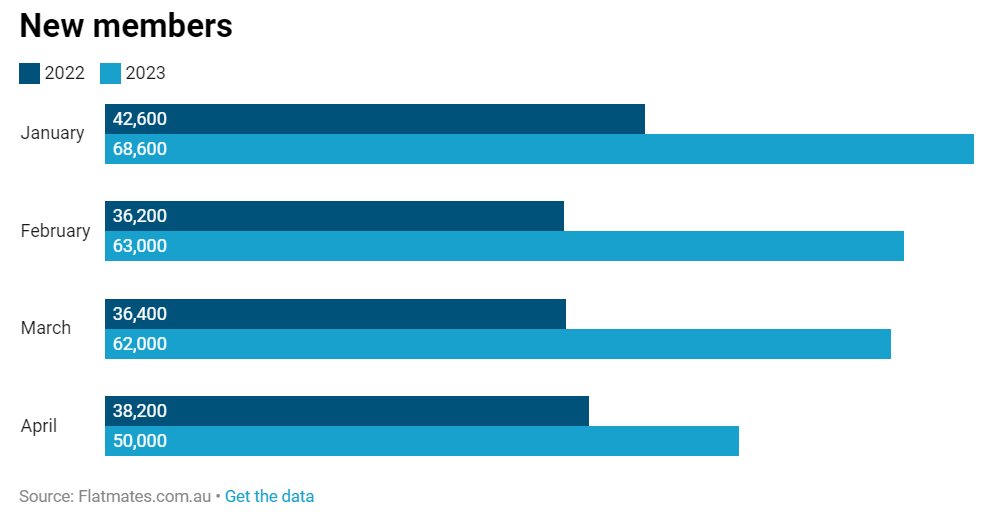
As reported by the ABC, “the number of people seeking to fill rooms in their homes has already significantly increased — with May 2023 breaking the record for the largest number of new users at 70,000”.
“Data provided showed the number of new sign ups each month had increased by up to 70% compared to the same time last year”.
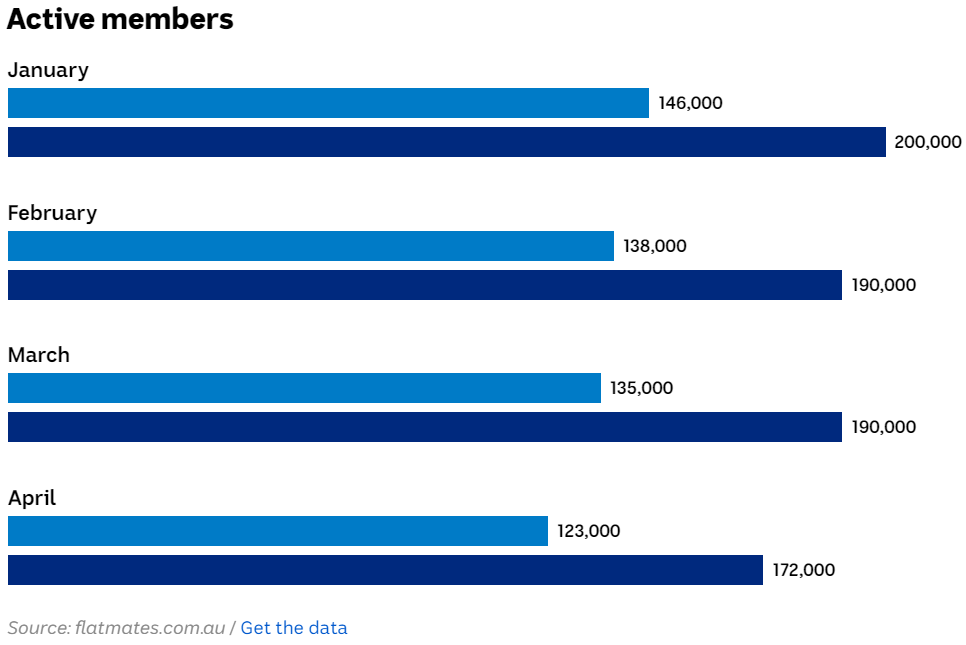
In a similar vein, the number of active members increased around 40% compared to the same month last year:
On Wednesday, SQM Research released rental vacancy data for May, which showed that rental vacancy rates held steady at 1.2%, with the number of vacancies edging slightly higher over the month:
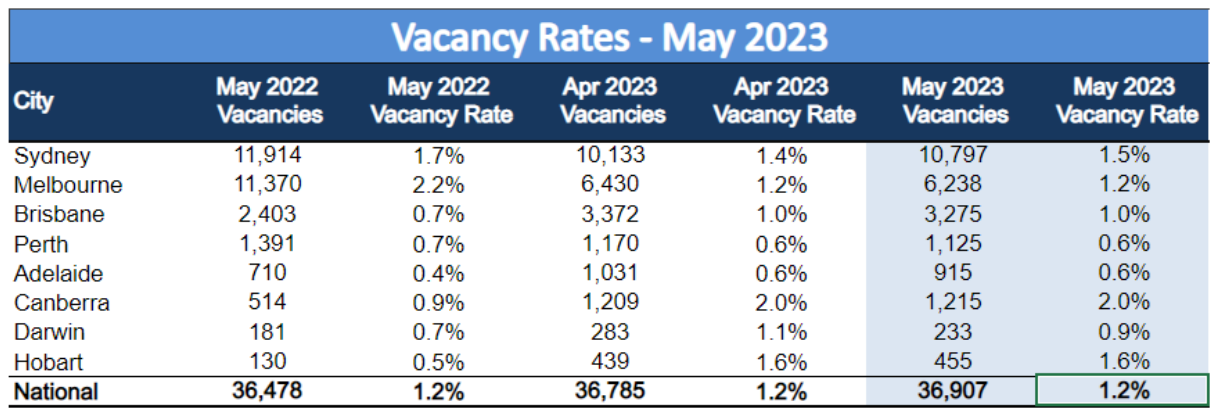
Source: SQM Research
Commenting on the results, managing director Louis Christopher noted that “while there has been some easing in rental conditions especially in regional Australia, it is still very much a landlord’s market for most capital cities”.
“We note though the recent increases in CBD rental vacancy rates. Especially for the Sydney CBD”.
“We will keep noting such areas so tenants can continue to understand areas that may now be experiencing relatively less rental stress”.
PropTrack also reported a slight easing in rental vacancy rates.
“The rental market appears to have stabilised, providing some much-needed relief for renters”, PropTrack senior economist and report author Paul Ryan said.
“Capital cities have seen rental market conditions ease over the past quarter, with vacancy rates up 0.1 percentage points”.
“This is the most significant easing in rental market conditions since early in the pandemic in November 2020”, he said.
Meanwhile, CoreLogic’s weekly market indicators report still shows a dearth of rental listings, which remain at around half early pandemic levels:
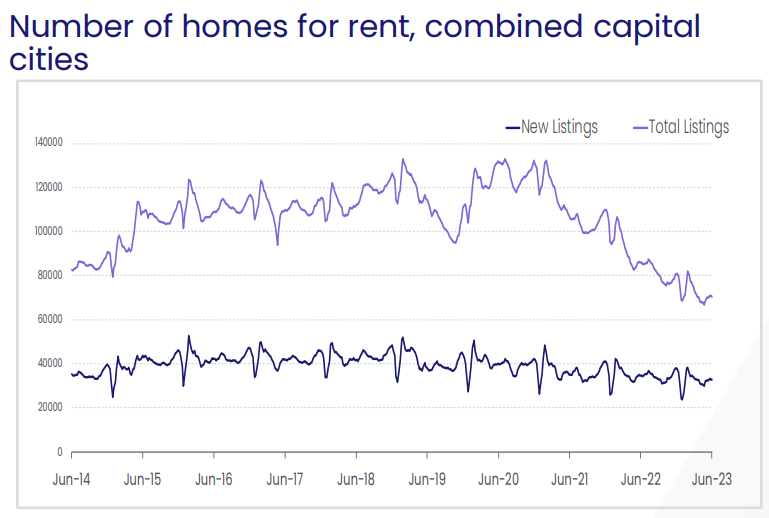
Source: CoreLogic
Any rental reprieve will only be short-lived given Australia’s population is officially projected to grow by 2.18 million people over the five years to 2026-27, which is equivalent to adding five Canberra’s or one Perth’s worth of people.
Worse, this population tsunami will occur at the same time as actual dwelling construction is collapsing amid widespread builder insolvencies and rising financing (interest rate) costs:
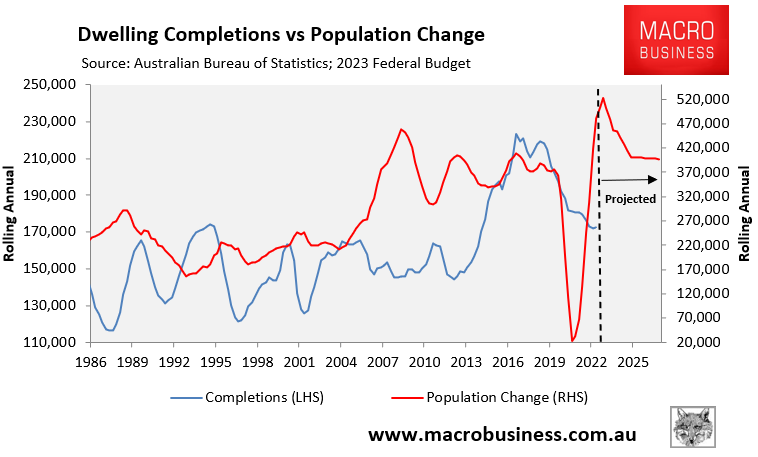
Treasury secretary Steven Kennedy told the recent Senate Estimates hearing that the downturn in dwelling approvals is expected to continue until 2025, with investment in new dwellings likely to contract by 2.5% this year and a further 3.5% in 2023‑24 and 1.5% in 2024‑25.
Growing Australia’s population by between 400,000 and 500,000 people a year amid falling dwelling construction necessarily means Australia’s housing crisis will worsen, resulting in higher rents and increasing homelessness.
